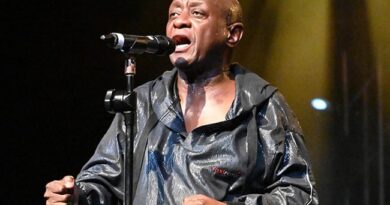
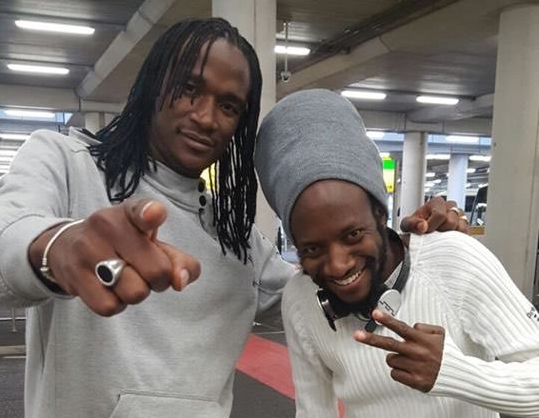
Jah Prayzah and Winky D at the NSS — When art unifies what politics divides
Zimbabwe is bracing for a night that feels less like a concert and more like a cultural alignment of planets. Two giants. One stage. One unforgettable night.
The kind of collision that makes the National Sports Stadium feel too small even with its towering concrete ribs and its reputation as the country’s largest gathering place.
When Jah Prayzah and Winky D share a lineup, the atmosphere changes. The air thickens. The city hums with anticipation. People speak of it the way they speak of rare cosmic events. Something you do not miss because it might never happen again.
This is a moment so rare that even the loudest fans fall silent for a second before deciding who to defend in the eternal debate. Who is the true king of Zimbabwean music? And why does it feel like both answers are correct?
*Jah Prayzah*
Jah Prayzah’s story begins in Uzumba, where an ambitious village boy carved melodies from the red earth and turned them into a global passport. His rise was never accidental. He built his career with the discipline of a soldier, which later shaped his military-influenced aesthetic.
The fatigues. The precision. The larger-than-life stage presence. He cultivated a brand that feels both local and international. A man who can switch from traditional mbira influenced sounds to glossy Afro-fusion that fits perfectly on pan-African playlists.
When Jah Prayzah embraced cinematic storytelling, he changed the visual expectations of Zimbabwean music. His videos became mini-films, complete with sweeping drones, elaborate plots and story arcs that felt like chapters in a cultural epic.
He partnered with artists from Tanzania, Nigeria and Rwanda, proving that Zimbabwean music can sit confidently at Africa’s top table.
His sound evolved from traditional roots to polished Afro contemporary anthems without losing the emotional texture that made him a household name. Songs like Kutonga Kwaro, Muhero and Chiramwiwa cemented him as a cultural force whose reach stretches beyond the stage.
Today Jah Prayzah stands as one of Zimbabwe’s most visible exports. His performances are well-rehearsed, his delivery is smooth, and his production is crisp. He represents a modern, aspirational, pan-African Zimbabwe whose identity is proudly global.
*Winky D*
Across the city in Kambuzuma, another legend was rising. Winky D’s arrival felt like a voltage surge. A lean, sharp-voiced teenager with too much fire in his chest to stay silent. He became the fearless face of conscious dancehall.
The prophet in a hoodie. The voice of the restless and the hopeful. His lyrics carried the weight of lived experience. Street hustle. Urban survival. Social frustration. And the belief that music can speak truth in ways politicians never dare.
Winky D shaped Zimdancehall until it became impossible to speak about the genre without mentioning him. He influenced how the youth walk, talk and dress. He brought dignity to the ghetto narrative at a time when it was reduced to stereotypes.
His courage made him an institution. Songs like Disappear, MuGarden and Ijipita are not just hits. They are cultural markers. His legacy as The Gaffa goes beyond music. He represents resistance wrapped in rhythm. He gives courage to the voiceless and hope to the disillusioned.
Where Jah Prayzah is polish, Winky D is raw flame. Where Jah Prayzah offers dreamscapes, Winky D offers reflection. Together they shape the emotional map of the nation.
*Comparing The Giants*
The debate over who is better has become a national pastime. Some swear by the disciplined Afro-fusion of Jah Prayzah. Others swear by the piercing social commentary of Winky D. The division is never hostile. It is passionate. Artistic. A clash of tastes, generations and realities.
Jah Prayzah sings to the lover of craft, melody and pan-African glamour. Winky D sings to the inner rebel, the poet, the hustler and the thinker. Jah Prayzah’s performances feel like theatre. Winky D’s feel like spiritual interventions.
Jah Prayzah’s voice is smooth and commanding. Winky D’s cuts through the air with intense clarity. Their brand philosophies also contrast. Jah Prayzah is sleek continental appeal. Winky D is unapologetic authenticity rooted in Zimbabwe’s urban pulse.
This is why fans argue endlessly. The comparison is tempting, but unfair. They are kings of different kingdoms. Two rulers of separate emotional continents.
*Their Cultural Power*
Both artists speak to social realities that define Zimbabwe today. Jah Prayzah reflects a striving, modern identity that looks outward to Africa and beyond.
His music tells stories of ambition, love, triumph and hope. He carries the image of a Zimbabwe that competes globally with pride.
Winky D mirrors the streets. His lyrics carve portraits of inequality, resilience, faith and rebellion. He speaks for those who feel unheard. His music often becomes the soundtrack of protest, introspection and awakening.
When he performs Ijipita or Kasong Kejecha the reaction is not entertainment. It is release.
Together they form the cultural seesaw on which Zimbabwe balances. One offers escape. The other offers confrontation. Both are necessary.
*Industry Impact*
Few artists have transformed Zimbabwe’s music economy the way these two have. Jah Prayzah expanded Zimbabwe’s visibility across Africa with collaborations that opened doors for younger artists. His touring success builds confidence for promoters and exporters of local talent.
His digital presence, from streaming numbers to YouTube dominance, shows how Zimbabwean music can live in global spaces.
Winky D strengthened the domestic industry from within. His concerts consistently sell out. His releases command instant national conversations. His influence shapes trends and sets standards for lyrical depth.
His refusal to compromise his message has given artistic courage to a new generation of socially conscious musicians.
Both artists have forced Zimbabwe to expect more from the creative sector. Better production. Better stagecraft. Better storytelling. Better vision.
*The Fan Wars*
Walk into any pub in Highfield, any barbershop in Gweru or any kombi headed to town and mention the names Jah Prayzah and Winky D. A heated debate will erupt before you finish the sentence.
Social media platforms become battlegrounds of laughter, pride and emotional essays every time either artist releases a new song.
But the rivalry is beautiful. It is poetic. These fan wars celebrate Zimbabwe’s diversity in taste and identity. Some fans want the soothing promise of Jah Prayzah. Others want the fiery honesty of Winky D.
What emerges is a colourful cultural tapestry that shows how wide the Zimbabwean emotional spectrum really is.
*Sharing One Stage*
This is why their New Year’s Eve appearance together is monumental. It symbolises unity at a time when Zimbabweans crave shared joy. It represents a national exhale.
A moment where people from different backgrounds, neighbourhoods and generations can gather under one sky and feel connected.
When two giants share one stage, it sends a message that art can unify what politics divides. It turns a concert into a cultural ceremony.
And as the lights blaze over the National Sports Stadium, Zimbabwe will witness not just performances, but a declaration of pride, identity and artistic excellence.
*Epilogue*
Jah Prayzah and Winky D stand as two of the most influential cultural architects of the modern era. Their differences are what make them powerful. Their coexistence is what makes Zimbabwean music extraordinary.
There is no need to choose a winner. The real victory belongs to Zimbabwean artistry itself. And as the countdown to midnight echoes across the stadium, it will be clear that this night belongs to two kings who shaped a nation’s sound.
Gabriel Manyati is a Zimbabwean journalist and analyst delivering incisive commentary on politics, human interest stories, and current affairs. *_-Nehanda Radio_*