Mnangagwa glorifies Zanu PF, remains mum on nation’s crisis
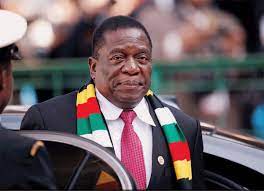
President Emmerson Mnangagwa’s latest address to the Zanu PF Central Committee, delivered at the party’s headquarters on Thursday, offered yet another showcase of the ruling party’s self-praise even as Zimbabwe battles worsening economic and social pressures that his speech conspicuously avoided.
Instead of confronting the country’s mounting hardships, Mnangagwa focused almost entirely on internal party achievements and loyalty narratives.
Mnangagwa opened his remarks by celebrating internal party cohesion, telling the gathering, “Comrades, it is my honour to address the 129th session of the CC of our revolutionary mass party,” before welcoming new members with the words, “Mawana mune vamwe vagara vari mundima… Ndinokugamuchirai, you’re welcome.”
Observers note that while the President emphasises unity, the party continues to face accusations of intolerance toward dissent and closing democratic space.
He applauded the recent national people’s conference, declaring, “We all have a reason to be proud of our achievements,” despite widespread public frustration over economic decline, unaffordable basics and persistent governance failures.
As he looked ahead to 2026, Mnangagwa urged members to stay united, saying, “Unity and hard honest work must see us achieve much more in the years ahead.” But critics argue the rhetoric of unity often masks the party’s inability to address corruption, policy inconsistencies and worsening inequality.
Mnangagwa also praised the presentation of the National Development Strategy 2 (NDS2) and the 2026 National Budget, insisting these “embody the aspirations of our people.” Yet many economists warn that NDS2 remains off-track, with key targets unmet and government expenditure failing to translate into improved public services.
He told the Central Committee that it must hold “robust, constructive and open discussions” around the policies, adding that the party must guarantee “a seamless coordination of this five-year plan for more people-centred milestones.” However, genuine debate is seen as difficult in a structure where dissent is frequently equated with disloyalty.
The President went on to commend Matabeleland North for completing its provincial party offices and challenged other provinces to follow suit. For many Zimbabweans, this emphasis on party infrastructure stands in stark contrast to the desperate state of public hospitals, schools and roads.
He further directed the party to prioritise mobilising young people and women to win the Nkulumane seat, claiming, “Our inclusive party mobilisation programs leave no one and no place behind. Zanu PF ihomwe inokwana munhu wese. It is the true political home of any Zimbabwean.” Opposition parties, however, argue that Zanu PF’s mobilisation strategies frequently rely on coercion, patronage and politicisation of aid.
Mnangagwa reminded members that they are “custodians of the Constitution,” saying the party must remain united and provide guidance to “those who undermine our constitution.” Yet civil society groups point out that some of the most serious constitutional violations in recent years have originated from the state itself — from unlawful detentions to politicised policing and disregard for judicial decisions.
The President also boasted about agricultural success, stating, “I commend our farmers… for yet another record-breaking yield in the winter wheat harvest.” But agricultural unions warn that input distribution remains highly politicised, with Mnangagwa urging that “support must reach all beneficiaries” despite repeated reports of partisan allocation.
He highlighted infrastructure development — “road and dam construction remains one of our strategic priorities” — even though many flagship projects have stalled, suffered from inflated costs or been handed to politically connected contractors without transparency.
Mnangagwa closed the meeting by urging party members to engage their communities and be “hospitable with our diaspora” during the festive season, telling them to share the government’s supposed achievements and the message that “nyika inovakwa nevene vayo.” This, despite the fact that millions in the diaspora left because of economic collapse and continue to sustain the country through remittances that the government often celebrates but does little to earn.
He declared the final Central Committee gathering of the year officially open, saying, “I thank you all for the unity and successes we realised throughout the year.” To ordinary citizens battling poverty, collapsing services, and rising costs of living, such claims may ring hollow.
Mnangagwa’s speech ultimately underscored a widening gulf between the ruling elite’s self-perception and the lived experience of Zimbabweans — a gap critics warn cannot be bridged by slogans, unity calls or political mobilisation alone. *_-ZimEye_*