
Chewore Lodge Case Exposes the Zimbabwe’s Investment and Justice Systems
As confirmed in a recent public notice by the Ministry of Environment, Climate and Wildlife, the State has now engaged all parties involved Susscaden, Big Five and the Zimbabwe Parks and Wildlife Management Authority with the stated aim of facilitating dialogue and reaching an amicable resolution. While this step is a step in the right direction it also exposes a deeper and more worrying reality, the Chewore Lodge matter has already travelled far beyond Zimbabwe’s borders and is now being cited internationally as a cautionary tale for potential investors.
The Chewore Lodge dispute is no longer merely about one operator or one concession. It has exposed systemic weaknesses within Zimbabwe’s investment protection mechanisms, administrative processes and judicial effectiveness. For years, concerns have circulated regarding unclear authority, inconsistent decision-making and prolonged legal uncertainty conditions that erode confidence regardless of an investor’s nationality or race.
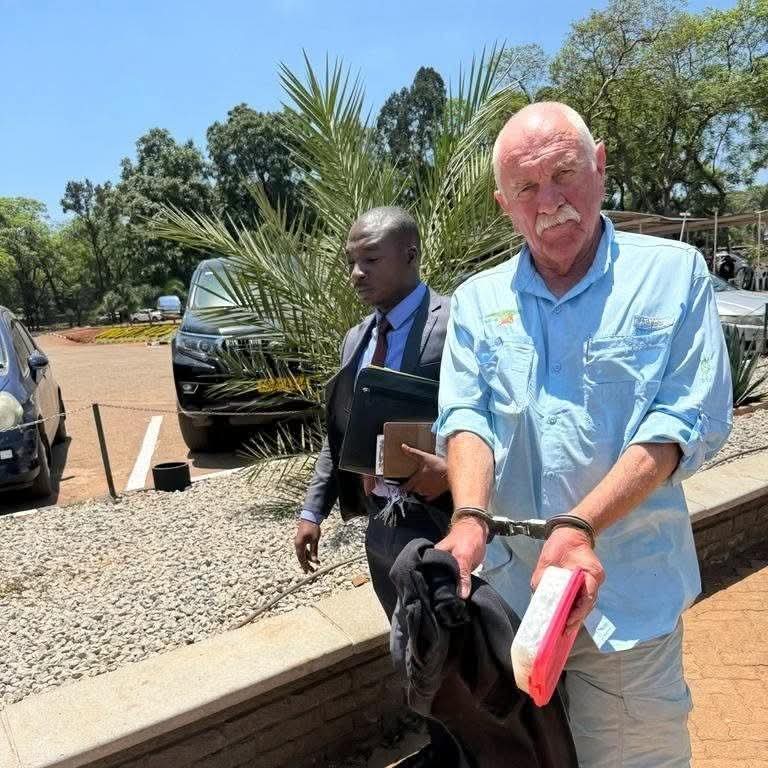
The damage is not theoretical. The Terry William Kelly case is being actively shared in Zimbabwe, Africa, Europe and elsewhere as an example of why foreign investors should exercise extreme caution when considering Zimbabwe. This narrative, once established, is difficult infact may be impossible to reverse.
The situation bears uncomfortable similarities to the case of Christopher Shepherd, a farmer, a Zimbabwean citizen whose Bandama Farm was acquired by the State despite him having followed all prescribed legal procedures and having secured all official documentation confirming that the government had no interest in the land in the early 1990s.
In both cases, individuals complied with the law, relied on written assurances from the State and invested in good faith only to later find themselves exposed to arbitrary reversals with devastating financial and personal consequences.
These are not isolated incidents. This is a well known pattern where ordinary Zimbabweans black and white alike can be treated as second-class citizens, while a small ruling elite operates as though national assets and institutions exist solely for their benefit.
If Zimbabwe is serious about being “open for business,” as repeatedly stated by the Second Republic, then resolving Chewore Lodge quietly behind closed doors will not be enough.
What is now required is a transparent, independent and public enquiry into how this case was allowed to escalate to this point,
• Where did administrative systems fail?
• Were legal safeguards ignored or overridden?
• Why were court processes unable to deliver timely and enforceable outcomes?
• Who benefited from the uncertainty and at whose expense?
Making the findings public is essential not to embarrass the State, but to restore confidence, correct institutional failures and prevent future recurrence.
The government can either treat Chewore Lodge as an unfortunate anomaly or it can acknowledge it as a warning signal demanding reform.
Doing the right thing openly, lawfully and decisively would send a powerful message to both citizens and investors that contracts matter, the law matters and no one is above the system. Failing to do so risks reinforcing the perception that corruption and arbitrary power remain embedded within government structures.
Zimbabwe cannot afford that cost. The world is watching, investors are watching and Zimbabweans at home and abroad are watching too.
Let’s just do the right thing.
Engineer Jacob Kudzayi Mutisi
+263772278161