
Women on the Front Lines: Zimbabwe’s Hazardous Waste Crisis
By Sally Nyakanyanga
As one enters the bustling Glen View suburb, the first sight is the hive of activity at the informal complex centre. The area—frequently ravaged by fires—is crowded with people from all walks of life, united by a single purpose: survival.
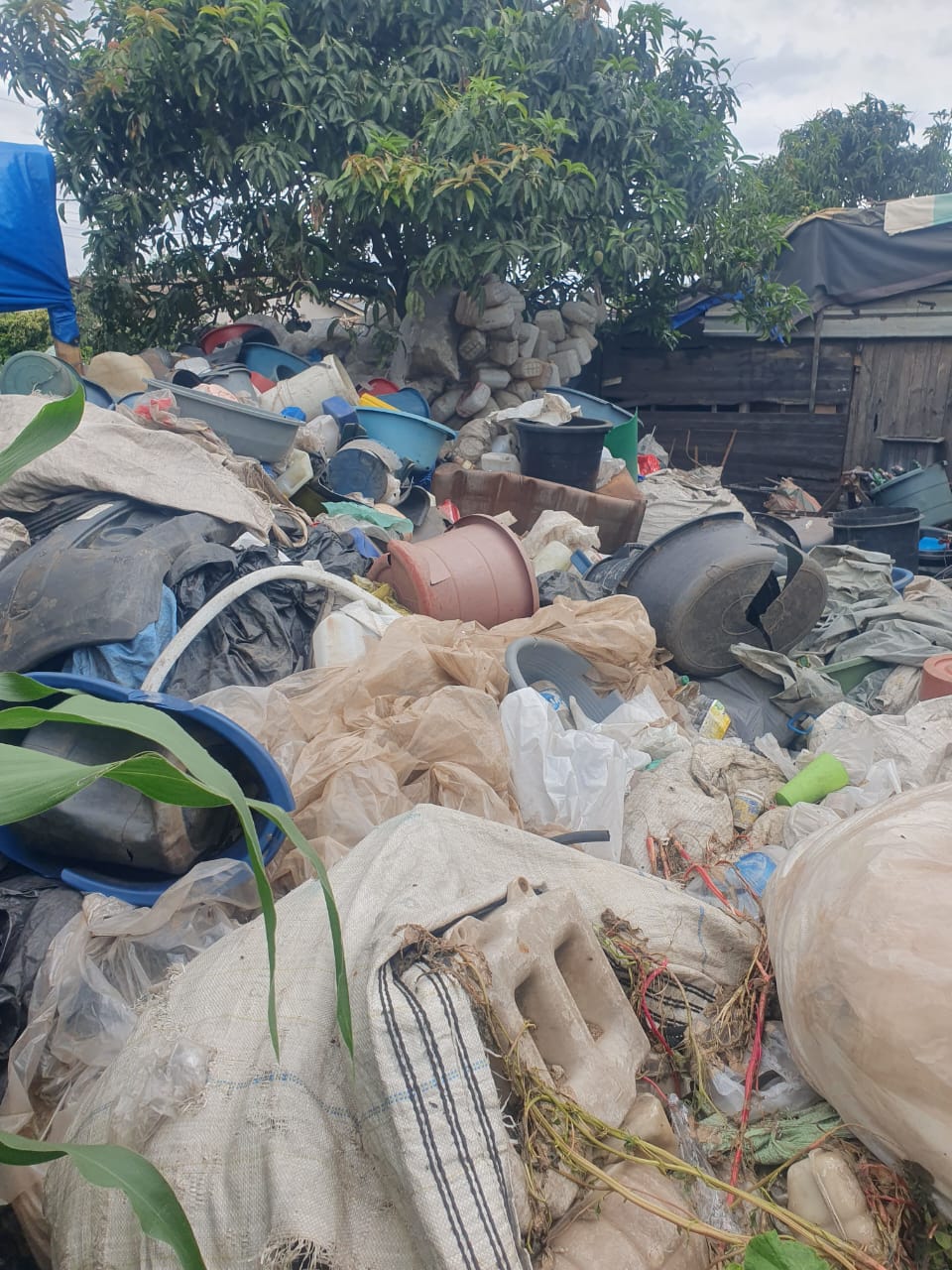
Navigating through the maze of stalls, one encounters waste collectors and makeshift service points—car repairs, electronics fixing, and the resale of cell phones and laptops. Looming over everything are heaps and mounds of waste, largely plastic and other discarded materials.
But who bears the cost of this pollution?
A Woman at the Centre of the Crisis
Sally Sitima, an unemployed mother and waste collector, lives at the sharp end of this reality. She has handled and collected plastic containers to sell to recycling companies.
At 46, with three children depending on her, Sitima often works without proper protective gear. Sometimes she reuses old gloves because she cannot afford new ones—let alone masks or boots but stopping work is not an option.
Moreover, across sub-Saharan Africa, women make up nearly 70 percent of waste pickers, yet they operate in hazardous conditions with little protection or recognition, according to Veritas. Statement released during the 2025 World Environment Day.
“Our environment is not clean, and it’s harming our kids,” Sitima says, surveying the pollution-choked streets of Glen View, where waste piles up along Willowvale Road. “We’re being poisoned and dying gradually, and we fear for our kids as they are also exposed,” she said.
During a discussion Protecting Africa from Hazardous Waste, Teresia Gitau, Global co-facilitator Women Major group United Nations Environment Programme (UNEP), emphasised the need for gender component in policy and sex disaggregated data with the aim of promoting gender equality. She said, “we can’t improve what we can’t measure.”
To buttress this, Bamako Convention launch of the Regional Clearing House Mechanism (CHM) marked a crucial landmark in strengthening transparency, information exchange and regional cooperation on hazardous waste. Speaking at the launch, Regional Coordinator, Chemical, Waste and Air Quality at UNEP regional office for Africa said, Alex Mangwiro, “Effective implementation of the Bamako Convention depends on timely access to reliable and well-organised information.
The Women Waste collectors.
Sitima represents an invisible army. According to UN-Habitat, women form the backbone of the informal recycling economy across sub-Saharan Africa—handling society’s most dangerous discards with their bare hands while earning barely enough to survive.
A recent World Health Organisation (WHO) study titled Children and Digital Dumpsites: E-waste Exposure and Child Health found that prenatal and childhood exposure to e-waste is strongly linked to serious health conditions, including lung malfunction, chronic coughing, wheezing, and asthma.
Reuben Akili, Director of the Combined Harare Residents Association, says women and children are the most affected.
“Children are exposed as they play around dumpsites. They pick up harmful materials to play with, and that exposure can have serious long-term effects,” Akili said.
Sitima confirms the daily risk. “I can’t afford masks, and I sometimes overuse gloves because I don’t have money to buy new ones. Safety has become secondary. Knowledge might be there, but poverty is the main challenge.”
Akili added that civil society has been pushing for companies to comply with environmental regulations, particularly regarding water pollution.
“We are calling for industries to install pre-treatment facilities before discharging waste into sewer reticulation systems,” he said.
A Double Burden: Home and Work
The danger does not end when the workday does. Professor Chitindingu of Chinhoyi University of Technology, who leads an initiative examining the environmental, livelihood, and health impacts of hazardous waste in household and community settings, says women face compounded exposure.
“There is limited awareness of the health risks associated with plastics, smoke inhalation, and contaminated organic waste,” he said. “Communities report respiratory problems, gastrointestinal illnesses, and even livestock losses linked to poor waste management.”
He noted the absence of formal waste collection systems, which increases prolonged exposure to hazardous materials.
“Women play a key role in household waste handling, cooking, and childcare, increasing their exposure to smoke from burning waste and contaminated materials. Children’s proximity to dumping areas and their play in polluted environments further exacerbates respiratory risks,” Chitindingu said.
The Flood at the Border
According to Akili, the crisis begins at Zimbabwe’s borders—particularly Beitbridge and crossings with Mozambique.
“A flood of cheap electronics, second-hand goods, and materials disguised as ‘donations’ enters the country. These products have short lifespans and quickly become toxic waste,” he said.
Jeremiah Kwenda, who buys collected plastic bottles and containers, for nine years, for resale to recycling companies, says survival often overrides safety.
“Because of economic pressure, collectors work without protective clothing. People have lost concern for health and the environment in the struggle to survive,” he said.
The Bamako Convention: Promise Versus Reality
Zimbabwe is a signatory to both the Basel and Bamako Conventions—the latter designed specifically to prevent Africa from becoming a dumping ground for hazardous waste. According to a report by Environmental Management Agency (EMA), Statutory Instrument 12 of 2007 (Hazardous Substances, Pesticides and Other Toxic Substances) calls for the licensing of various. Moreover, it explained that hazardous waste, “In some cases, these substances may irritate the skin or eyes, make it difficult to breath, cause headaches and nausea, or result in other types of illness.”
The Bamako Convention explicitly bans the import of all hazardous waste into Africa and strictly regulates its movement within the continent. Zimbabwe’s Environmental Management Agency (EMA) is the designated authority responsible for enforcing these obligations.
Akili noted that, on paper, strict monitoring systems exist, but on the ground, however, enforcement tells a different story.
Kwenda noted that, “the gap between treaty obligations and reality are on parallel, mostly affecting the vulnerable populations as they are more exposed.
Where Implementation Fails
According to CHRA leaders, inconsistencies, and weak enforcement at border posts have rendered Bamako’s protections largely theoretical. Akili said, “cheap electronics and hazardous materials enter major boarder entry points with minimal scrutiny, often labelled as donations or affordable goods.”
Kwenda shared the same sentiments, stating that, “Lack of political will, porous borders, corruption, and ineffective enforcement have worsened the crisis.
According to a statement by Veritas, during the World Environment Day 2025, “EMA statistics show that Zimbabwe generates over 300,000 tonnes of plastic waste annually, yet less than 10 percent is recycled. Harare alone produces between 850 and 1,000 tonnes of waste daily, collecting only about half”. However, the remainder ends up in open dumpsites, rivers, and burn pits, polluting critical water sources such as Lake Chivero, the statement reads. Accordingly, EMA report, plastic waste is regarded as challenging issue because of its non-biodegradable nature and not easily recyclable. Also as a petroleum by-product, plastic production presents a major source of air and water pollution.
The Price Women Pay
Sitima’s greatest fear is not the cuts she can see—but the damage she cannot.
Plastic pollution is not only an environmental crisis. It is a social justice, gender equality, and human rights issue—one carried daily on the backs of women like Sally Sitima.