Ziyambi Ziyambi Skips United Nations Human Rights Council Session Amid Constitutional Amendment Push
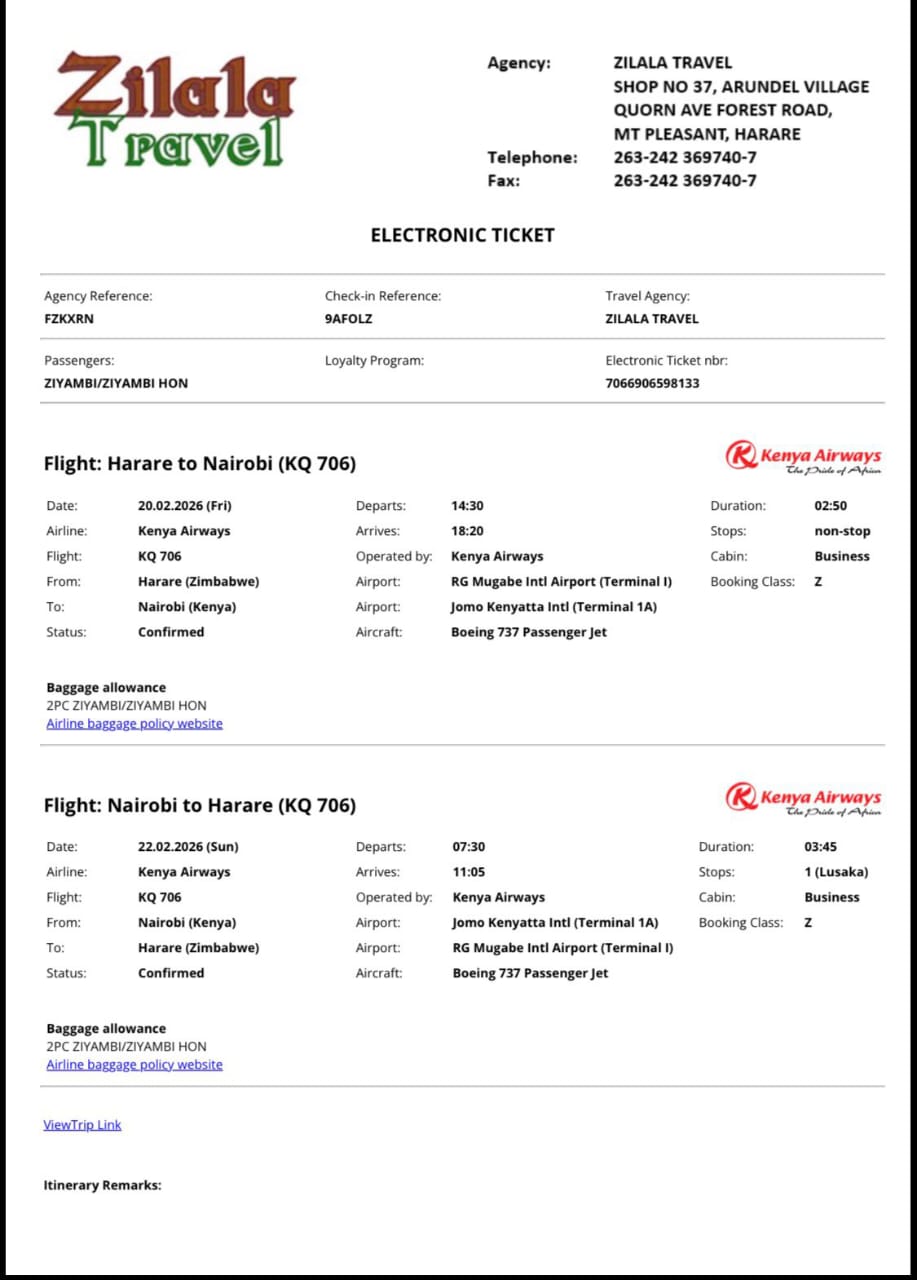
Zimbabwe’s Justice minister Ziyambi Ziyambi will not attend the 61st session of the United Nations Human Rights Council session in Geneva, Switzerland, which runs from 23 February – 31 March due to pressing commitments back home – ongoing consultations on constitutional amendments and public debate over 90 days.
As a result, Zimbabwe will now be represented by Attorney-General
Virginia Mabiza.
Appointed by President Emmerson Mnangagwa on 1 November 2023, Mabiza is the first woman to hold that position.
The Geneva Summit is a major assignment for her as she will be confronted by civil society organisations and fierce critics of Zimbabwe’s atrocious human rights record.
Ziyambi was initially set to attend the Geneva meetings, but withdrew due to his hectic schedule on constitutional changes which were recently gazetted and are being publicly debated before they are formally introduced to parliament.
Ziyambi is currently consulting various stakeholders, including Parliament, Portfolio Committee on Justice, Legal, and Parliamentary Affairs, legal experts, consultants and strategists in and out of the country.
His engagements have become even more urgent due to the 90-day window for consultations.
The widely criticised amendments give Mnangagwa’s a controversial tenure extension beyond his legal two-term limit which expires in 2028; extend the presidential term from five to seven years; and abolish direct popular voting in presidential elections.
The UN Human Rights Council will discuss protection of human rights defenders, freedom of religion, human rights while countering terrorism, and rights to food and housing.
It will also address grave human rights issues in contexts including Afghanistan, Nicaragua, Venezuela, China, Syria, South Sudan, Iran, North Korea, Myanmar, and the Occupied Palestinian Territory/Israel, amongst others.
This session takes place at a moment of profound stress for the international human rights system, marked by ongoing conflicts, selective adherence to international law, and a growing financial crisis within the UN.
The genocide in Gaza, Russia’s war of aggression against Ukraine, and persistent impunity afforded to powerful States and selective application of international law have severely eroded confidence in multilateral institutions.
The United States’ military attack against Venezuela and seizure of President Nicolas Maduro last month represents a further erosion of the international legal order.
Zimbabwe’s appalling human rights record has been a focal point at several UN-related events in Geneva, characterised by a sharp contrast between official government presentations and testimonies from civil society.
A few days ago, Zimbabwean journalist Blessed Mhlanga addressed the summit at the UN Office in Geneva.
Mhlanga testified about intense repression, “lawfare” used to silence critics, and restrictions on media freedom.
He warned that the proposed constitutional amendments to extend presidential terms threaten to entrench authoritarian rule.
Information Minister Zhemu Soda condemned Mhlanga’s remarks as “malicious”.
The state warned that “patriotic clauses” in domestic law prohibit citizens from engaging with foreign entities in ways deemed harmful to the state, leading the Geneva Summit coalition to call for urgent UN protection for the speaker. NewsHawks