
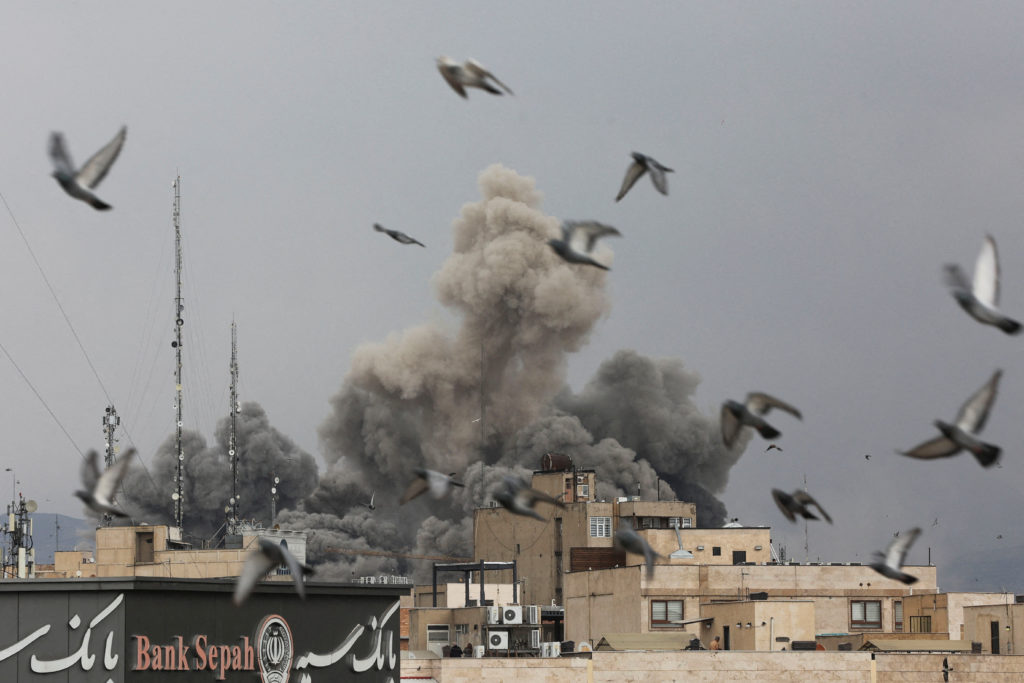
KINETIC BANKRUPTCY: HOW THE PENTAGON HALVED THE $2 BILLION-A-DAY PRICE TAG OF THE IRANIAN QUAGMIRE.
By Kudzai Jakachira
The staggering financial weight of the conflict with Iran has finally forced a reckoning within the halls of the Pentagon.
For weeks, the American taxpayer was footing a bill of $2 billion every twenty-four hours—a burn rate that threatened to hollow out the national defense budget faster than any enemy ever could.
This astronomical cost was not merely a byproduct of war, but the result of a calculated “attrition trap” set by Tehran.
By flooding the skies with disposable, low-tech drones, Iran forced the United States to fire gold-plated interceptors at wooden targets.
Every time a $3 million Patriot missile disintegrated a $20,000 drone, the U.S. was “winning” the tactical skirmish but losing the economic war.
The recent drop to less than $1 billion per day marks a desperate, necessary pivot away from this fiscal suicide.
The U.S. has been forced to stop playing the “expensive goalie.” Gen. Dan Caine’s admission that the military cannot catch every drone is a rare moment of strategic candor.
It signals that the U.S. is no longer willing to trade its most sophisticated technology for Iranian scrap metal.
While the reduction in daily spending offers some relief to the Treasury, the underlying reality remains: the U.S. is currently locked in a conflict where the enemy’s primary weapon isn’t just explosives—it’s the American balance sheet.
The financial architecture of the current engagement with Iran has undergone a drastic transformation.
Initially, the United States was hemorrhaging capital at a rate of $2 billion per day, a staggering figure driven by the immediate necessity of intercepting high-velocity ballistic threats with top-tier kinetic interceptors.
However, according to preliminary Defense Department analyses, this daily expenditure has been halved to less than $1 billion.
This fiscal “correction” is the result of a deliberate tactical pivot. Gen. Dan Caine, Chair of the Joint Chiefs of Staff, recently briefed lawmakers on a grim mathematical reality.
Iran’s strategy centers on cost-imposition. By deploying swarms of low-cost, one-way “Shahed” attack drones, Tehran aims to force the U.S. into an asymmetric trap—expending multimillion-dollar Patriot and THAAD interceptors to neutralize “lawnmower-engine” drones that cost a fraction of the price.
To mitigate this, the U.S. has transitioned from a purely reactive, defensive posture to an “active suppression” model.
Rather than engaging every low-slow drone in flight, the military is prioritizing the rapid destruction of launch sites and infrastructure. This shift from expensive aerial interceptions to proactive ground-level neutralization is the primary driver behind the $1 billion daily savings.
The war began as a series of localized skirmishes that rapidly metastasized into a full-scale regional confrontation.
The following facts outline the trajectory of the conflict:
The war was ignited following a series of retaliatory strikes between U.S. assets and Iranian-backed entities, which eventually crossed the threshold into direct state-on-state kinetic engagement.
Iran implemented a “saturation” doctrine, launching thousands of one-way attack drones. These drones, designed to fly low and slow, were specifically engineered to evade traditional radar and overwhelm sophisticated air defense systems through sheer volume.
In the opening phase, U.S. forces relied heavily on the “highest end” of the missile stockpile.
While effective, the high rate of fire raised alarms on Capitol Hill regarding the depletion of precision-guided munition (PGM) inventories.
In recent closed-door sessions, military leadership conceded that while the vast majority of threats are neutralized, 100% interception is a mathematical impossibility.
This admission paved the way for the current strategy of targeting “the archer rather than the arrow.”
Amidst the conflict, domestic leadership has offered conflicting views on readiness.
While the Pentagon maintains that stockpiles are sufficient for the “task at hand,” other political figures have admitted that while medium-grade munitions are “virtually unlimited,” the most advanced systems are facing supply chain strain.