Dark Secrets Behind the Load Shedding: The Real Reason Why Zimbabwe’s Electricity Crisis Refuses to Go Away
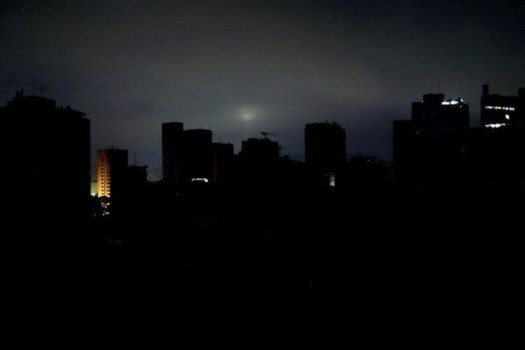
HWANGE – For decades, the people of Zimbabwe have lived in a state of perpetual twilight. While the Zimbabwe Electricity Supply Authority (ZESA) issues a relentless stream of press releases promising that load-shedding will soon be a thing of the past, the reality on the ground tells a far more sombre story. Millions of citizens continue to spend half their lives in the dark, their daily routines dictated by a power schedule that is as erratic as it is punishing. From the high-density suburbs of Harare to the remote villages of Matabeleland, the hum of a functioning refrigerator or the glow of a streetlamp has become a luxury rather than a right.
The official narrative from ZESA and the Ministry of Energy and Power Development has remained remarkably consistent over the years. They point to the “low water levels at Kariba” or the “ageing equipment at Hwange” as the primary culprits. While it is true that drought has hampered hydroelectric generation and that the thermal power station at Hwange is prone to frequent breakdowns, these explanations are merely the surface of a much deeper, more systemic rot. This investigation uncovers a landscape of systemic corruption, mismanagement, and the calculated influence of “power cartels” that have collectively crippled the national power grid.
At the heart of this crisis is a culture of procurement that prioritises political connections over technical competence. For years, multi-million dollar tenders have been awarded to what are commonly referred to as “briefcase companies”—entities with no track record, no technical expertise, and often, no physical office beyond a registered address. These companies are the primary beneficiaries of Zimbabwe’s ambitious solar projects, many of which have yet to produce a single kilowatt of power despite receiving substantial advance payments from the state.
The most notorious example of this procurement failure is the Gwanda National Solar Project. Awarded in 2015 during President Robert Mugabe’s era to Intratrek Zimbabwe, a company led by the controversial businessman Wicknell Chivayo, the project was intended to be a 100-megawatt beacon of renewable energy. The contract, worth over US$172.8 million, was signed amidst great fanfare, with promises that it would significantly alleviate the national power deficit. However, over a decade later, the site in Gwanda remains a desolate stretch of cleared bush and a few kilometres of fencing.
Internal audits and parliamentary investigations have since revealed the shocking extent of the irregularities surrounding the Gwanda tender. Despite Intratrek having no prior experience in large-scale energy projects and Chivayo himself having a previous criminal record for fraud, the Zimbabwe Power Company (ZPC) proceeded to pay the company over US$5 million in advance payments for “pre-commencement” works.
Crucially, these payments were made without the required bank guarantees, a fundamental safeguard in public procurement. When ZPC eventually attempted to terminate the contract due to lack of progress, they found themselves entangled in a protracted legal battle. In a final irony that illustrates the dysfunction of the system, Chivayo was later awarded US$22 million in damages for breach of contract, while the project itself remains abandoned.
The “power cartels”—a loose network of private entities and politically connected individuals—benefit immensely from the continued energy deficit. When the national grid fails, a lucrative market opens up for emergency power imports and the sale of high-priced generators and solar equipment. These cartels have a vested interest in ensuring that ZESA remains incapable of meeting national demand. By importing expensive emergency power from neighbouring countries like South Africa and Mozambique, often through opaque middleman arrangements, these entities drain the country’s precious foreign currency reserves while ordinary households suffer.
Internal audits within ZESA suggest that millions of dollars intended for the maintenance of existing infrastructure have been diverted into private pockets. The Auditor General’s reports have consistently highlighted weak financial controls and the “fruitless and wasteful expenditure” of public funds. In one instance, it was discovered that ZESA management had authorised payments for transformers and other critical equipment that were never delivered. While the equipment remained a figment of the procurement department’s imagination, the money disappeared into a labyrinth of offshore accounts and shell companies.
The impact of this mismanagement is not felt equally across society. A clear prioritisation of “VIP zones”—areas inhabited by the political and economic elite—ensures that the powerful are rarely inconvenienced by the blackouts that plague the rest of the country. Certain industrial giants also receive preferential treatment, leaving ordinary households and small businesses to bear the brunt of the load-shedding. For a small shop owner in Chitungwiza or a tailor in Bulawayo, sixteen hours of darkness a day is not just an inconvenience; it is a death sentence for their livelihood.
“The corruption can be traced to the time when the power utility was broken into five so-called strategic business units. The semi-autonomous entities, ZESA Holdings, ZPC, ZETDC, ZENT, and Powertel, became vehicles for patronage rather than service delivery,” stated a representative from a prominent labour union during a recent demonstration against the power cuts.
Recent incidents have only served to highlight the fragility of the system. On July 3, 2025, Zimbabwe suffered a total nationwide blackout following a catastrophic system failure at both Hwange and Kariba. For several hours, the entire country was plunged into darkness, bringing all economic activity to a standstill. More recently, in September 2025, the shutdown of Hwange Unit 3 for a 44-day maintenance period led to an immediate escalation of load-shedding, with some areas reporting outages lasting up to 18 hours.
Despite these failures, ZESA continues to project an image of progress. In March 2026, the utility claimed to have achieved a “65-day milestone” without significant power cuts, a claim that was met with widespread scepticism by a public that has heard such promises many times before. Critics argue that this recent “stability” is merely a cosmetic exercise designed to appease the electorate ahead of the upcoming independence celebrations. The underlying issues—the corruption, the lack of investment in maintenance, and the influence of the power cartels—remain entirely unaddressed.
The human cost of the electricity crisis is staggering. Hospitals struggle to maintain cold chains for essential vaccines, schools are unable to provide digital learning opportunities, and the lack of street lighting has led to a significant increase in crime in many urban areas. Women, in particular, are disproportionately affected as they are forced to seek alternative energy sources, often spending hours each day collecting firewood, which further contributes to deforestation and environmental degradation.
“We are tired of the excuses. Every year it is the same story—either the water is too low or the machines are too old. But we see the same people who are supposed to fix the grid driving the latest luxury cars and living in mansions that never lose power. It is clear that the crisis is being managed for profit, not for the people,” said an unnamed source within ZESA who spoke on the condition of anonymity for fear of victimisation.
The current “recovery plan” touted by the government focuses heavily on attracting private investment into the energy sector. While independent power producers (IPPs) could theoretically play a role in bridging the gap, the existing procurement framework remains a major obstacle. Without a transparent, competitive, and honest tendering process, any new investment is likely to fall into the same traps that claimed the Gwanda project. The prioritisation of political loyalty over technical capability ensures that the most competent players are often excluded from the market.
To truly resolve the electricity crisis, Zimbabwe must confront the dark secrets of its grid. This requires more than just building new power stations; it requires a fundamental overhaul of the governance structures within ZESA and the Ministry of Energy. Due diligence must become a mandatory part of all public procurement, and those who have embezzled public funds must be held accountable. The “power cartels” must be dismantled, and the prioritisation of VIP zones must end in favour of a more equitable distribution of electricity.
Until such reforms are implemented, the promises of an end to load-shedding will remain as hollow as the empty site in Gwanda. The people of Zimbabwe deserve a power grid that works for everyone, not just for a well-connected few who benefit from the darkness. As the country prepares for its independence celebrations, the question remains: is the recent improvement in power supply a genuine turning point, or is it just another temporary reprieve before the lights go out once again?
The investigation continues, but one thing is certain: the real reason Zimbabwe’s electricity crisis refuses to go away is not a lack of water or old machines. It is a crisis of integrity, a failure of leadership, and a systemic prioritisation of private gain over the public good. The grid is not just broken; it is being held hostage by those who profit from its dysfunction. Breaking that hold is the only way to finally bring Zimbabwe out of the dark.
_MyZimbabwe_