Rescue plan activated for 237 schools damaged by rains
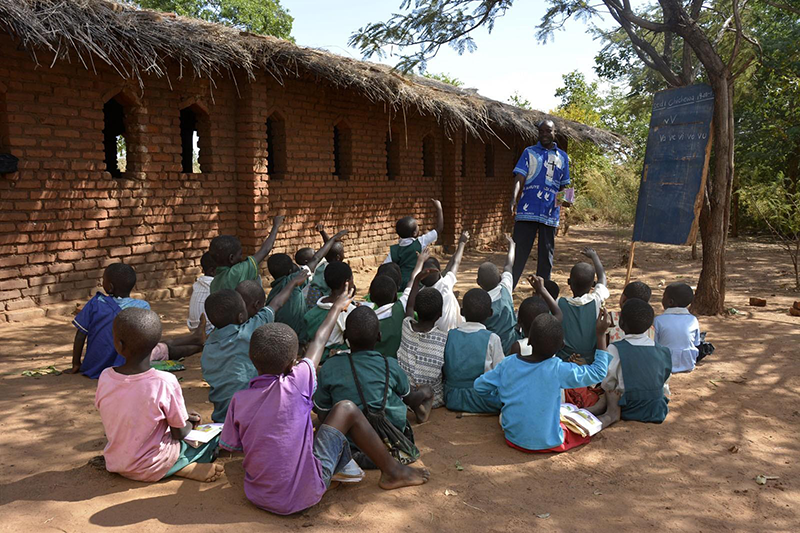
SCHOOL infrastructure destroyed by rains this season at 237 sites across the country will soon be repaired, with the Ministry of Primary and Secondary Education in the last stages of quantifying the damage.
The incessant heavy rains that pounded the country left a trail of destruction at the schools, with those severely damaged being prioritised.
The ministry has also put in place measures to ensure that learners who could not attend classes because of overflowing rivers catch-up.
Director of communications and advocacy in the ministry Mr Taungana Ndoro said teams were on the ground carrying out assessments of the damage.
Funds for the planned rehabilitation of the schools will be drawn from the ministry’s budget and this is expected to allow normal lessons to resume as soon as possible in areas where there were disruptions.
“The ministry is currently finalising the bill of quantities for the required repairs,” he said. “Given the scale, we are adopting a phased approach.
“Phase one involves emergency repairs to secure structures and prevent further deterioration. Phase two will focus on full rehabilitation and reconstruction. Our teams have been deployed nationwide to conduct comprehensive assessments. We are prioritising the categorisation of schools based on the severity of the damage to ensure that resources are directed to the most critical cases first.”
Mr Ndoro said the extent of the damage varied by region, ranging from partial damage such as blown-off roofs and flooded classrooms to damaged sanitation facilities.
“The Government has since activated the Disaster Risk Management framework and we are reprioritising the ministry’s budget to ensure that funds for these repairs are made available immediately,” he added.
Mr Ndoro said schools were not shouldering the burden alone as the parents’ assembly had also shown commitment to repairing some of the damaged infrastructure.
“We are profoundly grateful for the spirit of Ubuntu being exhibited by our communities,” he said.
“There are numerous community initiatives underway. In many districts, school development committees have mobilised parents and local businesses to contribute labour, bricks and other locally available materials to assist in the repairs.”
He added: “The ministry is supporting these initiatives by providing technical oversight to ensure that community-led constructions meet the required safety and structural standards.
“We encourage these partnerships, as they significantly accelerate the restoration process.”
Mr Ndoro said no learner should be disadvantaged due to natural disasters.
“We are working closely with the Department of Civil Protection (DCP) to ensure that schools are not only rebuilt, but are rebuilt with greater resilience to future climate-induced disasters,” he said.
“We are also conducting a psychosocial support programme for affected learners to address any trauma resulting from the loss of property or displacement.”
Furthermore, the ministry called on all stakeholders, including the private sector and development partners, to continue supporting the Government’s efforts to restore the right to education for every child.
In the interim, learners from affected schools have not been left idle.
“We have activated our catch-up strategy. Where infrastructure has been compromised, we are using existing infrastructure on a rotational basis,” said Mr Ndoro.
“We recognise the challenge faced by learners who are marooned by water bodies and are unable to physically access their school. To ensure they do not fall behind, we are deploying radio and correspondence learning modules as part of our catch-up strategy.
“The ministry has enhanced use of its e-learning platforms such as learning passport.”
Furthermore, teachers are being directed to establish catch-up schedules and weekend classes once the water levels recede to ensure these learners meet the required competency levels.
DCP chief director Mr Nathan Nkomo said continuous education on the dangers of crossing flooded rivers and streams was important.
Continuous monitoring and updating of rainfall patterns and wind direction were important, he added.
He said poor workmanship affected infrastructure in the recent flooding incident in Gwanda.
“The Civil Protection Committee responded to severe flooding along the Mtshabezi River following a breach at Insindi Dam, where an 80-metre section of the dam wall collapsed, reportedly due to poor workmanship, similar to a failure recorded in 2017,” he said.
“The 5 000-megalitre dam’s breach caused significant downstream flooding, leading to the main bridge being overwhelmed and leaving both motorists and pedestrians stranded, with no safe way to cross.
“Assessments revealed that the primary footbridge had been destroyed and a secondary footbridge at Hamden plots (prison farm) had also been swept away by unprecedented floodwaters, which reached levels not seen in the past decade and submerged nearby gardens.”
The committee found out that Gwanda’s municipal water pumping station had been completely submerged and was inaccessible due to the powerful currents.
According to the latest Situation Report, 138 people have been killed, 72 injured and 52 health institutions damaged since the onset of the rainy season. _*SundayMail*_