
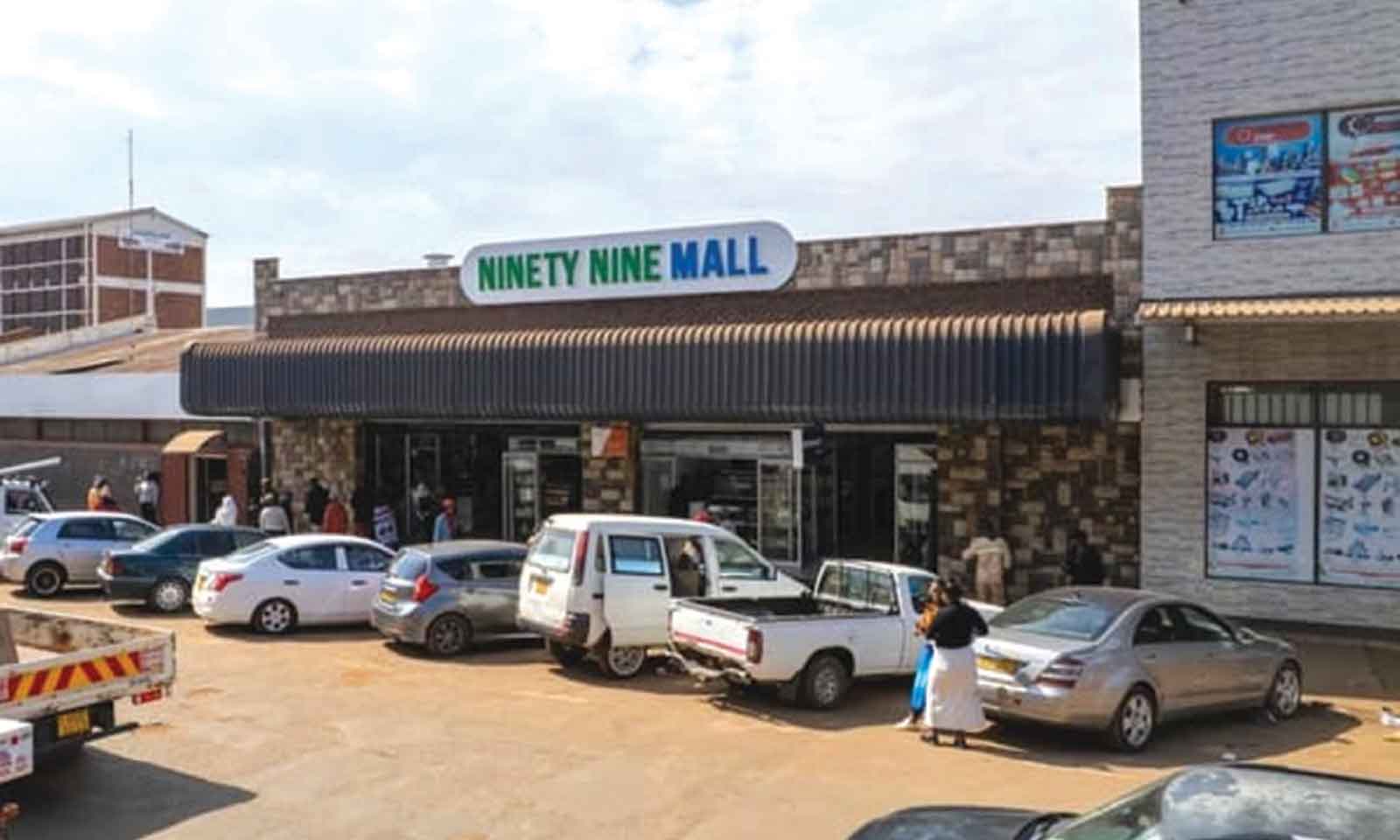
Harare CBD’s ‘pseudo malls’ spark safety fears
HARARE is experiencing a rapid and largely unregulated boom in makeshift multi-storey shopping structures — so-called “pseudo malls” — a trend city authorities and residents warn is becoming a major public-safety threat and undermining formal urban planning.
While they resemble modern commercial complexes, most lack basic infrastructure, regulatory approvals and fire-prevention systems, raising fears that the capital is sitting on a disaster.
Mayor Councillor Jacob Mafume says only a handful of buildings in Harare qualify as proper malls, including Joina City, Eastgate, Westgate and High Glen, while hundreds of other buildings have been transformed into congested “vertical markets” without planning approval.
The danger became more visible after a number of buildings went up in flames.
In January 2024, a fire destroyed goods worth thousands of dollars at an unofficial mall at Julius Nyerere and Speke Avenue.
Six months later, XGX Mall in downtown Harare was gutted by another inferno.
These incidents are part of a growing trend that has seen several of these informal complexes suffer fires in the past two years.
Just compartment shops
Clr Mafume said Harare’s retail landscape was creating a false impression of development as more landlords subdivide buildings into tiny units.
“The environment in Harare is ever-changing, but not always in ways that are safe or sustainable” he said.
“Some of these buildings have transformed without planning approvals, becoming vertical markets rather than genuine malls.”
According to Harare Mayor Councillor Jacob Mafume, malls are defined not just by the presence of multiple shops, but by an entire ecosystem of services. A building cannot call itself a mall merely because it has many shops stacked together. — File picture
He said genuine malls are engineered infrastructure with elevators, parking areas, banking halls, air-conditioning and certified safety systems.
“So basically, what we have in Harare outside the supermarkets are specialised compartment shops,” he said.
“Specialised compartment shops are buildings divided into small units where people sell different items, phones, clothes, beauty products.
“They function like markets, not like malls, because they were never designed as malls from the beginning.”
Malls, he explained, are defined not just by the presence of multiple shops, but by an entire ecosystem of services.
“A building cannot call itself a mall merely because it has many shops stacked together.”
Most of the so-called malls are renovated old office blocks lacking modern safety systems, proper ventilation and fire exits, he said.
An illusion of progress
Inside many of these buildings, corridors are blocked, wiring exposed and fire escapes obstructed.
Customers are drawn by convenience and low prices, but few realise the danger that comes with overcrowded spaces originally designed for low-traffic commercial use.
A town planning expert, Mr Tinovimba Manhanga, said the trend shows a “creeping planning crisis.”
“If a major fire occurs, evacuation would be impossible.
“We are sitting on a disaster similar to the Kampala or Nairobi fires that wiped out hundreds of vendors,” he warned.
Combined Harare Residents Association (CHRA) director, Mr Ruben Akili, said the problem stemmed from poor enforcement and weak compliance monitoring.
He cited buildings such as Zimpost Post Office, Orange Star, Kwame, Galaxy, Island and Dubai “malls” among examples of pseudo malls operating without proper certification.
“The responsibility for what is happening in the CBD rests entirely with the planning authority. Council has allowed buildings to be converted into malls without proper inspection, without safety certification, and without adherence to planning laws,” he said.
He said the association had long warned that Harare was drifting into a dangerous planning vacuum, where landlords were subdividing buildings to maximise profit, while the city turned a blind eye.
“We now have structures calling themselves malls which do not meet even the most basic standards of ventilation, fire safety, emergency exits or load capacity. This is a failure of governance, not an accident,” Mr Akili said.
He added that the city had become increasingly reluctant to enforce proper standards, especially when it came to approving mall-type developments.
“There is clear reluctance within council to insist on standards when approving these so-called malls. Some of these buildings were never meant to carry such densities of traders, yet they continue operating with no consequence,” he said.
Mr Akili said Harare City Council was now conflicted in both enforcing and implementing by-laws because it often benefited financially from the same businesses it was supposed to regulate.
He warned that such a dual role had created a dangerous loophole where compliance becomes negotiable.
“Council is conflicted because it wants revenue from businesses, but it is also supposed to ensure they follow the law. This conflict has created a space where enforcement becomes selective or delayed, and residents are the ones at risk,” he said.
He added many of the buildings now operating as “malls” were never designed to carry the volumes of people they currently host, and this has created a fresh layer of infrastructure strain in the CBD.
“When these structures were originally approved, they were office blocks or low-traffic commercial buildings equipped with ablution facilities meant for a handful of occupants. After being aggressively subdivided into dozens, in some cases hundreds, of tiny compartment shops, the pressure on sewer lines, water reticulation and toilets has increased exponentially,” he said.
“As a result, many of these buildings now suffer frequent blockages, leaking pipes, overwhelmed restrooms and persistent sanitation breakdowns, exposing both tenants and shoppers to health hazards.
“Yet, despite this drastic change in use, most of these structures have never been reassessed to determine whether the existing plumbing and ablution infrastructure can accommodate the new density.”
Last year, more than 500 buildings, including about 14 high-rise towers, in and around Harare’s Central Business District (CBD) were classified as unsafe for human occupation after city inspectors flagged the properties for regulatory infractions including poor ventilation, lack of emergency exits, and overall dilapidation.
Council then issued more than 500 abatement orders compelling landlords to repair buildings or face closure.
An abatement order is a legal document issued by a government agency or authorised body to address a building nuisance or violation.
It requires the recipient to take specific actions to stop the nuisance or violation and bring the situation into compliance with regulations.
They aim to resolve issues that pose a threat to public health, safety, or the environment.
Violations that trigger the issuing of abatement orders include, unsanitary living conditions in a property; excessive noise pollution; untreated hazardous waste; non-compliance with building codes and air or water pollution exceeding permissible limits.
The authority to issue abatement orders typically lies with local government agencies like health departments, building departments, or environmental protection agencies.
Fourteen properties including Mahachi Building, Vivandelphi Court, Steward and Lloyds, Dublin House, Msasa House, Bush House, Roslin House, Daventry House, and Robin House, were deemed unfit for use altogether.
Some of these buildings date back to the colonial era.
In terms of Section 49 of the Model Building By-Laws (1977) property owners should not allow any building on their premises to become a danger to the health of its occupants, be a source of unpleasant fumes, smoke, or odours, and an unsightly disfigurement to the neighbourhood.
Condemned
Council records show that Robin House, located along George Silundika Street, was condemned for overcrowding, poor house-keeping, lack of firefighting equipment and poor layout of machinery by occupants which was putting lives at risk.
Bush House, located on Cameroon Street, on the other hand, was flagged for overcrowding, blocking of the main exit, inadequate firefighting equipment, and the installation of illegal partitions made from plywood boards, making the building susceptible to fire.
An inspection of Roslin House, along Nelson Mandela Avenue, showed that there were blocked gangways and exit doors, naked electricity cables lying on the ground, lack of fire exit signage and goods stacked above the required height.
Daventry House, along Angwa Street, was found to be overcrowded, lacking firefighting equipment and fire exit signs.
Exit routes inside the building were also blocked.
Mahachi Building, headquarters of the Zimbabwe Electoral Commission (ZEC), was flagged for having no emergency exit doors, dysfunctional firehose reels and lack of fire extinguishers among other infractions.
Vivandelphi Court in Eastlea had no running water and electricity, while uncollected rubbish has piled up inside the building.
Steward and Lloyds building was found to be overcrowded and the exits were blocked, raising the risk of fire outbreaks.
Dublin House along Mbuya Nehanda Street was found to be congested, while there were portions of the building made from flammable materials. In addition, the building had no firefighting equipment and the exit doors were locked.
At Msasa House inspectors found the building overcrowded while partitioning was done using, chipboards and the exits were blocked.
Herald online