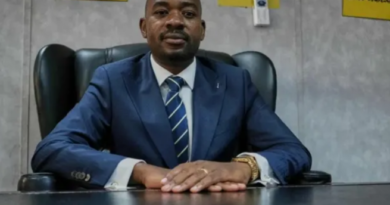
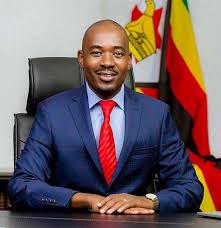
Love Him or Hate Him, Nelson Chamisa Is Your Saviour
Love him or loathe him, Nelson Chamisa has become the most compelling political voice of Zimbabwe’s moment of national exhaustion. At a time when the promise of independence has faded into economic hardship, political uncertainty and social decay, Chamisa is articulating what millions of Zimbabweans feel but have long been denied the language and space to express. His message is simple but powerful, Zimbabwe deserves better and a fresh start is not only possible but necessary.
In his Agenda 2026 – A Fresh Start, Chamisa confronts the uncomfortable truth that independence has not yet translated into accelerated transformation, shared prosperity, dignity and opportunity for all. Instead, the country remains trapped in disputed national processes, collapsing public services and a politics that rewards loyalty over citizenship. Government support, he argues, has become partisan, leaving ordinary people excluded from the very state meant to serve them.
Chamisa’s strength lies not just in diagnosing the crisis, but in framing it as a moral and governance failure rather than an inevitability. He speaks of a nation suffering from political intolerance, economic mismanagement and a breakdown of trust between leaders and citizens. Where the ruling elite normalise decline, Chamisa challenges Zimbabweans to reject hopelessness and reclaim agency over their future.
Critics are quick to dismiss him, pointing to opposition fragmentation and past setbacks. Yet even his harshest detractors cannot ignore his ability to mobilise hope in a society conditioned to expect disappointment. Chamisa represents a generational and ideological break from politics rooted in fear, violence and entitlement. He speaks the language of constitutionalism, inclusion and service, values that resonate deeply with a population weary of slogans unsupported by delivery.
Importantly, Chamisa’s call is not for blind allegiance, but for national renewal. His vision places citizens at the centre of governance, emphasising unity over division, competence over patronage and ethics over expediency. In a country where politics has too often been about survival of the powerful, he reframes it as a collective project to restore dignity and opportunity.
History shows that saviours are rarely universally loved. They are contested, resisted and doubted. Yet moments of national crisis demand figures willing to name the problem clearly and offer a credible alternative. Love him or hate him, Nelson Chamisa has positioned himself as that figure a symbol of unfinished independence and the possibility of a Zimbabwe that finally works for all its people.