
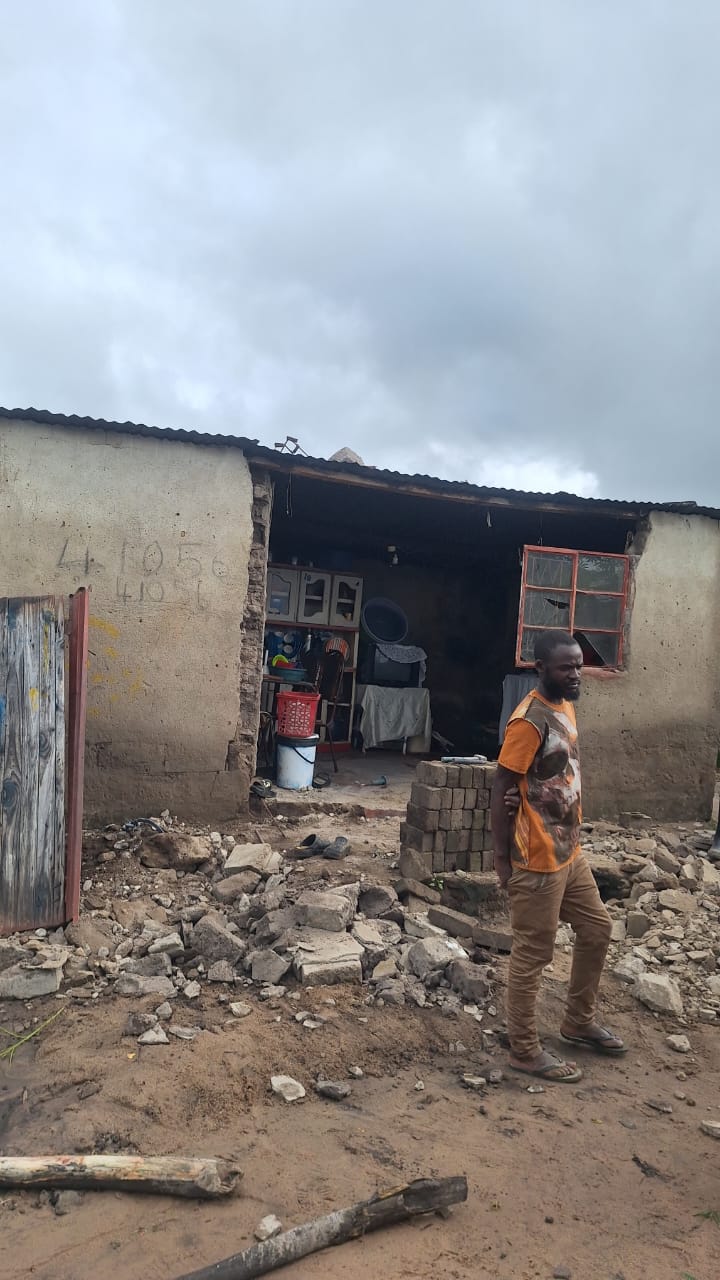
EPWORTH BURIED IN RELENTLESS FLOODS; ENTIRE HOMESTEADS ERASED
By Kudzai Jakachira
Harare-The residential fabric of Epworth has been torn apart following a catastrophic atmospheric assault that lasted from Friday through Sunday.
Torrential rains of unprecedented intensity transformed the Harare suburb into a literal disaster zone, triggering a structural collapse of the landscape and a humanitarian crisis that has left the community reeling.
What was once a collection of homes has, in many sectors, been reduced to a silt-covered graveyard of domestic dreams, marking one of the most severe flash-flood events the region has witnessed in decades.
Ward 5 bore the most violent brunt of the storm,as the weekend progressed, the heavens opened with a ferocity that local drainage systems—already strained by the topography of the area—could not begin to contain.
In Jacha and surrounding sectors, residents reported floodwaters rising to window height within minutes, turning bedrooms into riverbeds.
As floodwaters breached thresholds, the “security” of domestic life dissolved into a desperate, mud-slicked struggle for survival. The sheer volume of water rendered scores of homes structurally unsound, as foundations were literally liquified by the saturating currents.
This forced a mass exodus of families who were forced to watch, helpless, as years of hard-earned investments and personal belongings were swept away or buried under debris in mere hours.
The emergency is not just one of property; it is a profound erasure of the safe haven that these families worked a lifetime to build.
With the “security” of the home destroyed, the community has had to look toward public infrastructure for a lifeline.
Epworth High School has transitioned from an academic center to a primary humanitarian refuge.
The hallways, typically filled with the sound of learning, are now crowded with the displaced.
It is currently the only tether to stability for 36 residents from 19 families who have lost everything.
These survivors represent the human face of the tragedy—parents clutching damp blankets and children who have seen their world washed away.
The school’s transformation underscores the absolute lack of dedicated emergency shelter in the area, forcing a difficult trade-off between education and basic human survival.
While the Epworth Local Board and ward councilors have initiated emergency protocols, the scale of the destruction has far outpaced local capacity.
The deficit of basic necessities remains acute, leading to a desperate call for external support.
The following international actors have stepped in to fill the mounting gap in resources:
The International Red Cross: Currently on the ground providing life-sustaining aid. Their teams are distributing emergency tents to provide immediate shelter, as well as blankets and hygiene kits to those who escaped with only the clothes on their backs.
Médecins Sans Frontières (MSF): Focusing on the critical “second wave” of disaster—disease.
MSF is working tirelessly to prevent a secondary health crisis by refurbishing sanitation facilities and constructing new latrines at the high school to manage the sudden influx of people and prevent an outbreak of waterborne illnesses.
The deluge did more than destroy homes; it effectively severed Epworth’s circulatory system.
The heavy rains triggered a total failure of the local transport network, making rescue and relief efforts a logistical nightmare.
Chiremba Road, a vital transport artery that connects the suburb to the rest of Harare, was rendered completely impassable by deep water and debris. Even more devastatingly, the bridge connecting the Dombo shopping precinct to the “Stop Over” section was completely engulfed.
This left motorists and commuters marooned for hours, trapped by treacherous currents that threatened to sweep vehicles into the nearby ravines. The isolation of these wards has made the delivery of food and medical supplies a race against time.
The gravity of the disaster drew an emergency site inspection from the Minister of State for Provincial Affairs and Devolution, Charles Tawengwa.
During his visit, the Minister noted the recurring tragedy of riverbank settlements and urged for a stricter enforcement of by-laws, while acknowledging the immediate need for a densification and resettlement strategy.
Councillor for Ward 5, Chamunorwa Takundwa described the situation as a “somber development,” emphasizing that while long-term recovery plans are being formulated, the immediate suffering of his constituents cannot be overstated. “The people are asking for bricks and cement,” local leaders noted, “but right now, they just need a dry place to sleep.”
For the displaced, this is more than a weather event; it is a traumatic erasure of security.
The weekend has left an indelible scar on Epworth, as the uncompromising tide swept away the domestic investments of an entire population.