Chiwenga reportedly raises opposition to 2030 Bill in Cabinet
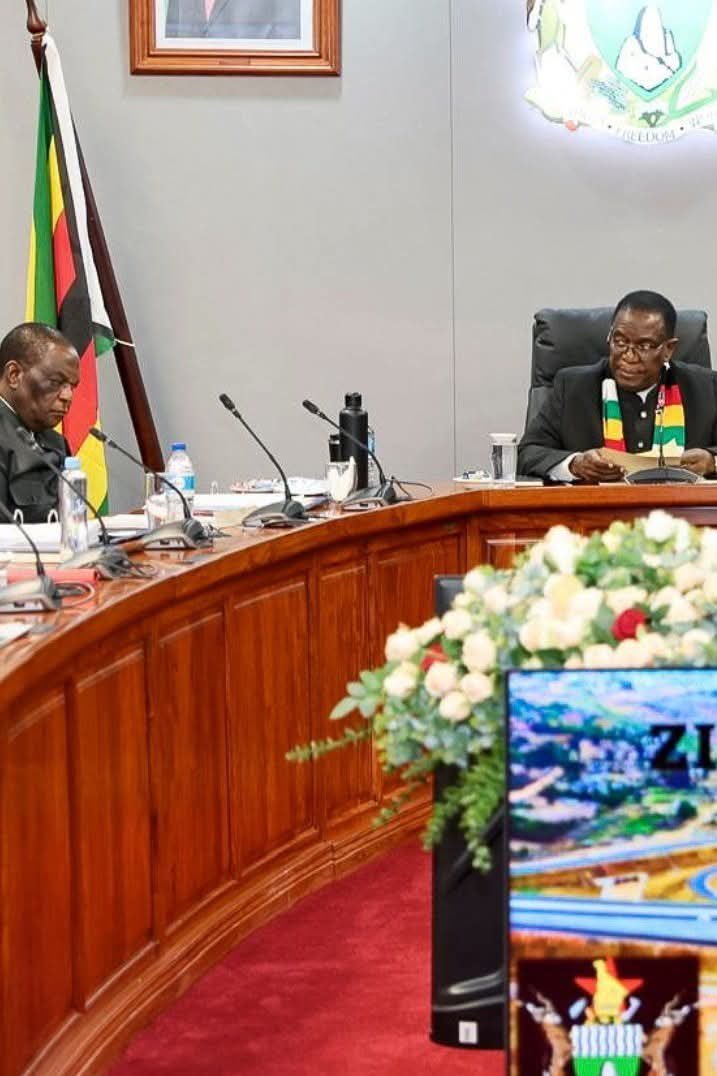
HARARE – Vice President Constantino Chiwenga angrily interjected attorney-general Virginia Mabhiza during a tense cabinet meeting last Tuesday after she cited South Africa as an example for planned constitutional changes, ZimLive can reveal.
Chiwenga, a retired army general who led the 2017 military coup that brought President Emmerson Mnangagwa to power, attended the meeting with prepared notes. Anselem Sanyatwe, the recently retired Zimbabwe National Army commander now serving as sports minister also had ready talking points.
The two men were the only cabinet members – of those that spoke – to strongly oppose key aspects of the proposed Constitution of Zimbabwe Amendment (No. 3) Bill, 2026, particularly a plan to amend section 92 by replacing direct presidential elections with a system in which MPs elect the head of state, according to sources briefed on the deliberations.
Justice minister Ziyambi Ziyambi presented the proposed amendments before Mnangagwa invited contributions from ministers.
Local government minister Daniel Garwe reportedly spoke first, backing the reforms. Other ministers who supported the proposals included energy minister July Moyo, primary and secondary education minister Torerayi Moyo, home affairs minister Kazembe Kazembe and ICT minister Tatenda Matevera, although the latter voiced objections to plans to abolish the Gender Commission.
Not all ministers who indicated they wanted to speak were given the floor, including finance minister Mthuli Ncube who had his hand up several times.
Sources said tensions escalated when Mabhiza began outlining the legal framework of the amendments, which would also see Mnangagwa’s second and final term due to expire in 2028 extended to 2030.
“Cabinet etiquette is generally that when a minister is speaking you don’t interject. So it came as a surprise when Chiwenga interrupted Mabhiza, angrily so, after she said the amendments were modelled on the South African and Botswana example,” one source said.
“He cut in and told her not to mention South Africa, saying it was not independent and should not be mentioned in the same breath as liberation movements that fought to liberate their countries. The mood changed immediately.”
Mnangagwa reportedly intervened, admonishing Chiwenga both for the interruption and for his remarks.
“Mnangagwa told Chiwenga to calm down, saying ‘we all must be honest about the ethos of the liberation struggle,’” the source said.
Chiwenga insisted on finishing his prepared remarks, prompting a sharp response from Mnangagwa, who at one point barked: “I’m the president!”
Sources say Chiwenga’s anger was driven largely by concerns over the proposed removal of direct presidential elections, which he fears could weaken the authority of the party leader and make leadership outcomes vulnerable to manipulation by well-heeled members of the party.
A minister aligned with Mnangagwa said Chiwenga’s intervention stunned colleagues.
“He has a very strong view of liberation politics which influences how he sees regional comparisons. But the bigger issue is clearly succession politics and how leadership will be determined going forward,” the minister said.
What struck most is the disdain with which Chiwenga views South Africa, which he insisted was “not independent, has no independence day” and therefore could not be cited as an example at all, one source said.
“He has a view of the liberation struggle which is a bit strange. If you become president how are you going to deal with the South Africans? There is a real possibility he could be the next president, but his hatred of the ANC and Umkhonto Wesizwe in particular, which is very common among war veterans who fought on the side of Zanla, would take some working on,” the individual said, asking not to be named due to the secrecy of cabinet meetings.
Defence minister Oppah Muchinguri-Kashiri reportedly pushed back against both Chiwenga and Sanyatwe, arguing that their later entry into the military did not confer superior liberation credentials.
“She challenged their attempt to claim the liberation struggle narrative,” the source said.
Beyond the dispute over presidential elections, the amendment bill proposes a raft of significant constitutional changes.
These include extending presidential terms from five to seven years, restructuring the electoral calendar to align with the longer tenure, and abolishing the the Gender Commission and the Peace and Reconciliation Commission.
The bill also introduces changes to succession mechanisms and governance structures that critics say could fundamentally alter the balance between voters, parliament and the executive.
Speaker of parliament Jacob Mudenda is expected to table the bill as early as Monday, triggering a constitutionally required public consultation period of at least 90 days before lawmakers vote.
With Zanu PF holding a two-thirds parliamentary majority, passage of the bill is widely expected if party discipline holds. Opposition CCC MPs are also expected to back the amendments for personal benefit as that would also extend their term by a further two years.
Prominent constitutional lawyers say the scale of the proposed changes could necessitate a referendum even if parliament approves them.
Constitutional law expert Professor Lovemore Madhuku has argued that amendments which fundamentally alter the method of electing a president go beyond ordinary constitutional revisions and strike at the core democratic framework established by the 2013 constitution.
Legal scholar and advocate Thabani Mpofu has similarly maintained that while parliament has wide powers to amend the constitution, changes that redefine the source of executive authority, particularly removing direct presidential elections, raise questions about constitutional legitimacy and may require direct endorsement by citizens through a national referendum.
Argued Mpofu: “It is fraudulent for Zanu PF to convert a five‑year mandate into seven years.
“The power to amend the constitution cannot reasonably be read to authorise such a subversion. The real issue is the scope of parliament’s amendment powers: they do not extend to undermining the text and spirit of the constitution. Parliament is not parliament Almighty!”
The cabinet clashes reveal underlying tensions within the ruling party, suggesting that despite Zanu PF’s numerical dominance in parliament, consensus on the future constitutional order remains unsettled.
ZimLive