
Prophet VS State: The REAL REASON Walter Magaya is being pushed to the Constitutional Court… and how Prophet Makandiwa won
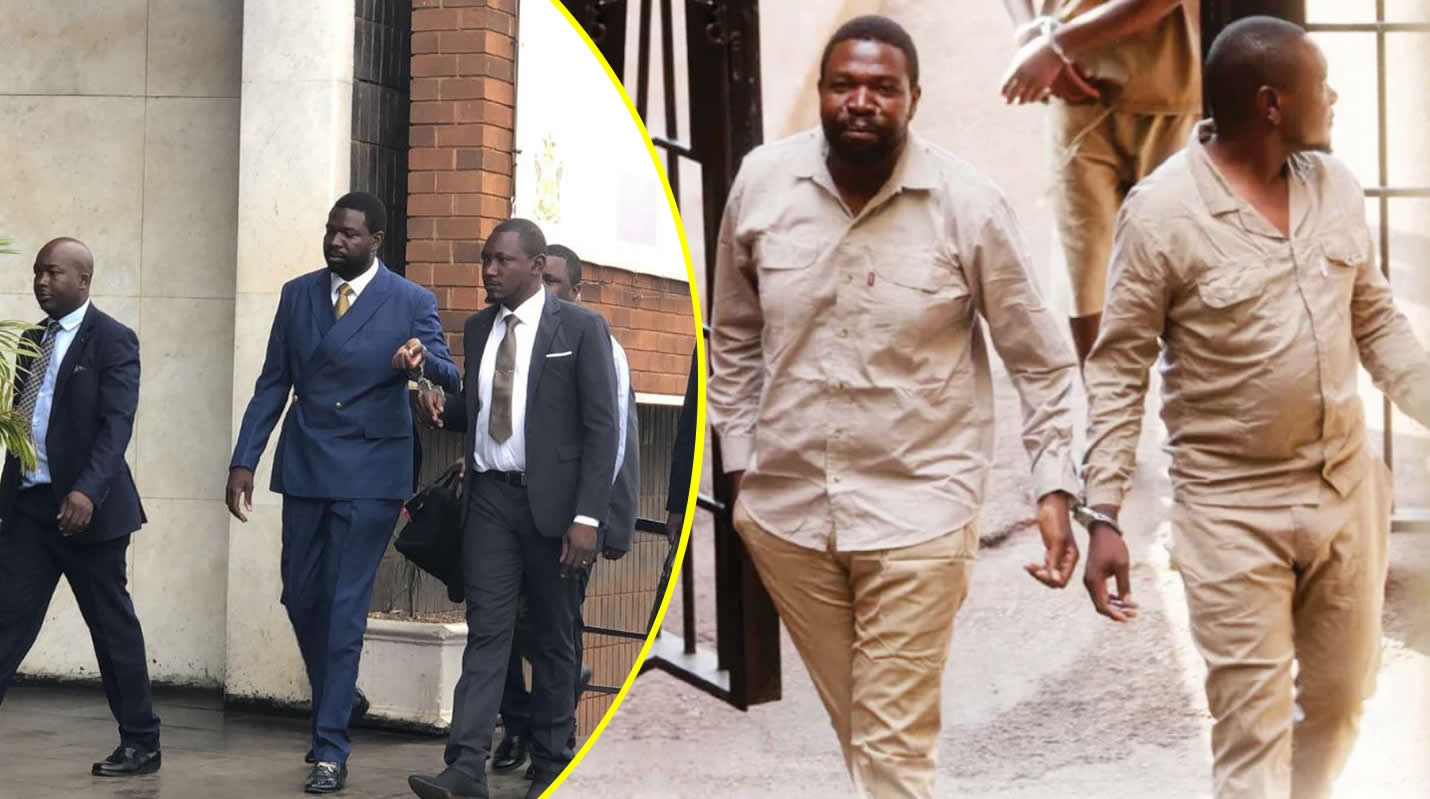
HARARE — The heavy iron gates of the Harare Magistrates Court have become a familiar backdrop for Prophet Walter Magaya. On a humid Friday morning in mid-February 2026, the leader of the Prophetic Healing and Deliverance (PHD) Ministries stood once again at the centre of a legal storm that has come to define the complex intersection of faith and power in Zimbabwe. While the formal charges involve multiple counts of rape and fraud, the true drama is unfolding in the subtle legal manoeuvres that are now pushing this case toward the highest court in the land.
The latest flashpoint in this legal marathon ignited when the State applied to move the proceedings to the Victim Friendly Unit (VFU), effectively shielding the trial from the public eye. Prosecutor Clemence Chimbari argued that the complainant and some of the six State witnesses were “vulnerable” and should not be forced to testify in open court. “They have gone through a lot mentally and emotionally. It will not be in the interests of justice for them to testify in open court,” Chimbari told the court.
However, for Magaya’s defence team, led by the sharp-tongued Admire Rubaya, this move was less about witness protection and more about a strategic attempt to handle a high-profile figure in the shadows. Rubaya’s opposition was immediate and fierce. He argued that the State had offered no medical or factual basis for the claims of trauma, pointing out that all the complainants are adults. “A fair trial starts now. This matter cannot be dealt with in secrecy,” Rubaya declared, his voice echoing through the courtroom. He stressed that the court should privately assess the witnesses before restricting open proceedings, rather than relying on the State’s blanket assertions.
When Magistrate Esthery Chivasa granted the State’s application, ruling that “vulnerability is not age-dependent and does not require medical proof,” the path to the Constitutional Court was cleared. “It can be traumatic to face an accused person. There is need to protect such a witness,” Chivasa stated. Rubaya immediately signalled his intention to seek a referral, arguing that Magaya’s fundamental rights to a public and fair trial were being infringed. This move transforms a criminal trial into a landmark constitutional battle over the separation of church and state, and more importantly, the limits of judicial power when applied to religious icons.
To understand why the State is so determined to manage this case with such precision, one must look beyond the courtroom dockets and into the “unseen forces” of Zimbabwean politics. Walter Magaya is not merely a cleric; he is a man who commands a massive, influential following that rivals the mobilising power of political parties. In a country where the pulpit is often as powerful as the podium, a “mega-church” leader represents both a valuable ally and a dangerous rival. The Prophetic Healing and Deliverance Ministries, founded in 2012, has grown into a spiritual and economic behemoth, with its flagship “Yadah” brand extending into hospitality, sports, and real estate.
Our investigation into the history of “State vs. Prophet” cases in Zimbabwe reveals a recurring pattern. From the legal troubles of Emmanuel Makandiwa to the diplomatic scandals surrounding Uebert Angel and the controversial antics of Passion Java, the relationship between the State and the “Men of God” is a delicate dance of quid pro quo. These religious leaders provide a “hunting ground” for votes, often appearing at State functions or endorsing political figures in exchange for a degree of legal immunity or favourable business conditions.
Take the case of Prophet Emmanuel Makandiwa of the United Family International Church (UFIC). For years, Makandiwa has navigated the treacherous waters of Zimbabwean politics with remarkable skill. When he was hit with a $6.5 million lawsuit by a Harare couple over “fake prophecies” in 2018, the case was closely watched as a potential turning point. However, the High Court eventually dismissed the claim, a move that some analysts saw as the State protecting an influential ally whose following is too large to antagonise.
Conversely, the rise of “Prophet” Passion Java, a self-styled socialite and close ally of President Emmerson Mnangagwa, shows the other side of the coin. Java has been instrumental in the ZANU-PF’s outreach to the youth, using his flamboyant lifestyle and social media presence to “cool” the political temperature. Yet, even he is not immune to the shifting winds of power. When his name was mentioned in connection with the “Gold Mafia” documentary, the State’s reaction was a study in ambiguity—neither fully defending nor fully abandoning him, keeping him in a state of perpetual dependence.
When a prophet’s influence grows too large, or when their loyalty is questioned, the judiciary often becomes a tool for “influence management.” As one church insider, speaking on condition of anonymity, explained: “The State doesn’t necessarily want to jail these men; they want to bring them to heel. A trial is a reminder of who holds the ultimate power. It’s about clipping the wings of anyone who might think they are more popular than the leadership.”
The legal arguments regarding “magistrate jurisdiction” in the Magaya case are particularly telling. While regional magistrates typically handle rape cases, the decision to push for a Constitutional Court referral shifts the narrative. It moves the conversation from the specifics of the alleged crimes to the broader principles of constitutional rights. For the State, keeping the trial in-camera limits the “spectacle” that Magaya’s followers often create, preventing the courtroom from becoming a site of religious pilgrimage or protest. It is a tactical move designed to de-escalate the emotional energy that surrounds the Prophet.
Legal experts suggest that this case is a litmus test for the independence of the Zimbabwean judiciary. “We are seeing a trend where the law is used to manage social and political influence,” says a Harare-based legal analyst. “By using the Victim Friendly Unit for adult witnesses without medical evidence, the court is setting a precedent that can be used to control any high-profile trial. It’s a way to sanitise the proceedings and manage the public narrative.”
The political anxieties are palpable. With the opposition also frequently invoking religious rhetoric—most notably Nelson Chamisa’s “#Godisinit” campaign—the ruling ZANU-PF government is acutely aware of the need to maintain its grip on the religious sector. Chamisa, a trained pastor himself, has often used the language of the spirit to challenge the material power of the State. This has forced the government to double down on its relationships with “loyal” prophets while aggressively managing those who appear too independent.
Magaya’s recent history is a testament to this ongoing struggle. Arrested in November 2025 by a Zimbabwe Republic Police crack team and again in January 2026 as he was leaving court, his legal battles have been a series of dramatic arrests and bail applications. Each time he walks out of court, his followers see it as a spiritual victory, while the State sees it as a need for more stringent control. The current push for the Constitutional Court is the culmination of years of tension, a “landmark for the separation of church and state” that will define the boundaries of religious influence for a generation.
The separation of church and state in Zimbabwe is, at best, a convenient fiction. Section 60 of the Constitution may guarantee freedom of conscience, but the reality is a deeply intertwined system where religious leaders are often de facto political actors. The “State vs. Prophet” cases are not just about criminal justice; they are about the management of the nation’s spiritual capital. When a prophet like Magaya is brought before the courts, it is a message to the entire religious community: your influence is permitted only as long as it does not threaten the hegemony of the State.
As the story of “Prophet vs. State” continues to unfold, it provides a documentary-like look at the intersection of faith, power, and the law. It is a story of a man who built an empire on miracles and deliverance, only to find himself entangled in a legal system that is equally interested in the “miracle” of political survival. Whether the Constitutional Court will uphold his right to a public trial or support the State’s move for secrecy remains to be seen. What is clear, however, is that this is no simple case of the law taking its course. It is a calculated move in a much larger game of influence, where the soul of the nation and the power of the State are both at stake.
The court has allowed the defence to file its written application for referral, and the nation waits. For the thousands of PHD Ministries faithful, Magaya remains a victim of persecution. For his critics, he is a man finally facing justice for serious allegations that have trailed him for a decade. But for the investigative eye, he is a pawn in a sophisticated strategy of “influence management,” a reminder that in Zimbabwe, even the most powerful prophets must eventually answer to the State. The resolution of this case will not just decide the fate of one man; it will signal whether the Zimbabwean judiciary can truly separate itself from the political anxieties of the ruling elite.