
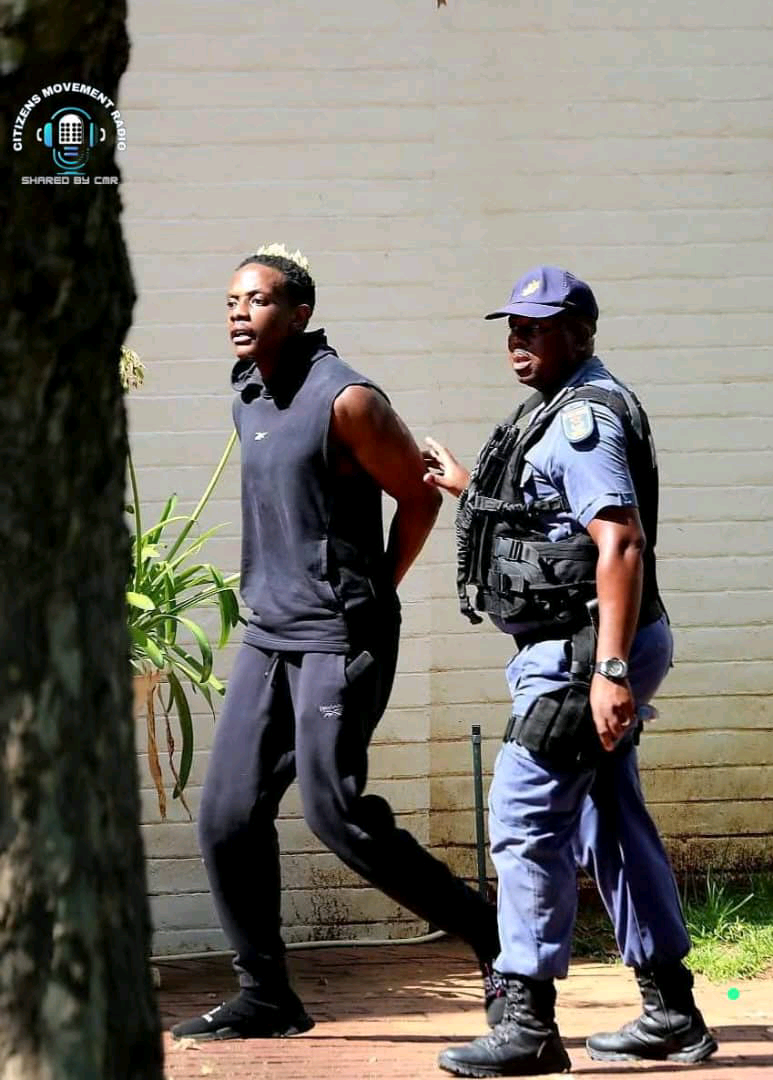
The Shadow of a Dynasty: The Profound Ignominy of the Bellarmine Chatunga Mugabe Arrest
The arrest of Bellarmine Chatunga Mugabe, the youngest son of the late Zimbabwean strongman Robert Mugabe, following a violent altercation at his Johannesburg residence, represents more than a singular criminal act.
It is a moment of profound national embarrassment and a jarring reminder of the perceived untouchability often associated with the progeny of political dynasties.
When the son of a former Head of State is paraded in handcuffs after allegedly shooting an employee, the optics transcend personal failure and bleed into the realm of national prestige and diplomatic disgrace.
The incident at the Hyde Park property—an enclave of extreme wealth—paints a devastating picture of inherited privilege gone curdled.
For a high-profile figure to allegedly resolve a domestic dispute with a firearm, and subsequently engage in a tense standoff with the South African Police Service (SAPS), signals a catastrophic lack of impulse control and a fundamental disdain for the rule of law.
This behavior is particularly humiliating for Zimbabweans, many of whom have spent decades attempting to shed the “pariah state” label associated with the later years of the Mugabe era.
When the heirs of that era are seen behaving as though they are above the statutes of their host nation, it reinforces the most damaging stereotypes of “Bigman-ism”—the belief that political lineage grants a license for violence and impunity.
From a national perspective, this scandal is a public relations nightmare.
Zimbabwe is currently in a delicate phase of re-engagement with the international community.
The image of a Mugabe son in a standoff with specialist hostage negotiators provides ammunition to critics who argue that the culture of the previous regime—characterized by authoritarianism and a disregard for human rights—persists within its inner circles.
Furthermore, the involvement of former First Lady Grace Mugabe, who remains hamstrung by her own 2017 arrest warrant in South Africa, adds a layer of farcical tragedy to the event.
It portrays the former First Family not as a dignified remnant of a liberation struggle, but as a fractured unit perpetually at odds with modern legal frameworks across the Limpopo.
According to South African law, the allegations against Chatunga Mugabe represent a severe level of criminality.
Under the Criminal Law Amendment Act, the act of shooting a person multiple times falls under Attempted Murder, a Schedule 5 or 6 offense depending on the degree of premeditation.
Attempted MurderIntentional use of a lethal weapon to cause life-threatening harm.
High probability of a significant custodial sentence.
Firearms Control ActPotential violations regarding the discharge of a firearm in a residential area.
Mandatory licensing reviews and possible forfeiture.
Obstruction of JusticeThe reported refusal to surrender to SAPS, necessitating hostage negotiators.Additional charges and complications for bail applications.
The transition from “diplomatic royalty” to a criminal defendant in a foreign cell is a steep fall from grace
. For Zimbabwe, the embarrassment lies in the realization that while the country attempts to move forward, the ghosts of its past continue to manifest in the reckless actions of those who once stood at its pinnacle.