
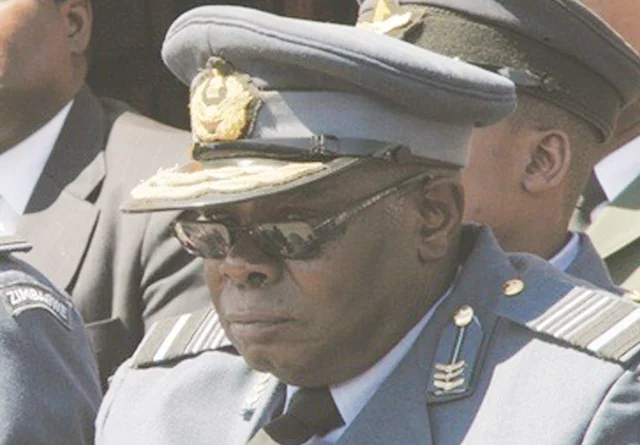
Moyo Tears Apart Muchena in Debate
Jonathan Moyo, a prominent local professor of politics and former cabinet minister, has viciously criticised retired Air Vice-Marshal Henry Muchena, whose real name is Jabulani Mahlangu, saying he is misleading the people about what universal adult suffrage means and the right of people to vote, the imperial executive presidency, and referendum over proposed constitutional amendments.
This is part of a growing stormy debate over a raft of contentious constitutional amendments to extend President Emmerson Mnangagwa’s rule to 2030 and overhaul the political system.
The proposed Constitution (Amendment No. 3) Bill, 2026, shifts the presidential election to parliament, changes presidential term lengths from five to seven years, and proposes electoral changes.
Government says this bill is a positive step towards stability, continuity, curing electoral toxicity, and socioeconomic advancement, and does not require a referendum as it does not amend Chapters 4, 16, or Section 328 of the constitution.
Analysts say the changes are unlawful or amount to a constitutional coup, and an authoritarian backslide.
Moyo says Muchena’s claims about the role of universal adult suffrage in Zimbabwe’s liberation struggle and the direct election of the president are “misleading, false, uninformed, ignorant and illiterate.”
He says universal adult suffrage means the right to vote without discrimination on grounds of race, class, gender, or property, among other qualifications—not the type of electoral system or mechanism of electing the executive president.
Moyo notes the liberation struggle was fought over land ownership and to ensure universal adult suffrage—meaning the right to vote without discrimination—not the electoral system like direct or indirect election of the President.
This follows Muchena’s strong and emotional letter to parliament, saying he was speaking on behalf of unnamed retired generals and former senior civil servants, rejecting the constitutional changes which extend President Emmerson Mnangagwa’s rule by two years, dismantle the imperial executive presidency, and make changes to the country’s political, electoral, and governance systems.
Moyo says Muchena does not understand what universal adult suffrage really means, nor the origins, electoral dynamics, and role of the executive imperial presidency in Zimbabwe.
The constitutional amendments, he says, do not disenfranchise or take away the people’s right to vote; they actually expand universal adult suffrage to millions in the Diaspora.
Moyo argues that those defending the current untenable imperial presidency, introduced in 1987, either do not understand its origins, are uninformed, or are simply defending a relic of the late former president Robert Mugabe’s failed one-party state, one-man authoritarian rule for whatever reason.
It is incomprehensible, he says, how pro-democracy activists and others who want reform would reject an overhaul of a vestige of an autocratic president’s system and defend what they have been fighting against for years.
The imperial executive presidency in Zimbabwe, characterised by heavily centralised power under Mugabe and continued, caused massive political, economic, and social dysfunction.
It enabled authoritarian rule, brutal repression of dissent, systemic corruption, and catastrophic economic problems, while weakening parliament and judiciary oversight.
Moyo says it is false that bringing back indirect election of the president is tantamount to disenfranchisement of the people.
He adds that the world’s leading democracies—for instance, Britain, United States, and India—elect their top leaders through indirect elections, and they are models in many respects.
Moyo says the strong executive presidency was introduced as part of Mugabe’s one-party state agenda and led to authoritarian consolidation and brutal excesses of one-man rule, including toxic and violent elections. NewsHawks