The 3 finger code — How Zanu PF orchestrated the hijacking of Zimbabwe’s constitutional future
Across the dusty townships and crowded community halls of Zimbabwe’s towns and cities, a high-stakes drama unfolding that may well decide the democratic character of the nation for a generation.
The public consultations on Constitutional Amendment Bill No. 3 were intended to be a hallmark of participatory democracy, yet reports from the ground suggest a process meticulously engineered to stifle dissent and manufacture consent.
From the eastern highlands of Manicaland to the mining towns of Mashonaland West, the hearings were characterised by an atmosphere of intimidation, where ordinary citizens and even decorated war veterans had to brave threats to voice their opposition to the proposed changes.
The scenes captured by observers painted a picture of a ruling party, Zanu PF, leveraging every tool of state and party machinery to dominate the narrative.
The hearings were marred by selective bias, the systematic exclusion of opponents, and the bussing in of ruling party members to pack venues to capacity before the doors even officially opened.
In many instances, the process felt less like a consultation and more like a coordinated military operation, designed to shut out any voice that dared to question the wisdom of the proposed constitutional amendments.
The strategy for dominance began with the selection of venues. In Manicaland, the parliamentary committee, chaired by Zanu PF Nyanga South MP and politburo member Supa Mandiwanzira, faced accusations of deliberate logistical sabotage.
Opposition figures pointed out that Mandiwanzira’s leadership gave an inherent advantage to the ruling party, as he was familiar with many of the local operatives involved in the mobilisation.
In districts like Buhera and Makoni, Mandiwanzira reportedly initiated proceedings by giving the floor to Zanu PF district coordination committee (DCC) chairpersons first.
This “party-first” approach set a chilling tone for the rest of the day.
The logistics of this dominance were reportedly handled by Zanu PF Manicaland chairperson Tawanda Mukodza, who was observed at nearly every venue, canvassing for support and overseeing the arrival of hired buses.
Interestingly, Mukodza allegedly gave strict instructions for supporters not to wear party regalia, an apparent attempt to present a facade of “ordinary citizen” participation.
The choice of venues — ranging from the Sakubva Beit Hall in Mutare to the Nyamhuka Hall in Nyanga — was criticised as being “deliberately” small.
“It was deliberate, choosing small venues,” a source said, explaining that Zanu PF members would secure these halls the night before or very early in the morning.
By the time the general public arrived, the halls were “packed to the brim,” leaving opposition members and concerned residents milling around outside, unable to gain entry or participate in the democratic process.
One insider was candid about the objective: “It was just a way of making sure we shut out opposers of the bill”.
Even when former MDC-Alliance MP Trevor Saruwaka attempted to convince Mandiwanzira to move the hearing outside the Manica Bridge Hall to accommodate the hundreds locked out, his plea was met with boos and jeers from the partisan crowd inside.
Saruwaka’s challenge went to the heart of the matter:
He asked: “As you can see many people are outside, why should we try to move the hearings outside the hall so that everyone has a right to speak?”
The meeting, however, proceeded in the cramped, controlled environment of the hall.
Perhaps the most disturbing revelation from the outreach program was the alleged use of clandestine “codes” to ensure only the “correct” voices were heard.
According to investigations, Zanu PF leadership in various districts coached members on specific hand signals to use when requesting the floor.
In Makoni District, supporters were reportedly told to raise three fingers, a signal that Mandiwanzira would then use to identify and select speakers8.
The frustration of the excluded was palpable. One individual in Makoni, who was denied the chance to contribute, asked pointedly: “Why are those raising three fingers the only ones being given a chance to speak?”
In other districts, the codes varied; in Chipinge, for example, the signal was four fingers.
This system effectively turned a public forum into a scripted performance, where the “public” was merely a collection of party loyalists vetted by local DCC chairs like Themba Munaiwa, who was seen actively influencing the choice of speakers in Chipinge.
When confronted with these allegations, Mukodza remained defiant.
“It is not a crime to come to venues early. Is it a crime to come to a venue early? Is it a crime to come to a football match early?” he asked, dismissing the notion of foul play.
He claimed that the venues were chosen by Parliament, not the party, and that they were situated in opposition wards.
Regarding the codes, he was dismissive: “There were no codes used. The opposition was clearly outclassed — all systems out.”.
Despite the heavy-handed tactics, a surprising and powerful source of dissent emerged: the war veterans.
These former liberation fighters, traditionally the bedrock of Zanu PF’s support, spoke out against the proposed amendments, arguing that they betrayed the very principles they fought for.
In Chegutu, war veteran and Zanu PF DCC member Michael Chingwedu openly opposed the bill, insisting that a constitutional change of this magnitude must be put to a national referendum.
Chingwedu warned against a return to the authoritarian structures of the past.
“If you want us to go back to (the Ian) Smith’s era, where a select elite chose leaders on behalf of the majority, then there would be a need for a referendum,” he said.
Another veteran, Elijah Jabangwe, echoed these sentiments, framing the bill as an assault on the principle of “one man, one vote.”
“The bill is taking us back to the colonial era, where a few people were allowed to choose leaders on behalf of the majority, and that is what forced us to go to war,” Jabangwe said.
Even when booed by his own party colleagues, Jabangwe refused to be silenced, reminding the crowd of his sacrifices.
“I fought for this country while you were enjoying the comforts of your homes, so you cannot tell me to keep quiet… I went to fight the same system that you are now trying to impose,” he charged.
Opposition leader Wurayayi Zembe said the resistance by war veterans reflected a “deeper understanding of the values that drove the liberation struggle.
“True war veterans oppose the bill because they understand why they went to war, and they can see that this legislation undermines those ideals,” Zembe said.
Political analyst Farai Maguwu added that “genuine war veterans are politically conscious” and are guided by principles that transcend partisan interests.
The physical security of participants was also called into question.
At Patchway, a man was allegedly assaulted and forcibly removed from a consultation meeting while police officers stood by and watched.
Despite his pleas for help, neither the law enforcement officers nor the parliamentary committee members intervened.
Maguwu accused the police of failing their constitutional mandate.
“The police are part of the problem… They appear compromised and willing to be used by those in power,” he said.
“There is need for a complete overhaul.”
Zembe questioned why Parliament was not “firmly in charge” of the proceedings, suggesting that the violence appeared “coordinated.”
When asked about the reports of violence and arrests, Mashonaland West police spokesperson Inspector Ian Kohwera claimed to be unaware of such cases, though he promised to check.
Efforts to reach the national police spokesperson, Paul Nyathi, were unsuccessful.
Pro-government activists, such as Rutendo Manyarire, have surprisingly joined the chorus of those calling the process “illegitimate,” citing a blatant conflict of interest among the parliamentarians leading the hearings.
“The problem is as parliamentarians you have a conflict of interest because you stand to benefit from this process,” Manyarire posted on .
He argued that the outreach should have been conducted by an “independent body” or “independent auditors” to ensure any degree of credibility.
Since the adoption of the 2013 constitution — which was itself the product of years of inter-party negotiation and a national referendum — the government has moved aggressively to consolidate executive power.
Amendment No. 1 and No. 2, passed in recent years, were seen by legal experts as significant setbacks for judicial independence and executive accountability.
They granted the president the power to appoint senior judges without public interviews and scrapped the “running mate” clause, which would have ensured a democratic succession plan.
The Constitutional Amendment No.3 Bill is viewed by many as the final brick in this wall of consolidation, potentially allowing for the extension of presidential term limits or further centralizing authority in the hands of the presidency.
Critics argue that the government is effectively rewriting the social contract by stealth, bypassing the referendum process that the 2013 constitution ostensibly required for such fundamental changes.
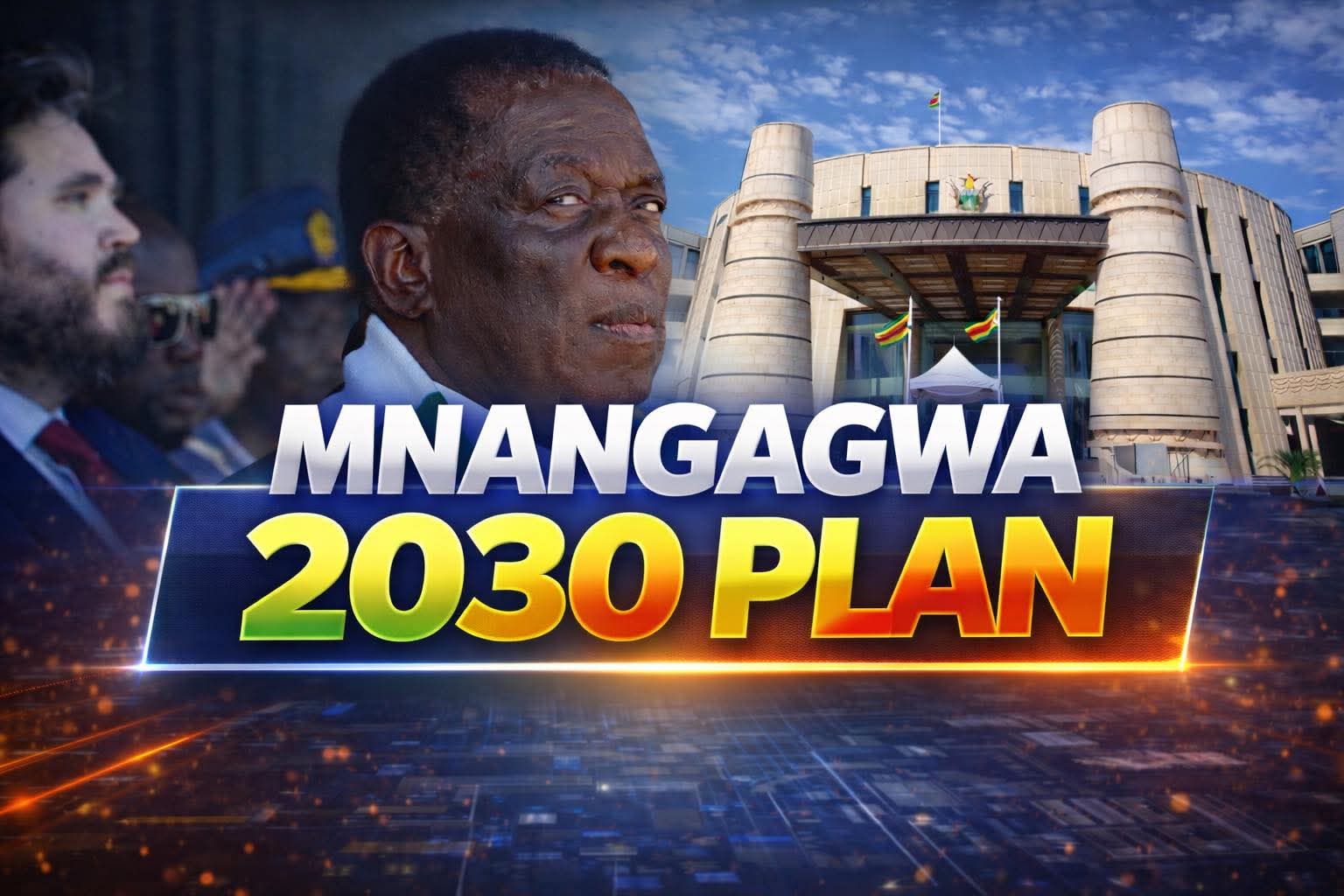
As the parliamentary committee forges ahead with the process to ensure Mnangagwa’s continued rule, the shadow of the “three-finger code” looms large.
For many Zimbabweans, the consultations have become a microcosm of the national struggle: a battle between those seeking to uphold the hard-won democratic ideals of the liberation war and a political machinery intent on securing power at any cost.
Without a radical shift toward transparency and a genuine commitment to hearing the voices of all citizens — not just those with the right hand signals — the legitimacy of Zimbabwe’s constitutional future remains in grave doubt. *_-The Standard_*