
𝗗𝗡𝗔 𝗧𝗲𝘀𝘁 𝗢𝗿𝗱𝗲𝗿𝗲𝗱 𝗮𝘀 𝗧𝘄𝗼 𝗠𝗲𝗻 𝗖𝗹𝗮𝗶𝗺 𝗠𝗮𝗿𝗿𝗶𝗮𝗴𝗲 𝘁𝗼 𝗠𝘂𝘁𝗮𝗿𝗲 𝗪𝗼𝗺𝗮𝗻_
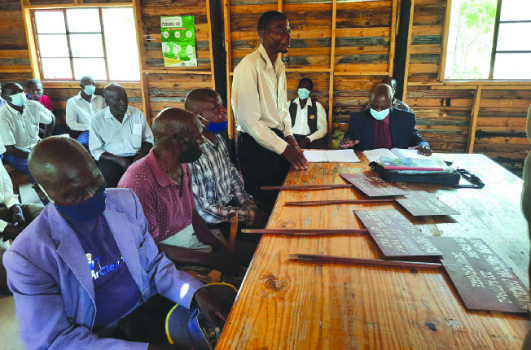
A traditional court has ordered a DNA test to establish the paternity of a child after two men appeared before Chief Zimunya claiming marital relationships with the same 18-year-old woman.
Tanatswa Muhomba is at the centre of a dispute involving Godfrey Mutsago, a 35-year-old gold miner who paid lobola for her, and Takudzwa Mahlunge, a 22-year-old transport tout with whom she later began living.
The case has raised questions about the validity of the competing unions, the repayment of lobola and the legal responsibilities of the child’s biological father.
No criminal charges have been reported, and the traditional court has not yet delivered its final ruling.
Mutsago told the court that he began a relationship with Muhomba in 2024 and later paid US$1 100 in lobola to members of her family in Shamva.
He said he did not immediately take her to his home because he intended to organise a formal wedding.
Mutsago claimed that Muhomba left her grandmother’s home while he was preparing for the ceremony and later entered a relationship with Mahlunge.
Muhomba acknowledged that lobola had been paid but told the court that she did not love Mutsago.
She said he left after completing the payment and did not return, leading her to begin a relationship with Mahlunge.
“Yes, Mutsago came and paid lobola, but I did not love him,” she told the court.
Muhomba said she subsequently eloped with Mahlunge, whom she regarded as her preferred partner.
Mahlunge told the court that he did not know Muhomba had an existing customary relationship when they met.
He said he entered the relationship with the knowledge of her grandmother and only discovered the earlier lobola arrangement after being summoned to Chief Zimunya’s court.
The paternity dispute emerged after the court heard that Muhomba had a child and that the timing of her relationships made it unclear which man was the biological father.
Mahlunge said he could no longer be certain that the child was his.
Chief Zimunya ordered DNA testing before making decisions affecting paternity and parental responsibility.
The scientific test is expected to determine which of the two men is the child’s biological father, but it will not by itself resolve the dispute over lobola or the status of the relationships.
Muhomba’s grandmother, Ketty Musikavanhu, told the court that she was present when Mutsago paid lobola.
She said the family traditionally recognised Mutsago because he had fulfilled the customary payment, while Mahlunge had not paid lobola.
However, she also acknowledged that Muhomba later left home and began living with Mahlunge.
Mutsago demanded the return of the US$1 100 paid to Muhomba’s family.
He also reportedly asked for the amount to be tripled as compensation, although the court has not ruled on whether that demand is valid or enforceable.
Chief Zimunya ordered relatives connected to the parties to attend the next hearing so that the lobola dispute and the recognition of the two men could be addressed.
The dispute illustrates the difference between a relationship described socially as a marriage and one whose legal status has been formally established.
Zimbabwe’s Marriages Act recognises civil marriages and customary law marriages. Civil marriages are monogamous, while customary marriages may be polygamous or potentially polygamous, depending on the customary law governing the parties.
The legislation does not create a corresponding system under which a woman may simultaneously have several legally recognised husbands.
However, the available account does not establish whether Muhomba and Mutsago registered a customary marriage or whether their arrangement remained an unregistered customary union based primarily on the payment of lobola.
That distinction could affect how the parties’ rights and obligations are considered outside the traditional court.
The payment of lobola alone does not settle every legal question arising from a relationship, particularly where consent, cohabitation and registration are disputed.
Muhomba’s statement that she did not love Mutsago also raises the question of whether she freely consented to the union.
Zimbabwean marriage law requires parties entering a marriage to be at least 18 and to provide genuine consent.
She is now 18, but the account does not provide her exact age when the relationship began or when the lobola was paid in 2024.
That information could be significant because Zimbabwe prohibits marriages involving people younger than 18.
The court will also need to separate the marital disagreement from the rights of the child.
Regardless of which relationship is recognised, the child is entitled to support and care from the biological parents.
A DNA result may establish biological paternity, but decisions about custody, maintenance and the child’s welfare would ordinarily require consideration of broader legal factors.
The sensational description of Muhomba as a woman “married to two men” may therefore oversimplify a more complicated dispute involving lobola, consent, cohabitation and an unresolved paternity question.
At this stage, Mutsago claims customary recognition because he paid lobola, while Mahlunge says he entered the later relationship without knowing about the first arrangement.
Muhomba has made her preference clear, saying she wants to remain with Mahlunge rather than Mutsago.
Chief Zimunya postponed the final decision pending the DNA results and the attendance of the parties’ relatives.
The next hearing is expected to determine how the lobola payment should be handled and whether either man can establish a recognised marital claim.
Until then, neither the paternity dispute nor the status of the relationships has been conclusively resolved. be prioritised by the authorities in charge of prisons.