Government admits most rural roads are in ‘sorry state’
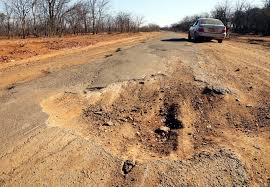
HARARE — Zimbabwe’s government has acknowledged that most rural roads are in a “sorry state,” warning that their condition could deteriorate further when the rainy season begins.
Transport and Infrastructural Development Minister Felix Mhona made the admission in the Senate while responding to questions about the rehabilitation and maintenance of roads linking farming communities, growth points and district centres.
Zimbabwe has an estimated 87,000-kilometre road network, with about 70% of it in rural areas under rural district councils and the Rural Infrastructure Development Agency, Mhona said.
“We are talking of 87 000 km road network and 70% are roads in the rural areas that are under rural district councils and under RIDA and 21% are under the Ministry of Transport, under DOR, which is the Department of Roads and 9% are urban council roads,” Mhona said.
He said many of the rural roads were earth or gravel roads and the government was shifting limited funding towards re-gravelling and maintaining them rather than attempting to tar every road.
“So, you see that 70% are normally earth roads or gravel roads,” Mhona said.
“We have resolved that since we cannot get enough from the fiscus, we now need to dedicate that funding towards rehabilitating our rural roads. Now the approach is shifting towards re-gravelling some of our roads with whatever this House allocates us because not all roads are supposed to be tarred. We maintain them, we gravel them and at the end of the day, this is the strategy that we are adopting.”
Mhona then acknowledged the poor condition of the country’s rural road network.
“I also want to agree with her that surely, most of our rural roads are in a sorry state. If we receive rains again without us attending to them, they will continue to be in that sorry state,” he said.
The admission came after Senator Mary Mliswa asked what the government was doing to ensure rural roads were maintained throughout the agricultural season instead of only receiving attention after becoming impassable.
“The Government has prioritised infrastructure development under the National Development Agenda and we are very grateful for that. My question to you is, what is the Ministry’s current programme for rehabilitating major roads in rural areas, particularly the roads connecting farming communities, growth points and district centres given that Zimbabwe’s agricultural productivity depends heavily on reliable access from farms to markets?” Mliswa asked.
Mhona said funding remained a major constraint, with the government increasingly looking beyond the national budget for money to rehabilitate roads.
He told senators that Zimbabwe was pursuing loan facilities and partnerships for some road projects and offered to return to Parliament with a province-by-province breakdown of roads under construction, those already funded and those still awaiting funding.
The government is also negotiating with a bank for a facility of nearly US$500 million to support road rehabilitation and dualisation projects, Mhona told the Senate.