He Saw 97 Bodies , But Not His Wife: Kariba Father’s Agony After Ferry Disaster
By Desire Tshuma
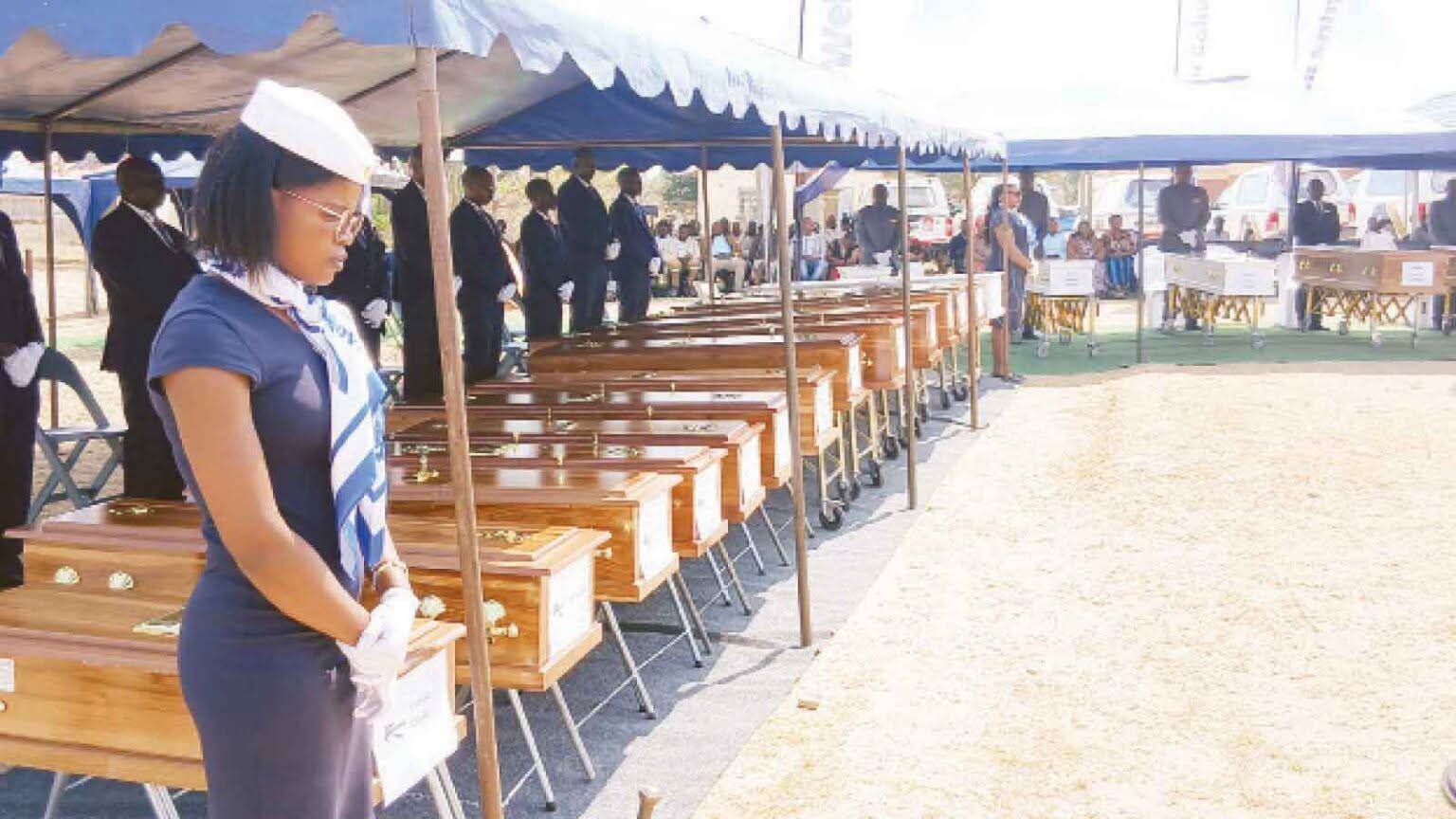
KARIBA — Francis Ndandarika stood before the 97 bodies recovered from the depths of Lake Kariba, searching for faces he knew and praying against what his eyes were telling him.
Three of the bodies were his children. But the face he wanted most to see, that of his wife, was missing.
For Ndandarika, the Kariba ferry disaster has refused to end. The water may have surrendered 97 bodies and rescue teams may have completed the most dangerous phase of the search, but for one grieving father a question remains suspended over the lake: Where is my wife?
His tragedy captures the unbearable human cost of Zimbabwe’s worst maritime disaster, which unfolded on 11 August when the Rural Infrastructure Development Agency operated ferry, Mbuya Nehanda, capsized near Long Island while travelling from Kariba town towards Chalala Fishing Camp in Nyaminyami District.
The Mbuya Nehanda was not a luxury vessel. It was a lifeline for communities scattered around Lake Kariba, carrying teachers, nurses, traders, fishermen, farmers and children between Kariba town and remote settlements. The lake route was often cheaper and quicker than road travel, with a journey from Kariba to Mola taking about six to seven hours by ferry compared with roughly two days by road.
That dependence explains why the tragedy has been felt far beyond the families whose relatives were on board. When the ferry left Kariba on 11 August it was carrying people and cargo bound for communities that have few practical alternatives. It never reached its destination.
In the first hours after the disaster the figures were confused. Initial police figures put the number of passengers at around 90, while other official accounts later indicated that about 120 people could have been aboard. Provincial authorities subsequently reported 114 adult passengers and five crew, while the number of children remained uncertain. Cabinet later said preliminary investigations indicated that approximately 180 passengers and goods could have been aboard, about twice the ferry’s stated capacity of 90. The confusion was partly caused by the difficulty of accounting for young children who did not necessarily have individual tickets.
Seventy-seven people survived. The death toll reached 97. On 14 August, police released the names of 44 victims who had been positively identified by relatives. By 26 August, police said 96 of the 97 victims had been identified, leaving one body still unidentified, while the overall death toll remained at 97. Among those initially named were numerous children, including infants and toddlers.
For families like the Ndandarika family, however, identification did not bring closure. It brought confirmation of some losses while leaving others unresolved.
The disaster has also raised fundamental questions about whether the ferry should have sailed. Government said the Meteorological Services Department had issued an early warning advising users of Lake Kariba against sailing. Cabinet said the ferry was struck by strong waves after apparently sailing in conditions flagged as hazardous. Earlier reporting on the weather bulletin said conditions were generally expected to be relatively calm but warned that strengthening afternoon winds could create localised choppy conditions on exposed sections of the lake.
Survivors reported that strong winds and waves were already affecting the vessel and that some passengers wanted the ferry to turn back. Those accounts remain part of the wider investigation.
The questions do not begin with 11 August. Investigative reporting has identified previous concerns about the vessel, including warnings relating to its stability and the condition of the ageing ferry fleet. Engineers servicing the ferry reportedly raised concerns about structural work intended to improve stability, including proposals for additional pontoons. Government officials have disputed some of those assessments, saying the vessel was certified for service.
The Mbuya Nehanda also had a history of operational problems. It nearly capsized after an engine failure in December 2024 and reportedly encountered another serious incident in January 2026 when its boarding ramp broke away. Passengers had previously raised concerns about life jackets and emergency preparedness.
For survivors, one of the most haunting memories was the scramble for life jackets. Accounts suggested that life jackets were difficult to access and that there were not enough readily available. Other officials maintained that the ferry had sufficient life jackets and suggested that chaos during the sinking contributed to difficulties in distributing them.
The recovery operation became one of the most demanding maritime searches Zimbabwe has undertaken. Police Sub-Aqua divers, Zimbabwe National Army personnel, Civil Protection authorities and local responders participated. Divers worked in difficult and dangerous conditions, with some reaching depths of about 80 metres while searching around the wreckage.
Every recovered body carried the possibility of ending one family’s agony while beginning another’s mourning. For Ndandarika, the search brought three devastating confirmations. His children were found. His wife was not.
In the aftermath, emergency workers, divers, fishermen, boat operators, funeral service providers and community members joined efforts to rescue survivors, search for victims and help families. Government declared the disaster a State of Disaster, directing authorities to mobilise resources for rescue, recovery, funeral assistance, medical care and psychosocial support. Doves and Nyaradzo Funeral Services were brought in to provide state-assisted funeral services, while social workers and psychologists were deployed to support survivors and bereaved families.
By September, Government had expanded the recovery programme to include psychosocial services, livelihood support, infrastructure rehabilitation and other interventions. But grief has proved more difficult to address than logistics.
The tragedy also exposed the reality facing Kariba’s rural communities. With the Mbuya Nehanda gone, attention shifted to the region’s roads. The Charara-Kanyanya road, popularly known as the Gachegache road, has been identified as a crucial alternative link between Kariba urban and rural communities, serving Musambakaruma, Mola, Gachegache, Mbileja and Siakobvu. At about 313 kilometres it is considerably shorter than the roughly 427 kilometre route through Karoi. Government has said sections require rehabilitation.
By September, Government had moved to restore water transport. A privately owned ferry was inspected and certified to resume services, with plans announced to procure two additional boats. Cabinet’s broader recovery package includes replacing vessels, repairing roads, establishing affordable ferry services and strengthening disaster preparedness through improved early warning systems, weather stations, drones and training in water safety.
But the formal investigation will still have to establish how many people were actually aboard, whether passenger limits were breached, whether weather warnings were properly communicated and acted upon, the condition of the vessel, the adequacy of life-saving equipment and whether previous safety concerns were addressed.
And then there is Francis Ndandarika. He has looked at all 97 bodies recovered from the lake. Three were his children. The fourth face he has been searching for is that of his wife. Her absence has turned mourning into waiting.
For other families, the recovery of a body brought the terrible certainty of death and allowed burials to begin. For Ndandarika, there is no such finality. The lake has given him three children back, but not his wife.
More than a month after the Mbuya Nehanda disaster beneath the waters of Lake Kariba, one of Zimbabwe’s greatest disasters is still being measured not only in statistics, inquiries and infrastructure plans, but in empty beds, in school uniforms that will never be worn again and in one grieving man who has seen 97 bodies and still has not found the person he is waiting for.