
Harare Demolitions: Residents Displaced As Mutswangwa Defends Crackdowns
By Desire Tshuma
Harare —
Residents in parts of Harare are facing displacement as demolitions of houses and other structures built without approved plans continue, sparking fresh debate over urban planning, property rights and the plight of affected families.
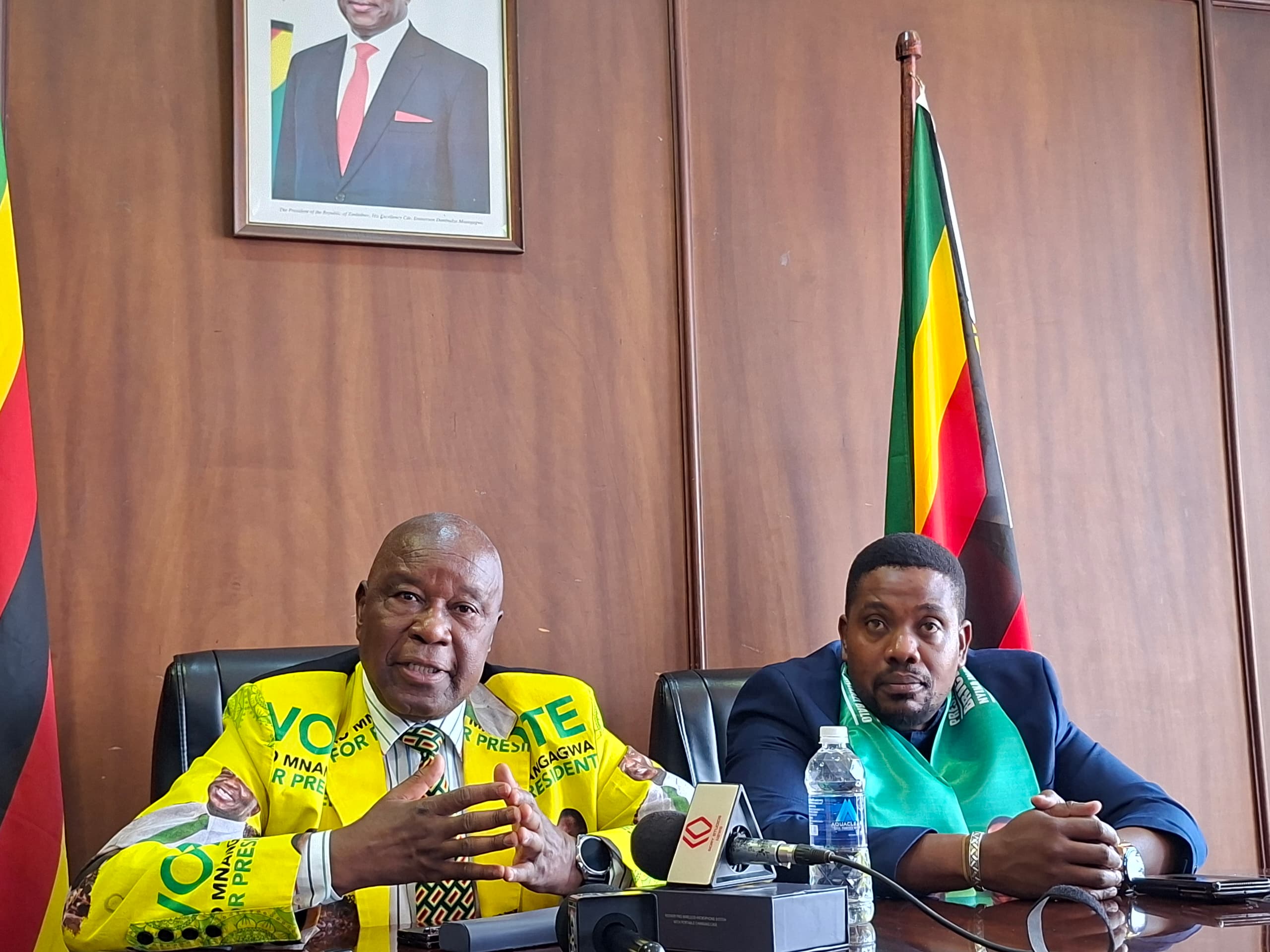
ZANU-PF National Spokesperson Ambassador Christopher Mutsvangwa has defended the ongoing demolitions, arguing that urban authorities must enforce planning regulations if Zimbabwe is to restore order in the capital, attract investment and revive the central business district.
“Every city, every urban community has to have its rules and other strictures about how people conduct their business. Otherwise, you can’t do anything,” Mutsvangwa said.
Addressing journalists at ZANU-PF headquarters, Mutsvangwa said the demolitions should not be viewed through a political lens, insisting that the regulation of urban settlements and businesses was primarily the responsibility of local authorities.
“ZANU-PF is not in charge of the urban councils. It is the opposition. ZANU-PF is in charge of the government,” he said. “But if the two arms of government, the national and the local government, see to it that they want to re-establish order in the way people conduct business, it means it’s a country which works by the rule of law.”
Mutsvangwa warned that allowing unregulated trading, construction and settlements to continue would undermine Harare’s ability to attract investment and accelerate the decline of the CBD.
“You cannot take advantage of the fact that you are in the urban area to do whatever you want,” he said. “The establishment of rules and regulations and their enforcement is only good because this is what makes for the increase in progress, economic progress.”
He argued that investors were unlikely to commit capital to a city where commercial areas were congested, pavements were occupied by informal traders and buildings were erected without regard to planning laws.
“You don’t want yourself to be coming to an office and all the pavement is littered with people who are trading. That’s why many companies now leave the CBD area and they are now going out. The city dies. Harare dies at night at five. It’s not a home,” he said.
Mutsvangwa said authorities should create conditions that would encourage businesses to return to the city centre and restore Harare’s reputation as the “Sunshine City.”
“We have to find a way where things are orderly, where things are done properly so that capital can come back to the CBD so that Harare can become the city, Sunshine City, which it deserves to be,” he said.
The ZANU-PF spokesperson also rejected attempts to link the demolition of structures and removal of informal traders to political developments surrounding Constitutional Amendment Bill No. 3.
“There is no nexus between the people who are being removed for city regulatory reasons from conducting business in a haphazard manner and the passage of the Constitutional Amendment Bill,” he said.
Responding to questions on reports that some people whose houses or structures were being demolished claimed to have political protection, including links to senior ZANU-PF officials, Mutsvangwa again shifted responsibility to urban authorities.
“Look, the regulatory aspects of building in the urban areas, they belong to the city fathers. Maybe those are the people whom we should go and ask those questions,” he said.
He warned that uncontrolled construction would make it difficult to develop Harare into a modern capital.
“If everybody starts building here and there and everywhere, then you cannot have a modern, appealing capital. You know, haphazard settlements, haphazard buildings, they cannot make for the city which we want to be,” he said.
Mutsvangwa argued that cities should be defined not merely by residential settlements but by their economic and industrial functions, citing New York as associated with finance, London with commerce and Nagoya with the automobile industry.
“It’s not the settlements which give the city an identity. It’s the industrial capacity which is going on in that town,” he said.
He acknowledged that the demolitions could attract sympathy for people losing homes but maintained that urban development required planning and enforcement.
“People may want to sympathise with those who are losing their shacks in this haphazard building. But if we are going to develop modern cities which appeal to who we are, as a developing, forward-looking country, we have to do things in an organized manner,” he said.
“We have to do things in an organized manner, which makes those with capital come to your town to say, ‘I can put my money in this place because it is safeguarded. I won’t find my new investment surrounded by shanties.'”
Mutsvangwa said the broader challenge was how Zimbabwe could balance the need for urban order and investment with the livelihood and housing needs of ordinary citizens, arguing that unplanned settlements without roads, water and other basic services could not constitute sustainable urban development.
“This is not a ZANU-PF where we really don’t run cities. It’s not our job,” he said, while adding that Harare’s historical reputation as a well-planned city should be preserved.
“Harare, when African countries come here they say, ‘Well-planned city.’ This is the colonial area. That’s well-planned,” he said.