Wicknell Chivayo — How a tenderpreneur became a weapon in Zanu PF’s succession war
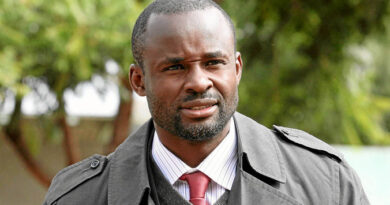
The death of prominent Zimbabwean businessman Wicknell Chivayo has triggered grief, controversy and renewed scrutiny of his extraordinary rise to wealth and political influence.
On September 30, 2026, a private helicopter carrying Chivayo and his wife, Lucy Muteke, crashed in the Marondera area near Waddilove High School. The couple died in the accident.
President Emmerson Mnangagwa expressed shock and grief, while Youth Minister Tino Machakaire announced Chivayo’s conferment as a Provincial Hero.
But beneath the official mourning lies a more complicated political story.
Chivayo’s rise was not simply about personal wealth. His extraordinary access to political power, state-linked contracts and influential institutions made him one of the most visible symbols of Zimbabwe’s patronage system.
His death has therefore raised questions about the relationship between money, political loyalty and the fierce succession struggle within Zanu PF.
*CAB3 and the succession battle*
To understand Chivayo’s political significance, it is necessary to examine the controversy surrounding the Constitution of Zimbabwe Amendment (No. 3) Act, commonly known as CAB3.
The proposed constitutional changes became deeply entangled with the battle over ZANU PF’s succession.
Under the 2013 Constitution, President Mnangagwa’s second term was due to end in 2028. The campaign to extend the presidential and parliamentary terms therefore became a major source of political tension.
Critics argued that the proposed changes would benefit Mnangagwa by extending his time in office, while weakening Vice President Constantino Chiwenga’s expected succession path.
Chivayo became one of the most outspoken public supporters of the 2030 agenda and the Mnangagwa camp.
He used his considerable financial resources and social-media presence to publicly champion the President and attack those opposed to the agenda.
In doing so, Chivayo became more than a wealthy businessman. He became a highly visible political actor operating outside the traditional structures of the ruling party.
*Chiwenga’s warning and Chivayo’s response*
The tensions became particularly visible in January 2025 during the national burial of former minister Justin Mupamhanga at the National Heroes Acre.
With Mnangagwa reportedly away, Vice President Chiwenga delivered a strongly worded speech attacking what he described as “mbinga” and “zvigananda” — people who accumulated wealth through questionable means.
The remarks were widely interpreted as criticism of wealthy tenderpreneurs whose growing influence was challenging traditional political structures.
Chivayo responded defiantly on social media, declaring his unwavering support for Mnangagwa and Zanu PF.
He said no individual, “Big or Small”, could intimidate him into changing his position.
The statement reinforced his image as a businessman who was not afraid to openly enter Zimbabwe’s political battles.
That image was further strengthened by leaked audio recordings that emerged in 2024, in which Chivayo made sweeping claims about his proximity to political power.
Chivayo rejected the recordings as sophisticated deepfakes, but they nevertheless generated intense public debate about his access to the highest levels of government.
*The patronage machine*
Chivayo’s public profile grew alongside a series of highly publicised donations.
He gave luxury vehicles and cash to musicians, churches and institutions connected to the security sector. His social-media platforms regularly displayed images of expensive vehicles, private jets, luxury watches and high-profile political and business figures.
Among the beneficiaries were musician Jah Prayzah and his band, the Zion Christian Church led by Bishop Nehemiah Mutendi, as well as welfare initiatives involving the army, police and prisons.
Many of these donations were publicly associated with the approval or support of senior political figures.
*The scale of the generosity raised an obvious question: where was the money coming from?*
Chivayo had been associated with major state-linked contracts, including the controversial Intratrek Gwanda solar project and the Ren-Form election-materials contract.
The Gwanda project received a multimillion-dollar advance from the state but remained incomplete for years, while the Ren-Form deal attracted scrutiny over alleged pricing irregularities.
Financial investigations in South Africa also examined money movements involving companies linked to Chivayo.
Yet despite the controversy surrounding some of these dealings, he remained a prominent and influential figure.
*From businessman to political symbol*
Chivayo’s public image extended beyond Zimbabwe.
His photographs with foreign political figures, appearances at State House and connections with prominent international personalities helped reinforce the impression of extraordinary political access.
Whether intended or not, these appearances became a form of political theatre.
They projected an image of a businessman who could move comfortably between the worlds of politics, business, entertainment and international diplomacy.
For supporters of the Mnangagwa faction, this influence was valuable.
For critics, it was evidence of a political system in which wealth and access could provide protection from institutional scrutiny.
*The architecture of patronage*
Chivayo should therefore not be viewed simply as an unusually wealthy individual.
His rise reflected a broader system in which political influence, state contracts and private wealth could reinforce one another.
The model is straightforward: access to political power creates opportunities for lucrative business, while wealth can then be converted into political loyalty through donations, public endorsements and patronage.
In this system, the businessman becomes both beneficiary and financier.
Chivayo appeared to occupy precisely that space.
His donations helped build relationships with influential constituencies, while his political loyalty strengthened his position within the ruling establishment.
The result was a cycle in which political protection and financial power reinforced each other.
*The machine outlives the man*
Chivayo’s death has inevitably shifted attention from the man himself to the system that enabled his extraordinary rise.
The granting of Provincial Hero status shortly after his death has added another layer to the debate.
Supporters may view it as recognition of his contributions to society. Critics may see it as evidence of how deeply political patronage had become institutionalised.
Whatever the interpretation, one fact remains: the political and economic networks surrounding Chivayo did not disappear with his death.
The relationships, institutions, contracts and political structures that shaped his rise remain.
His death therefore presents Zimbabwe with a broader question.
Can a political system built around personal loyalty, state-linked wealth and patronage produce genuine accountability and economic transformation?
Or will the system simply continue producing new versions of the same political entrepreneur?
Chivayo may be gone, but the system that made him possible remains. *_-Nehanda Radio_*