
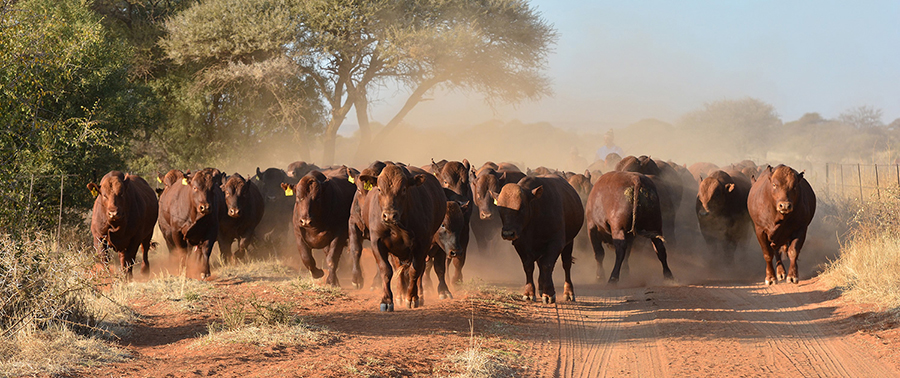
TN Livestock Trust Farm Scales Drought-Resistant Grass Production to Cut Livestock Input Costs.
By Kudzai Jakachira
Commercial agricultural producers in Mashonaland East are scaling up the cultivation of drought-resistant Juncao grass to insulate livestock operations from rising feed costs and pasture depletion ahead of an anticipated super El Niño weather phenomenon.
Located in Featherstone, roughly 110 kilometres from Harare, TN Livestock Trust Farm has emerged as an early commercial adopter of the high-yielding Chinese grass variety. With Zimbabwe’s national livestock herd standing at approximately 5.9 million head, agribusinesses face mounting pressure to secure affordable, climate-resilient fodder reserves to prevent catastrophic herd losses and protect profit margins during prolonged dry spells.
For commercial livestock enterprises, feed typically represents the largest single operational expense. Juncao grass addresses both supply stability and input cost control. The versatile crop is suitable for cattle, goats, and poultry, offering multi-species utility across diversified farming operations. Crucially, its low-input agronomic profile allows producers to bypass expensive synthetic fertilisers while maintaining high biomass yields.
At TN Livestock Trust Farm, harvesting is actively underway across a 20-hectare plantation staggered at varying stages of maturity to ensure continuous supply.
“We got to discover that there’s a plant or a grass that is yielding and highly nutritious and it’s also easy to grow,” said Patrick Chizengeya, Farm Manager at TN Livestock Trust Farm. “You may even grow it organically without the use of any fertilisers. At the moment we have got 20 hectares of the Juncao grass at different stages of growth. When cut, the grass can be stored underground for a very long period of time for future feeding requirements.”
This underground ensiling capability transforms seasonal harvests into long-term capital assets, enabling farms to bank excess biomass during peak growth periods and draw down reserves when commercial feed prices spike during drought cycles.
The private sector shift aligns with broader regulatory and infrastructural interventions aimed at safeguarding national agricultural output. Authorities have rolled out water drought mitigation centres to stabilise rural water access alongside strict directives governing crop residue management. Under a newly enacted statutory instrument, wheat stalks have been officially designated as livestock feedstock, prohibiting farmers from burning post-harvest residues and mandating their baling for hay.
“Which is why wheat has now been declared a feed stock in terms of a statutory instrument so that we don’t burn that but we utilise that as feed,” said Dr Anxious Masuka, Minister of Agriculture, Mechanisation and Water Resource Development. “We also promote as government the fodder production in the small holder sector.”
By combining regulatory mandates on crop residue conservation with private investment in high-yield, low-input grasses like Juncao, Zimbabwe’s agricultural sector is moving to de-risk livestock value chains. For commercial and smallholder producers alike, building self-sustaining fodder banks is rapidly becoming an essential balance-sheet strategy to preserve herd equity and ensure continuity of meat and dairy supply through severe climatic volatility.


