
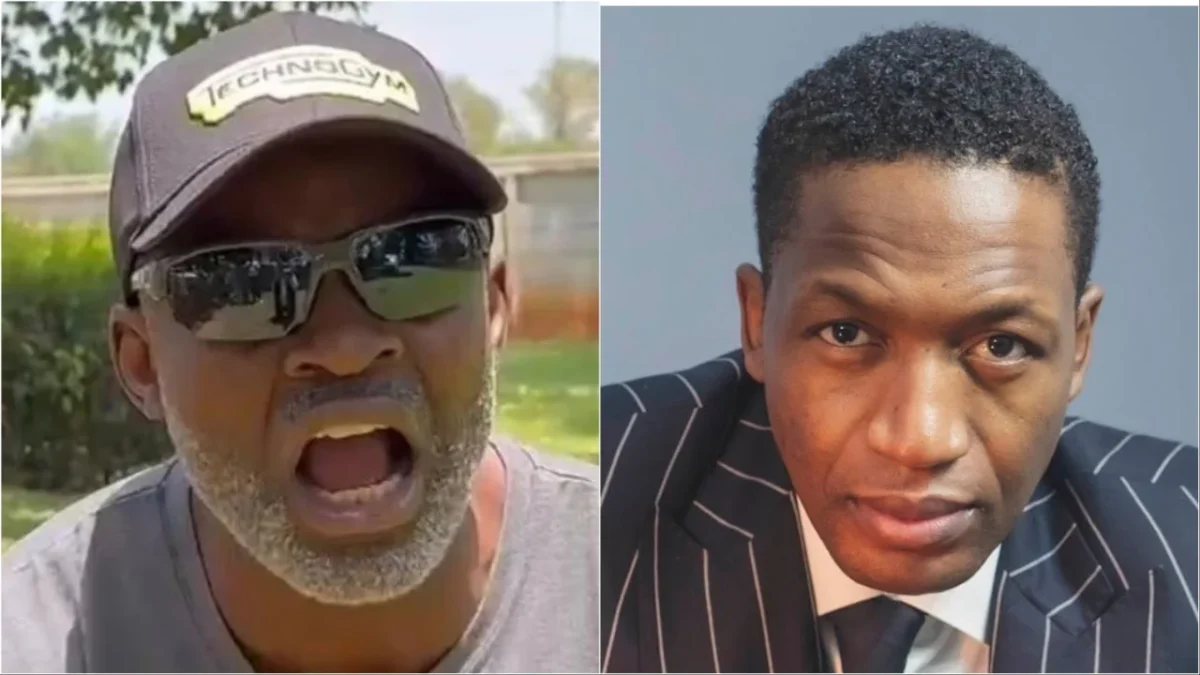
Temba Mliswa and Eubert Angel war exposes Zanu PF succession battle
The explosive public feud between former Norton legislator Temba Mliswa and Presidential Envoy Prophet Uebert Angel has evolved into a wider political controversy, exposing possible tensions within Zanu PF and raising questions about the influence of powerful individuals over State institutions.
In an opinion piece, political analyst Dr Sibangilizwe Moyo argued that the confrontation was no longer simply a war of words between two politically connected personalities, but a reflection of deeper succession tensions within the ruling party.
The controversy intensified following Angel’s arrest on November 22, 2026, over an aggravated indecent assault charge, which remains before the courts. He has not been convicted.
The arrest came weeks after Mliswa publicly called for Angel’s arrest over sexual misconduct allegations, amid a bitter exchange over Vice-President Constantino Chiwenga’s political standing and his relationship with President Emmerson Mnangagwa.
Mliswa had accused Angel of acting as a political defender of Chiwenga while allegedly overlooking issues surrounding the President’s authority.
Moyo, however, cautioned against assuming that Mliswa’s calls directly caused Angel’s arrest or that the subsequent police action was politically motivated, saying such claims would require evidence.
*Police conduct under spotlight*
The controversy took another dramatic turn after four police officers were charged with criminal abuse of duty over allegations surrounding Angel’s handling following his arrest.
The State alleges that the officers arranged for Angel to be taken to an undisclosed location instead of being held in police cells, with the preacher allegedly returning to the station approximately two hours later.
Moyo said the allegations raised serious questions about whether powerful and politically connected individuals receive preferential treatment from law enforcement.
He argued that the police must demonstrate that the law applies equally to ordinary citizens, politicians, businesspeople and influential religious leaders.
The analyst also questioned the circumstances surrounding the prosecution, particularly after the defence indicated that the complainant had withdrawn her initial report.
He noted that withdrawal of a complaint does not automatically terminate criminal proceedings, as the decision to prosecute rests with the relevant authorities.
*Chiwenga and Mnangagwa silent as tensions mount*
At the centre of the wider political debate is the unresolved succession question within Zanu PF.
Moyo questioned why Angel’s public defence of Chiwenga had generated such a fierce reaction from Mliswa, arguing that the preacher’s intervention could not be separated from the sensitive political environment surrounding the President and his deputy.
Chiwenga’s political history, military background and role in the events of November 2017 make his position particularly significant in discussions about the country’s future leadership.
Meanwhile, Mnangagwa remains the country’s principal centre of executive authority, with ongoing debates about constitutional amendments and the future leadership of Zimbabwe adding to the political uncertainty.
Interestingly, both Mnangagwa and Chiwenga have remained publicly silent on the Mliswa-Angel confrontation, leaving other political figures and intermediaries to dominate the public debate.
Moyo suggested that individuals operating around powerful political figures could be increasingly influential in shaping narratives, defending political interests and testing loyalties without the principals themselves becoming directly involved.
However, he warned against automatically interpreting their statements as representing instructions from either the President or Vice-President.
*Who is really pulling the strings?*
The analyst identified political access, informal networks and the relationship between law enforcement and political power as key issues emerging from the controversy.
He also questioned the accountability of individuals holding public appointments while maintaining independent religious, commercial and political networks.
Angel’s position as Presidential Envoy and Ambassador-at-Large, Moyo argued, raises questions about the responsibilities and boundaries of individuals occupying influential public offices.
He further warned that political battles should not distract the country from broader governance concerns, including public procurement, state contracts, management of public resources and economic accountability.
*’The liability belongs to Zimbabwe’*
Moyo concluded that while Zanu PF was entitled to manage its internal leadership battles, Zimbabwe should not become collateral damage in the process.
He warned that political competition becomes dangerous when it threatens the independence of institutions responsible for upholding the law.
He stressed that Angel deserves a fair trial, the complainant deserves justice, and the police officers facing charges are entitled to due process.
Mliswa, he added, was equally entitled to express his political opinions.
Ultimately, Moyo argued that the biggest question was whether Zimbabwe’s institutions were strong enough to withstand political pressure from powerful individuals.
“The battle may be within Zanu PF. The liability, however, belongs to Zimbabwe,” he said. *_-Nehanda Radio_*


