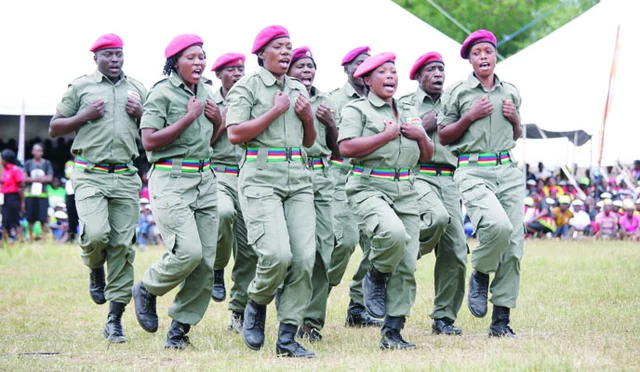
750 youths begin Zimbabwe’s National Service training; 10,000 targeted
The re-established programme aims to train a total of 10,000 youths in 2024.
The government asserts that graduates of the programme will receive priority in employment, enrolment into public sector and higher education institutions, as well as financial support for new projects and businesses.
Information Minister Jenfan Muswere, addressing the media at a post-cabinet briefing in Harare on Tuesday, emphasized that the programme — previously criticized by the opposition as Zanu PF indoctrination camps — intends to instil discipline and patriotism among the new generation.
“Since the Cabinet’s decision in 2021 to re-establish the National Youth Service Programme, progress has been evident within the Ministry of Youth Empowerment, Development, and Vocational Training,” stated Muswere.
“Achievements include drafting the National Youth Service Bill, establishing an Inter-Ministerial Implementation Committee, and developing a 6-month training program targeting youths aged 18 to 35.”
He added, “Graduates of the programme will be prioritized in employment, enrolment into public sector and higher education institutions, and for financial support in launching new projects and businesses.”
The programme, funded through Treasury, makes a return after years of suspension during the 2009-13 Government of National Unity.
Initially introduced in 2000 and named after the late former Youth Minister and Zanu PF political commissar Border Gezi, it was derogatorily referred to as ‘Green Bombers’ due to its uniform coloUr and rigorous military-style training, which some accused of fostering aggressive behavior and intimidating tactics among graduates.
However, the government asserts that the revamped programme is distinct from its past iteration and aims solely to instil discipline and patriotism in the new generation.
The resurgence of the youth training programme coincides with the government’s preparations to inaugurate the Hebert Chitepo School of Ideology.
The school, according to its principal Munyaradzi Machacha, aims to “decolonize the mind” through fostering what he terms as “ideological, intellectual, and political consciousness.”
However, critics argue that it represents partisan Zanu PF indoctrination rather than a neutral educational initiative.