
Restoring Forest Resilience Through Agroforestry Innovation and Alternative Energy Adoption to Reverse Rural Deforestation
By Kudzai Jakachira
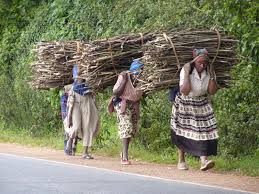
Across rural wards and urban peripheries nationwide, an aggressive wave of indigenous woodland depletion is laying bare fragile ecosystems as persistent energy poverty forces millions to strip native forests for daily survival.
The crisis stems directly from structural failures within the national electrical grid where rolling load shedding schedules exceeding sixteen hours daily and chronic infrastructural deficits in off-grid settlements have left households without reliable power. Deprived of electricity and priced out of liquified petroleum gas, communities have reverted en masse to biomass dependency, relying on firewood and illicit charcoal production for domestic thermal energy.
Environmental authorities and forestry experts report that hundreds of thousands of hectares of forest cover vanish annually. Slow-maturing indigenous hardwoods such as the Colophospermum mopane are felled at unsustainable rates to feed urban and rural hearths, accelerating soil erosion, disrupting local hydrological cycles, and eviscerating critical carbon sinks.
For rural residents navigating this energy vacuum, stripping the landscape is an act of sheer economic survival rather than environmental negligence.
“Finding firewood is no longer a simple task of gathering fallen branches; it is an exhausting expedition that takes us deeper into depleted hills and distant mountains where the trees are already gone,” said Rudo Matika, a smallholder farmer from Mutawatawa.
“The electricity poles stand in our villages like dead monuments—they have not brought power in years. When the grid fails completely, the forest is our only kitchen. We know we are stripping the land bare, but when children cry for a cooked meal at sunset, environmental conservation feels like a luxury for people who are not hungry.”
Commercial firewood vendors operating along major arterial corridors echo the reality of an economy driven into the woodlands by destitution.
“I used to find piece jobs cleaning houses in town, but the pay could not even keep bread on the table for a month,” said Charity Bore, a firewood merchant along the Mutare-Masvingo highway.
“Cutting and selling firewood is gold, it brings immediate cash. We see the hills losing their hair, and we know the rains are changing because of it, but without a reliable power grid or affordable gas, the forest is the only bank account we have left to feed our families.”
To reverse this downward ecological spiral, environmental scientists and agricultural economists emphasize that punitive policing alone cannot halt deforestation without establishing rigorous, community-led management of the landscape itself.
Forestry Commission Zimbabwe director general Mr Abednego Marufu said a raft of measures have seen a substantial reduction in terms of hectarage destroyed through the cutting down of trees from 300 000 hectares last year to 262 000 hectares this year.
“We have recorded significant success when it comes to protecting our forests as you can tell from the figures. We, however, cannot say we have won the war since we are targeting to further reduce the hectarage to about 100 000 hectares annually,” he said.
Restoring forest resilience demands an aggressive pivot toward advanced Sustainable Forest Management frameworks, anchored in decentralized community woodlot governance, rotational harvesting protocols, and participatory agroforestry integration.
Another government agency involved in saving forests, the Environmental Management Agency (EMA) said it had significantly advanced sustainable land management practices within the Drylands Sustainable Landscapes Impact Programme. To date, the agency has established an impressive 600 farmer field schools and four vital community seed banks across the Midlands and Masvingo provinces. These initiatives aim to bolster agricultural resilience and biodiversity within these key dryland regions.
EMA National Projects Co-ordinator, Mrs Precious Magwaza stated that the
farmer field schools provide training to villagers on sustainable land management, forest management, intensification and intercropping, soil and water conservation, integrated crop and livestock production and conservation farming.
“We also work with the Forestry Commission whose focus is on improving land cover through woodland management, tree planting and other activities. They are also building community capacity to care for forests and benefit sustainably from them,” said Mrs Magwaza.
She also noted that World Vision is a key partner in a component of the project focused on strengthening community livelihoods through business development.
“World Vision is leading this component, which centres on non-timber forest products and traditional green enterprises. We are encouraging communities to benefit from their natural resources in a sustainable manner,” she said.
Civil society interventions led by organizations such as the Southern Alliance for Indigenous Resources in districts including Mutasa, Bikita, and Chiredzi highlight the profound efficacy of establishing legally protected village woodlots and indigenous tree nurseries. When local governance structures are empowered through devolved authority to manage, protect, and derive sustainable livelihood benefits from regenerated woodlands—through regulated non-timber forest product harvesting and carbon-credit revenue-sharing mechanisms—communities transition from passive exploiters of forests to active custodians of ecological integrity.
Silvicultural experts argue that institutionalizing community-based natural resource management must be paired with strict enforcement against industrial-scale illegal charcoal syndicates that commercialize rural timber for urban markets. By establishing localized forest management committees equipped with participatory monitoring tools and sustainable yield quotas, rural districts can safeguard slow-maturing indigenous canopies against catastrophic over-extraction.
Until decentralized forest governance and community-driven silviculture are prioritized at the national policy level, the relentless assault on the nation’s indigenous woodlands will continue to undermine long-term climate resilience and ecological stability.