Zanu PF commissar Machacha pile praises on Sekuru Banda
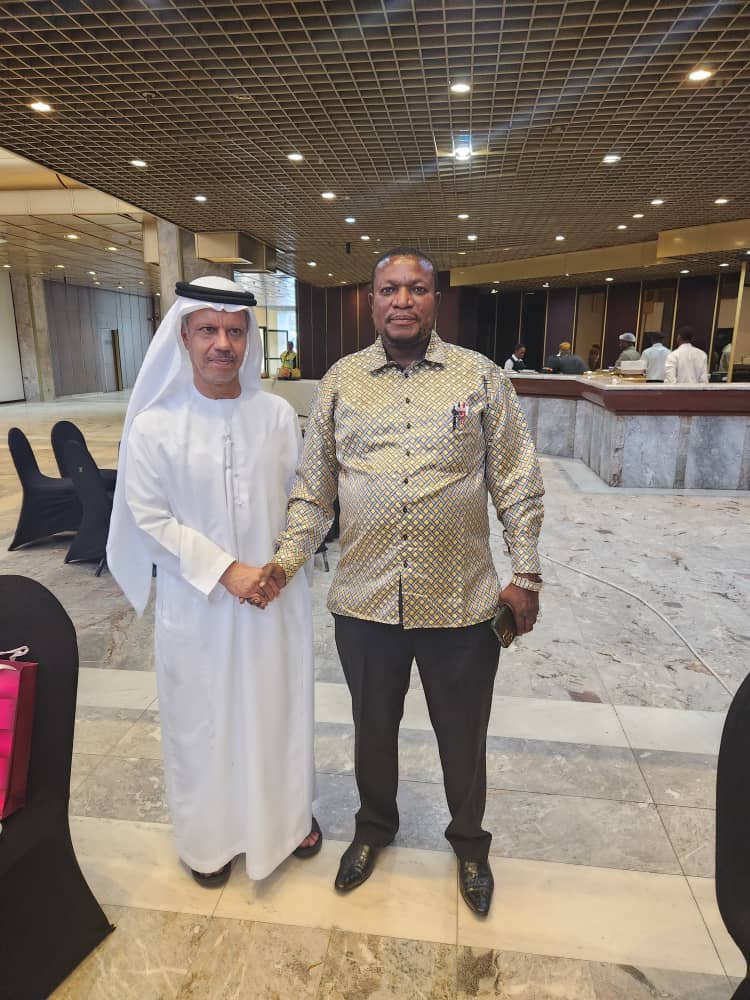
ZANU PF Political Commissar Cde Munyaradzi Machacha has publicly endorsed the community work of traditional healer and Muslim cleric, Sekuru Banda, praising his recent outreach to the less privileged in Karoi as a model of people-centred development and social solidarity.
Cde Machacha commended Sekuru Banda for combining spiritual leadership with practical assistance to vulnerable groups, saying such initiatives resonate with the ruling party’s philosophy of leaving no one and no place behind.
“Community-driven initiatives that uplift the disadvantaged are at the heart of our national vision. Sekuru Banda’s work in Karoi demonstrates how faith leaders can play a constructive role in promoting unity, compassion and development, while encouraging citizens to rally behind the country’s shared aspirations,” Cde Machacha said.
During the outreach programme, Sekuru Banda mobilised resources for disadvantaged families and used the platform to encourage citizens to support President Emmerson Mnangagwa’s 2030 Agenda, which seeks to transform Zimbabwe into an upper-middle-income economy through inclusive growth, infrastructure development and economic modernisation.
Cde Machacha said the call for unity around Vision 2030 was timely, noting that Zimbabwe is already witnessing tangible progress through major infrastructure projects that signal the country’s development trajectory. He cited the expansion and modernisation of Robert Gabriel Mugabe International Airport as a landmark achievement that has enhanced Zimbabwe’s connectivity, capacity and international profile.
“The transformation of Robert Mugabe International Airport is not just about bricks and mortar; it is about positioning Zimbabwe as a competitive destination for investment, tourism and trade. It reflects the seriousness of the Second Republic in modernising key infrastructure to support economic growth,” he said.
Cde Machacha also pointed to the construction and commissioning of the Trabablas Interchange as another milestone in the country’s infrastructural renewal. The interchange, which has significantly improved traffic flow and road safety in Harare, was described as a symbol of efficient planning and execution under the current administration.
“These projects are visible proof of the development path Zimbabwe is on. They demonstrate what is possible when there is political will, unity of purpose and support from all sectors of society.”
A key aspect of Cde Machacha’s remarks was his recognition of the contribution of Muslims in Zimbabwe as an essential support base for the ruling party and national development. He acknowledged the Muslim community’s long-standing role in social welfare, education, health support and disaster relief, often working quietly at the grassroots level.
“Muslims in Zimbabwe have consistently shown commitment to peace, development and social responsibility. Their support for community initiatives and national programmes strengthens social cohesion and adds an important voice to our collective journey towards Vision 2030,” he added.
Sekuru Banda, who bridges traditional healing and Islamic clerical leadership, was described as a unifying figure who embodies Zimbabwe’s cultural and religious diversity. Cde Machacha said such diversity should be harnessed as a strength in building a prosperous nation.
As Zimbabwe continues to pursue its development agenda, the endorsement of community-led initiatives by political leaders underscores the importance of partnerships between government, faith-based organisations.