
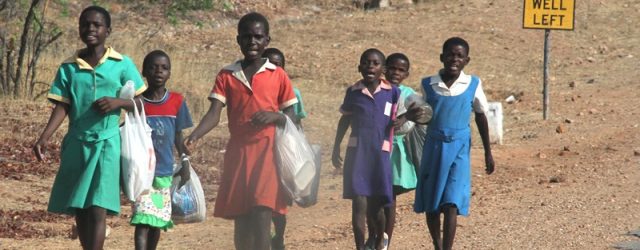
New teacher recruitment drive begins tomorrow
A nationwide teacher recruitment drive will begin tomorrow across all 10 provinces to fill staffing gaps in public schools, following the release of funding for the exercise by Treasury.
The Public Service Commission (PSC) has previously indicated that it plans to recruit 3 000 teachers during the first three months of this year.
The new posts are being filled after a nationwide assessment of staffing needs was completed last month.
Primary and Secondary Education Minister Torerayi Moyo announced the development while responding to questions during the Senate’s question-and-answer session on Thursday.
He said provinces had submitted their teacher requirements by February 10.
“We wrote to all the provinces asking them for the numbers of teachers they need from all the 10 provinces. They responded before February 10, meaning that on Monday, March 2, 2026, we will start recruiting,” he said.
Minister Moyo confirmed that Treasury had availed the necessary funds to facilitate the recruitment process countrywide.
Teachers who had previously left the profession were urged to apply for reinstatement through the ministry and the PSC.
“Right now, we are taking those who are returning, but we have been prioritising the STEM (Science, Technology, Engineering and Mathematics) subjects,” said Minister Moyo.
“Once they write their letters and are recommended to come back, we offer them employment again.”
Teachers who had completed their training, but were not yet employed, he added, would be considered in the recruitment exercise.
“Some people finished their courses and they are at home. The Government has allowed us to start recruiting.”
Zimbabwe National Union of School Heads secretary Mr Munyaradzi Majoni welcomed Government efforts to bolster the teaching workforce.
“Any Government initiative to increase the number of teachers is a positive development for us as school heads,” he said.
“We want more educators on board to collaborate and improve the pass rate; ultimately, higher staffing levels lead to better results. Some schools had previously requested teachers who specialised in areas like ICT, but with the adoption of the Heritage-Based Curriculum, such specialisation is no longer as relevant.
“Consequently, school heads have been tasked with rationalising their staff.”
Minister Moyo said the Government was moving to ensure that all schools adopted the Heritage-Based Curriculum (HBC) in line with Section 63 of the Constitution of Zimbabwe.
He said a Bill has been presented to Cabinet proposing that all learning institutions, including private schools, implement the Heritage-Based Curriculum as the primary framework.
“According to Section 63 of the Constitution of Zimbabwe, everything that is learnt in the country is supposed to be taught under the same curriculum, which is given by the Permanent Secretary,” he said.
Three curricula are offered in Zimbabwe, including the Heritage-Based Curriculum, which is offered in Government, council and church schools.
On the other hand, Association of Trust Schools (ATS) and independent colleges mainly offer the Cambridge curriculum, while international schools offer the International Baccalaureate (IB).
“So, if we are to look at this law, the Bill was presented to the Cabinet, and we said that all the schools in the country are supposed to teach the Heritage-Based Curriculum. To those who want to continue doing Cambridge, they will do it as an option,” he said.
Schools wishing to continue offering Cambridge, he said, would be allowed to do so as an option, provided they first seek approval from the Permanent Secretary and outline how they intend to implement both curricula.
“Heritage-Based Curriculum will be the first, and they will also be doing Cambridge,” he said.
He expressed concern that some schools no longer teach Zimbabwean history and indigenous languages.
“Many schools no longer teach the history of Zimbabwe — where we came from and where we are going,” said Minister.
“Our indigenous languages such as Shona, Ndebele, Kalanga, Shangani and Tonga are not taught in many ATS schools. They are now learning French and Chinese and no longer learning our local languages.”
Minister Moyo said the move is not meant to discourage international languages, but to ensure national identity and heritage are preserved. *_-Sunday Mail_*
3. *‘Mentor, employ young graduates to drive economic transformation’ — Minister Machakaire*
Minister of Youth Empowerment, Development and Vocational Training, Cde Tinoda Machakaire, has emphasised the importance of skills development in driving Zimbabwe’s economic growth and transformation.
Speaking at the “Skills2Live and Knows No-Borders Project” graduation ceremony in Beitbridge on Thursday, the minister highlighted the Government’s commitment to empowering youth through vocational training.
A total of 430 young people graduated in trades such as solar technology, hotel management, and metal fabrication following a six months’ training programme co-ordinated by Young Africa Zimbabwe and supported by the International Organisation for Migration (IOM).
Among the trainees drawn from rural and urban wards of Beitbridge District, 76 percent were young female adults aged between 18 and 35 years, while 24 percent were young male adults.
In a speech read on his behalf by the Acting Director Vocational training and skills development in the ministry, Mr Ngonidzashe Madzimure, Minister Machakaire urged the private sector to mentor and employ the graduates as they represent the skilled workforce needed to modernise industries and strengthen the economy.
He encouraged the youth to take ownership of their skills and drive Zimbabwe’s industrialisation under Vision 2030.
“This occasion is not just a celebration of skills training; it is a powerful demonstration of our national commitment to youth empowerment and a tangible validation of our development agenda under the National Development Strategy 2 (NDS2),” he said.
“NDS2 places a strong emphasis on job creation, youth entrepreneurship and development, along with the creative industry, sports and culture. This underscores a fundamental truth — Zimbabwe is on a journey towards Vision 2030, aiming to become a prosperous and empowered upper middle-income society.
“This vision relies heavily on strategically empowering its people, particularly the youth. Job creation, entrepreneurship, and skills development are not optional pursuits, they are central pillars of inclusive economic growth, social cohesion and reduced inequality.”
The minister said the NDS2 was building on the foundations established under NDS1, which integrated youth, sports, and culture into the national development framework, while NDS2 specifically positions youth development and Zimbabwe’s cultural assets as catalysts for sustainable economic transformation.
He said through targeted policies, programmes, and partnerships—such as the collaboration between Young Africa Zimbabwe, the International Organization for Migration, and support from the Kingdom of the Netherlands—the country was unlocking the full potential of its demographic dividend.
Under NDS1, he said sustained economic recovery and enterprise growth led to an increase in formal sector employment, which reached 35.8 percent by the second quarter of 2025, exceeding the national target of 30 percent.
“However, despite this progress, unemployment continues to be a challenge, with 65 percent of employed individuals working in the informal sector. These realities remind us that while we have made progress, our work is far from complete,” said the minister.
“Youth development is a national priority in Zimbabwe. With over 67 percent of the population aged between 15 and 35, as indicated by the 2022 Population Census, our young people represent both a significant responsibility and a tremendous opportunity.
“During the National Development Strategy 1 (NDS1), youth participation in decision-making exceeded national targets and over three million young people benefited from leadership and empowerment initiatives.”
Machakaire also bemoaned the surge in cases of drug and substance abuse and hence skills development programmes serve as both economic interventions and powerful tools for prevention, protection, and social transformation.
Speaking during the same event, Young Africa Zimbabwe’s coordinator for Beitbridge Mrs Perseverance Ndou said the Skills2Live intervention perfectly aligned with the core goal of the ‘HIV Knows No Borders’ project that seeks to improve SRH-HIV outcomes among vulnerable populations, including migrants, young people, sex workers, survivors of GBV and Drug and Substance Abuse in migration-affected communities.
The project aims to reduce economic vulnerability to HIV and SRH challenges, through entrepreneurship, financial literacy and vocational skills training linked to livelihood/employment opportunities.
The most significant vulnerabilities reported by YVPs during the assessment and screening were the young people enrolled into the project for training reported vulnerabilities.
IOM Beitbridge head of sub office Mr Nhamo Muleya said the Sexual Reproductive Health and Rights HIV Knows No Borders (SRHR-HIV KNB) project was a regional project being implemented in six Southern African countries which include South Africa, Eswatini, Mozambique, Malawi, Zambia including Zimbabwe. *_-Sunday News_*