
Unregulated fermented drinks flood zimbabwe
UNREGULATED fermented beverages — sold cheaply in supermarkets, on street corners and busy commuter omnibus ranks — are increasingly flooding the local market, raising concern among the authorities over their safety and potential health effects.
The drinks, which have become common in urban centres and informal markets across the country, are often distributed through roadside vendors and small retail outlets, raising questions among regulators about manufacturing standards, labelling practices and consumer safety.
While no comprehensive scientific investigations have been conducted into their long-term health effects, officials say there are growing fears about their potency, possible alcohol content and claims that some of the beverages may be addictive.
In recent months, the authorities have banned products such as Hubaba, which falsely claimed certification by the Medicines Control Authority of Zimbabwe (MCAZ), and Kambucha, which was being marketed with unverified medicinal claims.
“Such conduct is illegal, deceptive and intended to mislead consumers into believing that unregistered products have undergone regulatory evaluation,” the MCAZ has said.
“The misuse of its identity poses a serious public health risk, as it undermines regulatory safeguards and may expose consumers to unsafe, substandard or falsified medicines and health products.”
Retailing for as little as US$0,50 a bottle, the drinks are mostly distributed through roadside vendors.
Vendors at the Copacabana commuter omnibus terminus in Harare’s central business district said the drinks sell quickly because of their price.
“People buy them because they are cheap and strong,” said one vendor who requested anonymity.
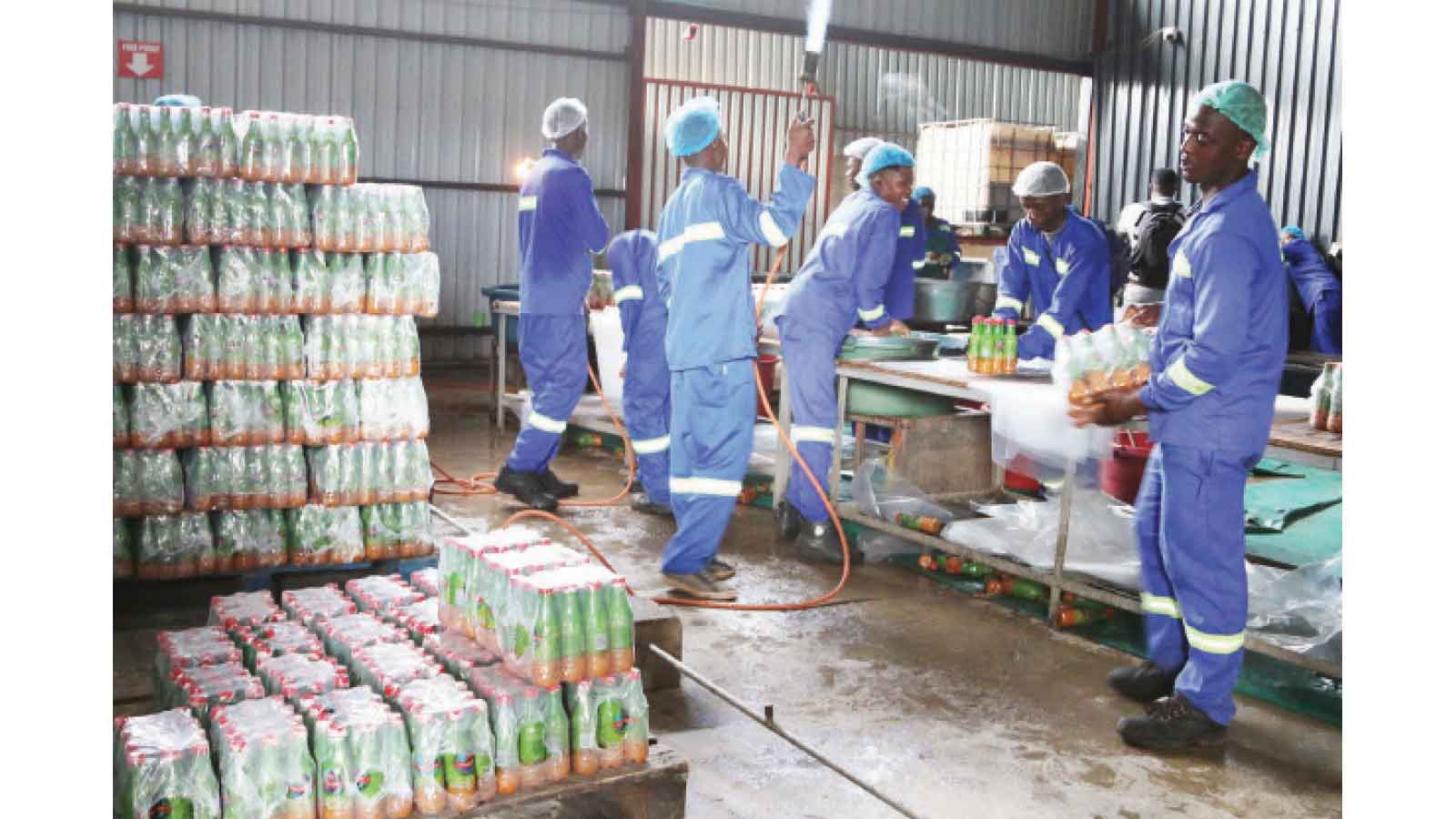
It is against this backdrop that a multi-agency team last week raided a factory in Rugare suburb, where a company trading as Tembeya Africa is producing a fermented ginger drink under conditions the authorities described as irregular and unhygienic.
The joint operation comprised officers from the Zimbabwe Republic Police, immigration officials, the City of Harare’s departments of health and urban planning, and the MCAZ.
The label does not explicitly claim that the drink has medicinal properties.
Officials said the manufacturing process and labelling practices raised red flags.
Investigations revealed that the beverage, whose label lists ginger, rosemary, yeast, sugar, sodium benzoate and water among its ingredients, is brewed over an open fire in uncovered pots.
The water used in its production is drawn from a borehole and has not been purified for beverage manufacturing.
The product undergoes fermentation and the company claimed it contains about 5 percent alcohol content.
However, this is not disclosed on the label, while the alcohol percentage is suspected to be significantly higher.
The only cautionary note on the packaging is a “not for children” sign.
The Food and Foodstuffs Act of 1996, under the Open Date Regulations, states that all food and beverage products must clearly display the manufacturer’s name, physical address, ingredients, batch number, date of manufacture and expiry date.
These requirements are meant to protect consumers and provide recourse in the event of adverse reactions.
Tembeya Africa, however, was found to have listed an address in Waterfalls on its packaging, despite operating from Rugare for over two years.
One of the directors, Mrs Catherine Mukantabana, said the company was in the process of regularising its operations.
“We moved from our old site in Waterfalls to this site, but we are still in the process of getting all our licences and permits in order. If we can have time, we will correct our mistakes,” she said.
Mrs Mukantabana added that the company had operations in Rwanda and South Africa, where it produces alcoholic beverages, and in Zambia and Zimbabwe, where it manufactures non-alcoholic beverages.
“We want to work together with the Zimbabwean Government so that we can invest here, and we are willing to work with the authorities,” she said, adding that the business belonged to her husband, who was not available for comment.
However, investigators noted that the company had been operating from the Rugare site for more than two years without updating its documentation.
The lease for the land, which falls under the servitude along the railway line owned by the National Railways of Zimbabwe, is not in the company’s name.
In addition, while the company holds a City Health Department licence, the document was issued for a different site.
City health officials also established that the factory did not have an on-site laboratory as required by law, meaning the beverage is not being tested before distribution to the market.
Officials said the case is part of a broader clampdown on unregulated beverage manufacturers whose products continue to find a ready market among consumers drawn by low prices and bold health claims.
The emergence of unregulated fermented drinks has become a growing concern in several African countries, where informal food and beverage markets are expanding rapidly in response to rising demand for low-cost products.
Regulators in countries such as South Africa, Kenya and Nigeria have stepped up crackdowns on illicit or poorly regulated brews in recent years amid fears over unsafe production methods and undisclosed alcohol levels.
The spread of such beverages also mirrors a broader global concern over unregulated alcohol.
The World Health Organisation defines unrecorded alcohol as “alcohol that is not taxed and is outside the usual system of governmental control”.
The global health body also warns that alcohol-related harm remains a major public health challenge, noting that “every 10 seconds a person dies from alcohol-related causes”.
Public health experts have warned that without proper testing and transparent labelling, particularly where alcohol content is involved, consumers are left vulnerable.
Community Working Group on Health executive director Mr Itai Rusike said the huge volumes of unregulated food and drink being sold to the consuming public is worrying.
“We are concerned about the far-reaching effects of these brews on the health of the consumers. The addiction and accompanying damage to the liver and other internal body organs is worrying and begs urgent action,” said Mr Rusike.
“We call upon the authorities to firm up on the mandates of local authorities, business and relevant Government departments to deal with this thriving but detrimental industry.”
As investigations continue, the authorities say they will intensify surveillance and enforcement measures to curb the proliferation of unregulated fermented drinks, warning that public safety cannot be compromised in the name of entrepreneurship. Sunday Mail