
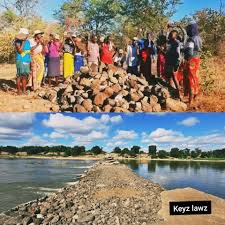
18 Villagers Trapped As Rivers Swell At Save–Runde Confluence
Eighteen villagers from Mahenye in Chipinge South remain stranded on Lisungwe Island, situated at the confluence of the Save and Runde rivers, after being cut off by rising floodwaters last week.
According to The Manica Post, the group had been engaged in farming and fishing on the island when water levels suddenly surged, severing access to the mainland.
Manicaland Civil Protection Committee chairperson John Misi said authorities and other stakeholders are closely monitoring the situation. Said Misi:
“Efforts are currently being made to evacuate the 18 Mahenye villagers. The Zimbabwe Republic Police Sub-Aqua team was deployed, but failed to reach the island.
“We have since contacted Civil Protection headquarters in Harare to facilitate possible airlifting, as water levels in the Save and Runde rivers continue to rise, putting the villagers’ lives at risk.
“Stakeholders at both provincial and national levels are closely monitoring the situation.”
He added that although the stranded villagers have indicated they are safe, authorities remain concerned about the length of their isolation and the escalating risks posed by worsening flood conditions.
Misi said the Civil Protection Committee is now working with national agencies to facilitate a swift evacuation, as rising water levels continue to threaten lives and livelihoods in flood-prone parts of Chipinge South.
Chipinge Rural District Ward 30 councillor, Liberty Chauke, revealed that it is common for villagers to camp on Lisungwe Island during the summer months for farming and fishing activities. Said Chauke:
“Awareness campaigns have been conducted to discourage Mahenye villagers from visiting Lisungwe Island during the rainy season, but they continue to go there because of its fertile soils and abundant fish.
“Many have turned to full-time farming on the island after abandoning their ancestral lands in Mahenye, where crops are frequently destroyed by wild animals.
“While on the island, they usually receive food supplies from family members using canoes.
“However, rising water levels have now made canoe access impossible, raising serious safety concerns for the 18 villagers trapped there.”