
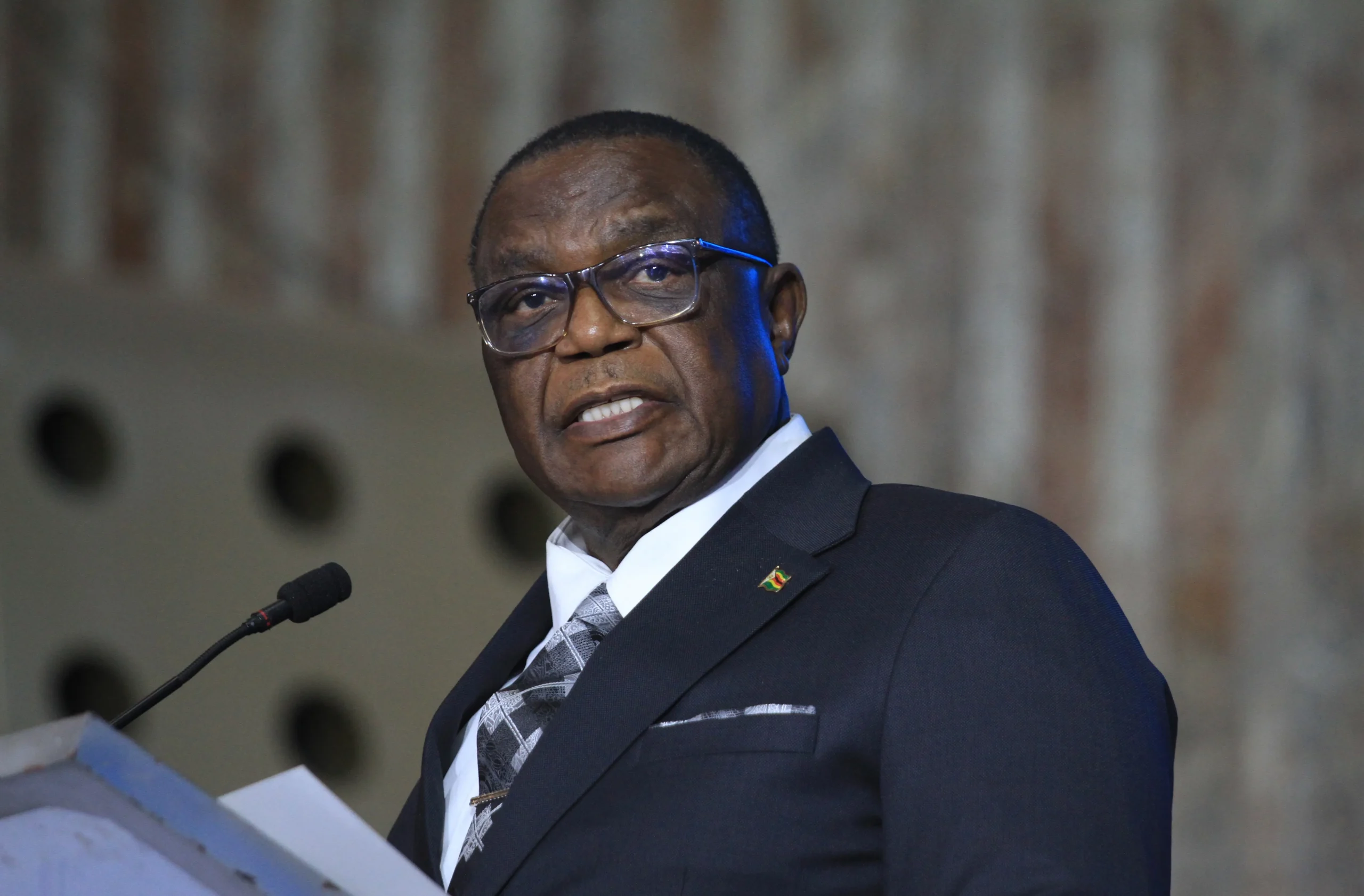
Chiwenga Fights Mnangagwa Plan
Vice President Constantino Chiwenga has embarked on a renewed narrative-framing whispering campaign to counter President Emmerson Mnangagwa’s controversial constitutional amendments extending his rule to 2030, saying the reason why people fought the liberation struggle was for land and the “one-man, one-vote” principle.
Mnangagwa and Chiwenga are locked in a deadly succession power struggle, with the 2030 plan as the new battlefront.
Chiwenga’s escalating campaign is designed and calculated to stop Mnangagwa’s constitutional changes which extend his rule by two more years to 2030 beyond his 2028 second term constitutional limit.
The Vice-President wants the direct presidential election system to remain as it symbolises the one man one vote principle for him.
Chiwenga also wants the changes to be subjected to a referendum, a hotly contested point in the debate.
Zanu PF says there is no need for a referendum as it is not removing term limits, but only changing the electoral cycle.
The opposition and civil society say elongating Mnangagwa’s stay in office needs a referendum.
The resultant intense debate currently unfolding over Constitutional Amendment Bill No.3 (CAB3) has triggered significant controversy over whether these changes should be subjected to a referendum or not.
While there is no argument that the Zimbabwean struggle was principally fought for land and the right to vote – unqualified franchise, there is a debate whether electing a president through parliament violates the one man one vote principle.
Some say that it does since voters are reduced to spectators in electing the president, while others say it does not as changing the electoral system will not remove universal adult suffrage.
It simply deepens voters’ right to elect MPs who in turn vote for the President as they do in Botswana and South Africa, among many others countries in the world, they say.
This debate has divided national opinion.
Mnangagwa, backed by the ruling Zanu PF and government, wants to extend his rule beyond his 2028 second term legal limit to 2030, and introduce a raft of changes revamping the political, electoral and governance systems.
One of the changes is to shift from a direct presidential election system to choosing a president through parliament.
While there is no single, globally fixed number of countries which elect their president indirectly due to shifting political systems, about 50 to 60 countries currently elect their president through an indirect process.
In these systems, the president is typically chosen by a legislature, a special electoral college, or another representative body rather than by a direct popular vote from the citizens.
Following the liberation struggle and independence from Britain in 1980, Zimbabwe elected its prime minister for a five-year term through parliament under the Lancaster House constitution.
A ceremonial president was elected by parliament for a renewable six-year term.
The late Canaan Banana was the only president to serve in this ceremonial role from 1980 until 1987.
Banana actually served for seven years; 257 days.
In 1987, the constitution was amended to abolish the separate role of the President and Prime Minister, creating an executive presidency under the late former president Robert Mugabe via constitutional amendment N0.7 in 1987.
Constitutional amendments in 2007 and the 2013 constitution later officially changed the presidential term from a maximum of six years to five-year terms.
Amendment (No. 7) was a landmark piece of legislation that fundamentally transformed the country’s political structure from a parliamentary system to an executive presidency.
The proposed amendments want to reverse that and go back to the old system.
The amendment weakened checks and balances, granting the president significant powers over the legislature and judiciary, effectively centralising authority within the executive branch, while creating an imperial presidency. NewsHawks