Mnangagwa’s insurance policy — Why General Sibanda’s rise should worry Zimbabwe
On 11 May 2026, a single sheet of paper bearing the Zanu PF crest formally tethered the future of Zimbabwe’s military top brass to the inner sanctum of its ruling party.
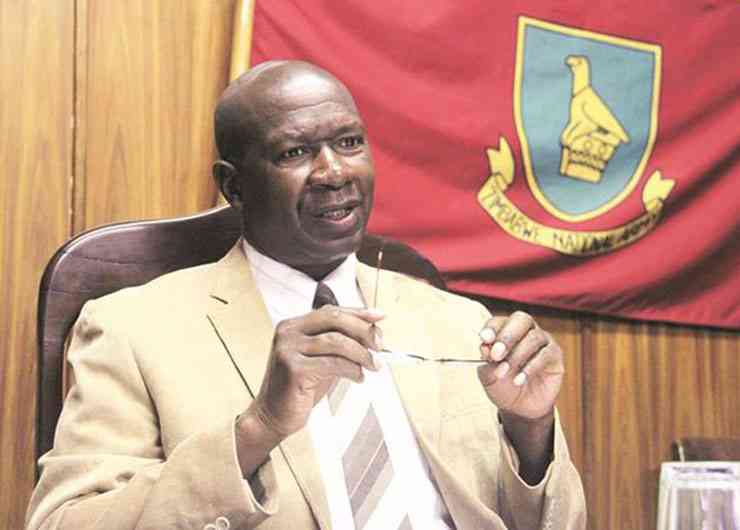
The appointment of retired General Philip Valerio Sibanda to the Zanu PF Politburo was delivered with the clinical precision of a military briefing, yet its reverberations are anything but routine.
While official communiques speak of “strengthening party structures,” the reality on the streets of Mutare and Bulawayo tells a different story. In the fights for basic survival and at the borders where the youth flee toward uncertain futures, there is little celebration. For the ordinary Zimbabwean, the reshuffling of the elite deck offers no relief from the grinding poverty that defines daily life.
This move is not about the people; it is a masterstroke of political survival. In appointing Sibanda, President Emmerson Mnangagwa is executing a sophisticated insurance policy against his deputy, Constantino Chiwenga, while further entrenching military influence within the state. This gambit prioritises personal loyalty and ethnic-regional consolidation over the desperate need for democratic reform.
*The Soldier’s Soldier: Who Is Philip Valerio Sibanda?*
General Philip Valerio Sibanda is no ordinary securocrat. To understand his utility to Mnangagwa, one must look at the silhouette he has cast over Zimbabwean history. A veteran of the liberation struggle with ZIPRA credentials, Sibanda has long been regarded as a “soldier’s soldier” – a disciplined, relatively low-profile officer.
He rose to the pinnacle of the Zimbabwe Defence Forces in 2017, succeeding Constantino Chiwenga after the latter led the “military-assisted transition” that toppled Robert Mugabe. Unlike the more abrasive Chiwenga, Sibanda’s reputation for professionalism provided a veneer of stability to the post-coup administration.
Furthermore, Sibanda shares a Karanga identity and Midlands-Masvingo regional ties with Mnangagwa, creating a powerful ethno-regional alignment. By bringing him into the Politburo – Zanu PF’s highest decision-making body after Congress – Mnangagwa is integrating the ultimate arbiter of power into a civilian structure that has increasingly become an extension of the barracks.
*Succession Chess: The Chiwenga Counterweight*
The strategic heart of this appointment lies in the high-stakes chess match of succession ahead of 2028. The relationship between Mnangagwa and Vice President Chiwenga has long been characterised by a fragile “bromance” born of necessity, but strained by competing ambitions.
Chiwenga, the face of the 2017 coup, has always been viewed as the heir apparent with a formidable power base in the ZANLA-dominated military wing. By elevating Sibanda – a ZIPRA veteran with a clean record – Mnangagwa introduces a disciplined counterweight to Chiwenga’s influence.
It is a classic “divide and rule” tactic, utilising liberation-era factionalism to ensure that no single military figure holds a monopoly on the party’s coercive power. This move suggests that Mnangagwa is not ready to hand over the keys to the state just yet.
Whether he is grooming Sibanda as a potential “third way” successor or simply using him to block Chiwenga’s path, the result is the same: the further militarisation of Zimbabwean politics. The transition from the uniform to the party regalia has become the only viable career path for Zimbabwe’s army elite.
*The Blurring Of Borders: A Critique Of The Securocratic State*
This recycling of securocrats into political roles signals a distressing continuity rather than the “New Dispensation” renewal once promised. When military officers transition directly into the Politburo, the thin line between civilian governance and military command evaporates entirely.
This blurring of authority erodes constitutional norms and demotivates civilian party cadres who find their upward mobility blocked by “parachuted” generals. It perpetuates a system of patronage where loyalty to the leader is valued above administrative competence or the democratic will of the people.
While the world watches for signs of institutional reform, this appointment suggests that the ruling party is doubling down on its “securocratic state” model. This affects the quality of governance significantly.
When the primary qualification for high office is the ability to command a battalion, the complex tasks of economic stabilisation and attracting foreign investment fall by the wayside. Public trust is further decimated when the citizenry sees their future being bartered in a closed-door game of military-political musical chairs.
*Beyond The Barracks: The Search For A Civilian Future*
Looking forward, the Sibanda appointment may offer short-term stability for Mnangagwa, but it offers little for Zimbabwe’s long-term health. Stability built on the loyalty of individuals rather than the strength of institutions is inherently brittle and prone to collapse under pressure.
Zimbabwe’s future cannot be secured by simply rearranging the occupants of the Politburo or by shifting power between different military factions. True progress requires a fundamental break from this cycle of elite power struggles and a genuine commitment to constitutionalism.
It requires a return to a civilian-led democracy where the military remains in the barracks and the government is held accountable by the ballot. As long as the path to power remains a march through the corridors of the military-security complex, Zimbabwe will remain a country in waiting.
Competence and accountability must finally replace loyalty and lineage if the nation is to move beyond the shadows of its own history.
The people of Zimbabwe deserve a leadership that prioritises their survival over its own. *_-Nehanda Radio_*