The Back-of-House Secret: The Hidden Battle for HIV-Positive Restaurant Workers
The Observer News Editor
Kudzai Jakachira
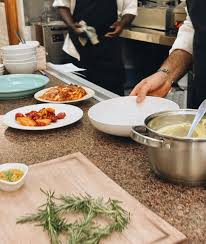
The dinner rush at any high-end city bistro is a masterclass in controlled chaos. Searing pans hiss, orders are shouted over the din of clattering porcelain, and servers glide through the swinging doors with practiced grace. In this high-adrenaline world, efficiency and presentation are everything. But for “Marcus” (a pseudonym), a brilliant 28-year-old line cook with an impeccable palate, the most exhausting part of the shift wasn’t the heat of the line—it was the crushing weight of a secret.
Marcus is living with HIV. He is also completely healthy, undetectable, and visually indistinguishable from any of his peers. Yet, in the culinary industry, a positive status remains one of the last deeply entrenched taboos.
Modern antiretroviral therapy (ART) suppresses the virus to levels that cannot be detected by blood tests, meaning the virus cannot be transmitted to others—including through food preparation.
When Marcus accidentally let his status slip to a co-worker during a late-night post-shift drink, the reaction was swift and silent. Within a week, his shifts were cut. Within two, he was reassigned from the visible drama of the presentation line to the isolated monotony of prep-work in the basement. A month later, he was let go under the vague guise of “restructuring.”
Marcus’s story is far from an isolated incident; it represents a quiet crisis brewing in the back-of-house of restaurants worldwide, where outdated stigma clashes violently with modern medical reality.
The culinary world prides itself on being a refuge for misfits, rebels, and outsiders. Yet, when it comes to HIV and AIDS, the industry frequently reverts to 1980s-era panic. Restaurant owners and managers, hyper-sensitive to brand reputation and consumer paranoia, often opt for a “fire first, ask questions never” policy.
The discrimination is rarely overt. It doesn’t come with shouting matches or explicit termination letters. Instead, it manifests as a slow, systematic freezing out scheduled shifts ,prominent, high-tip weekend shifts mysteriously vanish.
Minor infractions that are usually laughed off in a chaotic kitchen suddenly become fireable offenses.
Management weaponizes basic health codes, falsely claiming that a worker’s presence violates food safety protocols.
“It’s a ghost protocol,” says human rights advocate Sarah Jenkins, who specializes in labor law. “Employers know that explicitly firing someone for their HIV status is a blatant violation of labor laws. So, they create a hostile work environment until the employee quits, or they find a minor, unrelated loophole to justify termination.”
The tragic irony of this discrimination is that it defies every piece of established medical science. According to the World Health Organization (WHO) and the Centers for Disease Control and Prevention (CDC), HIV cannot be transmitted through food or drink. The virus is fragile, cannot survive long outside the human body, and is completely destroyed by the heat of cooking and standard stomach acid.
Even in the event of a kitchen accident—a common knife cut, for instance—standard hospitality protocol requires immediate first aid, sanitization of the station, and discarding of any compromised food. This applies to every single employee, regardless of their health status.
Furthermore, with modern Antiretroviral Therapy (ART), individuals living with HIV can achieve an “undetectable” viral load. The global medical consensus is absolute: Undetectable equals Untransmittable (U=U). A line cook with an undetectable viral load poses exactly zero risk to the patrons eating their food or the team working beside them.
Yet, public perception remains stubbornly frozen in time. Restaurant management often fears that if customers discover an employee is positive, the business will face a boycotting public driven by irrational fear. To protect the bottom line, they sacrifice the worker.
For those who rely on the hospitality industry for their livelihood, this discrimination forces a grueling psychological choice: live in constant fear of discovery, or face financial ruin.
The cold reality of kitchen stigma raises public fear over managerial panic which silences the poor worker.
“You become a double agent in your own life,” Marcus reflects, staring at his hands, scarred from years of battling hot oil and sharp steel. “You hide your medication in generic vitamin bottles. You pray you don’t get a sudden fever or need a day off for a specialist appointment, because any question feels like an interrogation.”
This culture of fear doesn’t just damage mental health; it actively undermines public health. When workers believe that disclosing their status or seeking treatment will cost them their livelihood, they are driven into the shadows. Advocacy groups argue that inclusive, educated workplaces actually create safer environments for everyone, fostering transparent health practices and robust safety protocols.
Breaking this cycle requires a radical overhaul of how the hospitality sector approaches chronic health conditions. Progressive culinary coalitions are beginning to push for mandatory, science-based training for restaurant management, shifting the focus from fear-based exclusion to rigorous, universal kitchen safety.
The remedy is simple: education must become a staple ingredient in culinary training. When kitchen managers understand the reality of U=U, the irrational fear evaporates, leaving room for what actually matters in a kitchen—talent, dedication, and a passion for the craft.
As for Marcus, he eventually found a position at a progressive, farm-to-table cooperative where the head chef openly champions inclusivity and health education. Today, he is running the busiest station in the kitchen, proving every night that a virus doesn’t dictate a person’s worth, and it certainly doesn’t diminish the artistry on the plate.
“The kitchen should care about your knife skills, your seasoning, and your speed,” Marcus says, a spark returning to his eyes as the dinner rush begins to roar. “Everything else is just noise. It’s time the industry grows up and faces the facts.”