
“No Water, No Land, No Justice”: Manhize Families Cry Out as Manhize Walls Them Off From Their Future
By Desire Tshuma
HARARE— The Centre for Natural Resource Governance says the government must urgently step in at Manhize. Families displaced by Dinson Iron and Steel Company are living with unreliable water, inadequate compensation, and years without access to farmland.
“The Centre for Natural Resource Governance is deeply concerned by the worsening humanitarian, environmental, and governance crisis surrounding the Dinson Iron and Steel Company operations in Manhize, where displaced communities continue to suffer under poor living conditions, unclear relocation arrangements, and environmental harm,” CNRG said.
Dinson Iron and Steel Company is owned by a Chinese investor. CNRG and community members argue that Zimbabweans are bearing the cost of land taken during the liberation struggle now being used by foreign-owned companies.
CNRG reports that six boreholes drilled by Manhize at relocation sites have turned into dry holes. This has left families without reliable water.
Compensation has become a point of conflict. Because the land was classified as state land, households say they were only paid for structures and trees. They were not paid for the full value of their livelihoods.
The crisis is most severe for about 22 families from Mushenjere village. Many of them are elderly people aged 80 to 90.
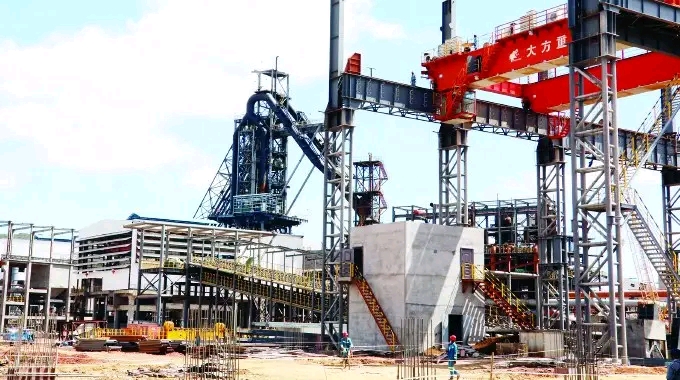
CNRG says Manhize built its industrial complex on villagers’ farmland. The company also erected a wall around the area, cutting families off from arable land. For more than four years households have been unable to grow crops for subsistence. This has led to persistent food insecurity.
Only three families have reportedly been moved to the proposed relocation site. CNRG alleges that even those houses have developed internal structural cracks, despite appearing complete from the outside.
Families say they survive on irregular subsistence payments of US$200 every other month. They describe the amount as inadequate given rising living costs. At one point, the payments reportedly stopped for more than five months until communities protested.
CNRG also raises concern about how the project is presented publicly. The group alleges that media houses are invited on choreographed tours of production facilities. Relocation sites, cracked houses, and dust pollution zones are deliberately excluded.
The organization says senior Zimbabwean managers at Manhize have drawn government attention. CNRG reports that officials from the Ministry of Lands recently called the manager to order. This followed allegations that he engaged communities outside formal government relocation processes and without oversight from state authorities.
Workers are facing safety concerns too, CNRG says. The group alleges that medical tests were conducted on employees. The results were kept at the safety office and not shared with workers. In cases where employees might have life threatening conditions, that information remains with management.
CNRG and some community voices warn that the treatment of displaced Zimbabweans at Manhize risks deepening public anger toward foreign-owned firms. They argue that when citizens feel their land, earned through the liberation struggle, is taken without fair compensation, it fuels resentment. This resentment is not only local but also spreads across the region. It has contributed to attitudes linked to xenophobia in South Africa.
CNRG says Zimbabwe’s industrialization agenda cannot come at the expense of human dignity, community rights, and environmental justice. The organization is calling on the government to enforce immediate construction of standard, safe, and durable housing for all affected families. It also wants independent structural assessments of all relocation houses.
CNRG further demands reliable water infrastructure for relocated communities. It wants full, impartial government oversight of relocation and compensation processes. The group says elderly and vulnerable residents must be protected from further displacement until humane conditions are guaranteed.
It also calls for independent environmental and health assessments on dust pollution and emissions. CNRG wants medical results of all tested workers released. It is asking for free medical examinations and treatment for affected families.
The organization wants an investigation into allegations of misinformation and irregular community engagements involving company officials. It also wants a measurable timeline for implementation of all action points.
CNRG says its goal is to defend the rights of communities affected by extractive industries. The organization can be reached through its Information Department at info@cnrgzim.org or +263 786 913 423.
Dinson Iron and Steel Company had not responded to the allegations by the time of publication.