
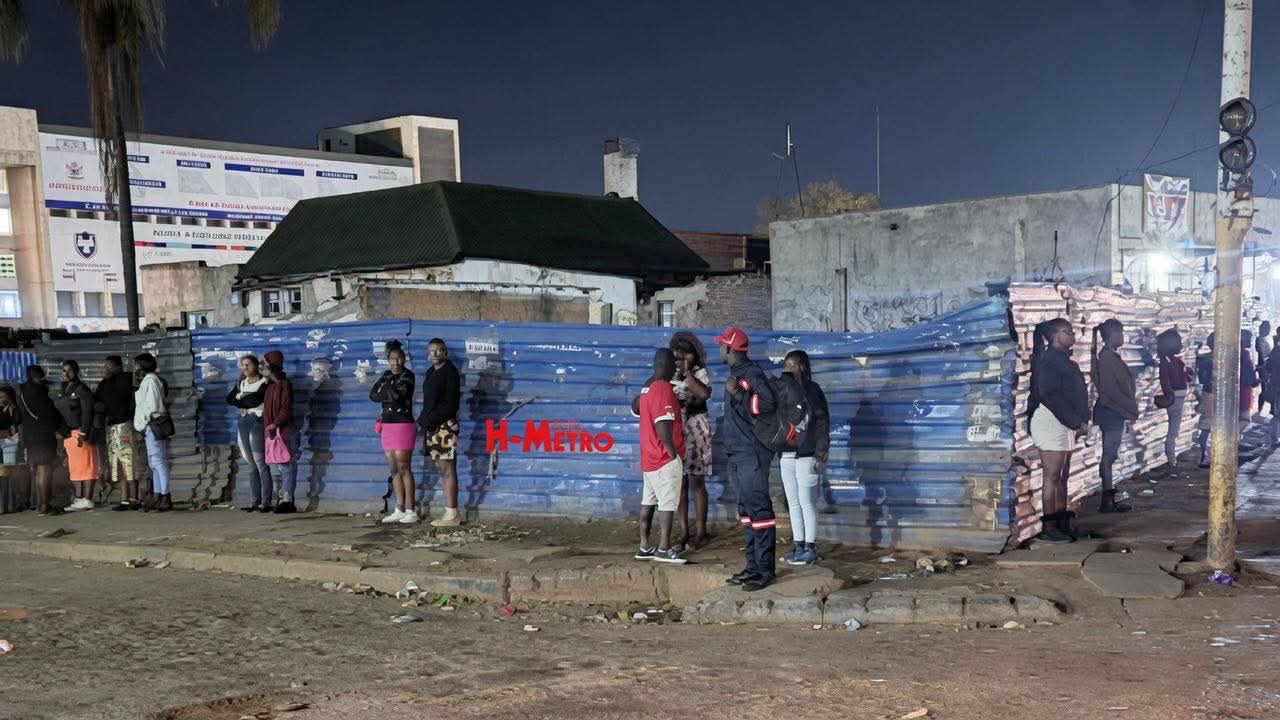
HARARE CBD HOTSPOT TRIGGERS EXPLOSION OF NEW HIV, AIDS AND STI TRANSMISSION RISKS
The night is completely transforming the once-orderly business
corridors of Harare, as a shocking and aggressive influx of commercial
sex work takes over the heart of the central business district. At the
busy intersection of Mbuya Nehanda Street and Nelson Mandela Avenue,
what used to be a standard transit point for commuters and a hub for
daytime traders has suddenly become an open, crowded marketplace for
transactional sex. The scale of this nightly takeover is stunning,
catching regular citizens and business owners completely off guard as
the sidewalks are flooded with activity the moment the sun goes down.
This dramatic shift is not just altering the face of the city; it is
creating an environment that is deeply disturbing to witness and
highly dangerous for the community.
What makes this situation so alarming is how openly it is happening
right in the middle of the capital city. This is no longer a hidden
trade confined to dark back alleys or secluded bars; it has moved
directly onto the main tarmac, where dozens of individuals flag down
passing vehicles and openly solicit pedestrians. Motorists slowing
down at the intersection are routinely swarmed, and ordinary citizens
trying to navigate their way home are forced to walk through a
gauntlet of overt sexual commerce. The sheer numbers and the boldness
of the operations give the distinct impression of an invasion, where
public spaces meant for everyone have been entirely repurposed into an
unregulated, adult-only zone operating in plain sight.
This rapid expansion is having a devastating and immediate impact on
the city’s youth, who are exposed to this environment every single
day. Many young people, including students and informal night vendors,
frequent this specific corridor to catch late-night commuter omnibuses
or run small stalls. Instead of a safe urban environment, they are
forced to witness the aggressive realities of street-level sex work on
their way home. Even more heartbreaking is the fact that the economic
hardships facing families are pushing a growing number of vulnerable
teenagers directly into this ecosystem. Young girls, who lack the life
experience or social leverage to protect themselves, are being drawn
to these street corners by the promise of quick money, completely
unaware of the brutal realities and long-term consequences of the life
they are entering.
The public health consequences of this unfolding crisis are
terrifying, particularly regarding the risk of new HIV and AIDS
infections. Street-level transactional sex in a chaotic and highly
competitive environment like Mbuya Nehanda creates a perfect storm for
unsafe practices. In the desperate scramble for income, the standard
rules of protection frequently collapse. Clients regularly offer
double or triple the standard fee to engage in unprotected sex, and
under severe economic strain, many individuals give in to these
demands. This trade-off creates a massive, hidden health emergency, as
a single unprotected encounter can easily spark a new chain of
infection that spreads far beyond this single street corner, traveling
back with clients into stable homes and suburban families across
Harare.
For young people who become consumers or find themselves caught up in
the margins of this street network, the danger is equally severe. The
constant visibility and normalization of unprotected transactional sex
on these street corners distort their understanding of personal safety
and healthy relationships. It exposes them to life-altering health
risks at the very beginning of their lives, threatening to roll back
decades of progress that Zimbabwe has made in lowering national HIV
transmission rates. The tragedy is that this environment is actively
grooming a new generation to view sexual health through a lens of risk
and economic survival rather than safety.
Watching the character of the city change so drastically leaves
residents and onlookers deeply unsettled. The aggressive nature of
this street economy has made the area feel unsafe and inaccessible for
ordinary families, turning a vital commercial zone into a source of
constant anxiety. It is a striking wake-up call that the city center
is shifting in ways that cannot be ignored, as the daily invasion of
these street corners threatens the social fabric of the community.
Without a serious effort to address the economic vulnerabilities
drawing people to these streets and a plan to reclaim public spaces,
this intersection will continue to serve as a dangerous breeding
ground that compromises both the health of the public and the future
of the youth.