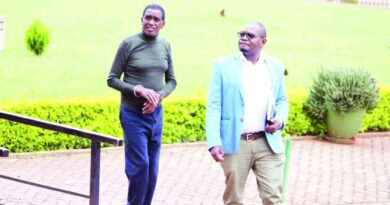

‘2023 Elections May Be the Last Zimbabwe Ever Had,’ Says Douglas Coltart
Zimbabwean human rights lawyer Douglas Coltart has strongly criticised President Emmerson Mnangagwa after he signed Constitutional Amendment Bill No. 3 into law.
Speaking to Channel Africa’s Peter Ndoro, Coltart accused Mnangagwa of abandoning promises made to Zimbabweans.
He argued the president’s decision represented a serious attack on the country’s constitutional democracy.
According to Coltart, the signing exposed broken commitments made both locally and internationally.
“He’d broken promises repeatedly made that he would not do precisely what he has just done by participating in this extension to his term,” Coltart said.
He went further and described the development as a direct assault on Zimbabwe’s constitutional order.
Coltart claimed both the president and Parliament had worked together to weaken the country’s founding democratic principles.
He warned the amendments erase key protections introduced under the 2013 Constitution.
“In many ways [it is] an even worse system than was there prior to the constitutional reforms of 2013,” he added.
Coltart warns amendments strengthen executive control
Coltart identified the extension of presidential and parliamentary terms until at least 2030 as the biggest change.
He also highlighted wording introduced during the amendment process.
According to him, that wording creates room for future term extensions.
He warned this loophole could delay elections indefinitely.
An “ambiguity” inserted during the amendment process, which opposition MPs tried to close, “potentially opens the door to the perpetual extension of the president and parliament’s term… till kingdom come”. “Effectively abolishing elections or making elections no longer mandatory,” he said.
Coltart argued the amendments contradict constitutional provisions preventing sitting leaders from benefiting from term extensions.
He insisted such changes require approval through a national referendum.
“The president has signed the bill in violation of the constitution,” he said.
Coltart also criticised changes affecting presidential elections.
He noted Zimbabweans have directly elected presidents since 1987.
However, he said the amendments now shift that responsibility to Parliament.
Supporters compare the model to South Africa’s system.
Coltart rejected that comparison.
He argued other amendments undermine democratic parliamentary elections.
He also expressed concern over appointments to electoral institutions.
According to Coltart, the president now enjoys expanded authority over key electoral bodies.
He further criticised new powers allowing direct appointments to the Senate.
He argued these changes favour the ruling party regardless of voter support.
He warned the reforms could help retain power with limited electoral backing.
“That is not a democratic reform. That is authoritarian consolidation,” Coltart said.
Lawyer urges Zimbabweans to defend the Constitution
Coltart also raised concerns over judicial independence.
He said previous appointment procedures protected the courts from political interference.
The amendments, he argued, remove those safeguards completely.
“The president has been given unfettered power to appoint every judge in the country, essentially giving the executive control over the appointment of the judiciary.”
He believes every amendment serves one purpose.
“Each and every single one of the reforms… is about consolidating power for the president and stripping the people of Zimbabwe of any mechanisms of accountability,” Coltart said.
Although legal action remains difficult, Coltart believes court challenges are still possible.
He pointed to constitutional provisions protecting presidential term limits.
“There are still reasonable prospects of success that the judiciary will stand up on that issue,” he said.
However, he urged citizens not to depend entirely on the courts.
“We cannot simply sit back and hope that the courts will save us from this constitutional coup,” he said. “We need to use those rights now to defend our constitution which is under attack.”
Coltart also dismissed government claims that the amendment only changes term length.
Addressing government arguments that the amendment only changes the length of a term, not the number of terms, Coltart called the line “hilarious”.
He referred to Section 328(1) of the Constitution.
“It explicitly says it’s about dealing with the length of time that a person may hold office,” he said. “The argument carries no weight whatsoever the moment one actually just opens the constitution.”
Finally, Coltart warned Zimbabwe’s democratic future remains uncertain.
He linked the amendments to concerns surrounding the disputed 2023 elections.
“It is not unreasonable to say that those flawed 2023 elections may be the last elections that Zimbabwe ever had,” he said.
He cautioned that future elections may depend entirely on Parliament’s decision.
“Whether we have elections… perhaps we do have elections by the benevolence of parliament in 2030,” he said.
*Some Zimbabwean returnees vow to never return to South Africa, warn of farm labour crisis*
SOME Zimbabweans returning from South Africa have vowed never to go back, describing the experiences that forced them to leave as traumatic, while warning that South African farms could soon face labour shortages following the departure of thousands of foreign workers.
Speaking to Zimpapers at the reception centre at the United Congregational Church of Southern Africa (UCCSA) in Njube, Bulawayo, on Thursday, several returnees who arrived on Wednesday evening said many commercial farms in South Africa depended heavily on foreign workers, particularly Zimbabweans.
The latest group forms part of a growing number of Zimbabweans returning home following heightened anti-migrant tensions in parts of South Africa.
Mr Wiseman Mlilo from Tshefunye in Tsholotsho, who had been working in Limpopo Province, said he lost virtually everything after being forced to flee at short notice.
“I will never go back to South Africa. What I went through was traumatising. I left my goods such as sofas, a refrigerator and bicycles and they were all looted because I had no time to prepare,” he said.
A skilled builder and tiler, Mr Mlilo said South African agriculture would likely feel the effects of the departure of foreign workers.
“My fear is that while we may have been chased away, this move will bite the South African economy sooner rather than later. White farmers were left staring at their farms without anyone to attend to them,” he said.
Another returnee, Mr Bancgwele Sibanda from Plumtree, said he had also resolved never to return to South Africa.
“I am a welder, so I would rather get a job back home or, if I receive financial assistance, start my own small business,” he said.
Mr Sibanda said he returned with only a single bag containing a few clothes.
“There was no time to pack our things,” he said.
Mr Brighton Ncube from Ntabazinduna, who had been living in Polokwane since 2008, said although he returned empty-handed, he was grateful to be back in Zimbabwe.
“Home is always best. I went to South Africa in 2008 but came back with nothing. I have no identity particulars. I informed the officials here, but they just wrote my name down and did not explain how I would get those documents,” he said.
Government, working with churches, humanitarian organisations and other partners, is providing temporary accommodation, meals and other essential services to the returnees while arrangements are made for them to travel to their respective home areas.
Authorities have also indicated that reintegration support will extend beyond the reception phase, with empowerment programmes and livelihood initiatives being developed to help returnees rebuild their lives and become economically productive.