
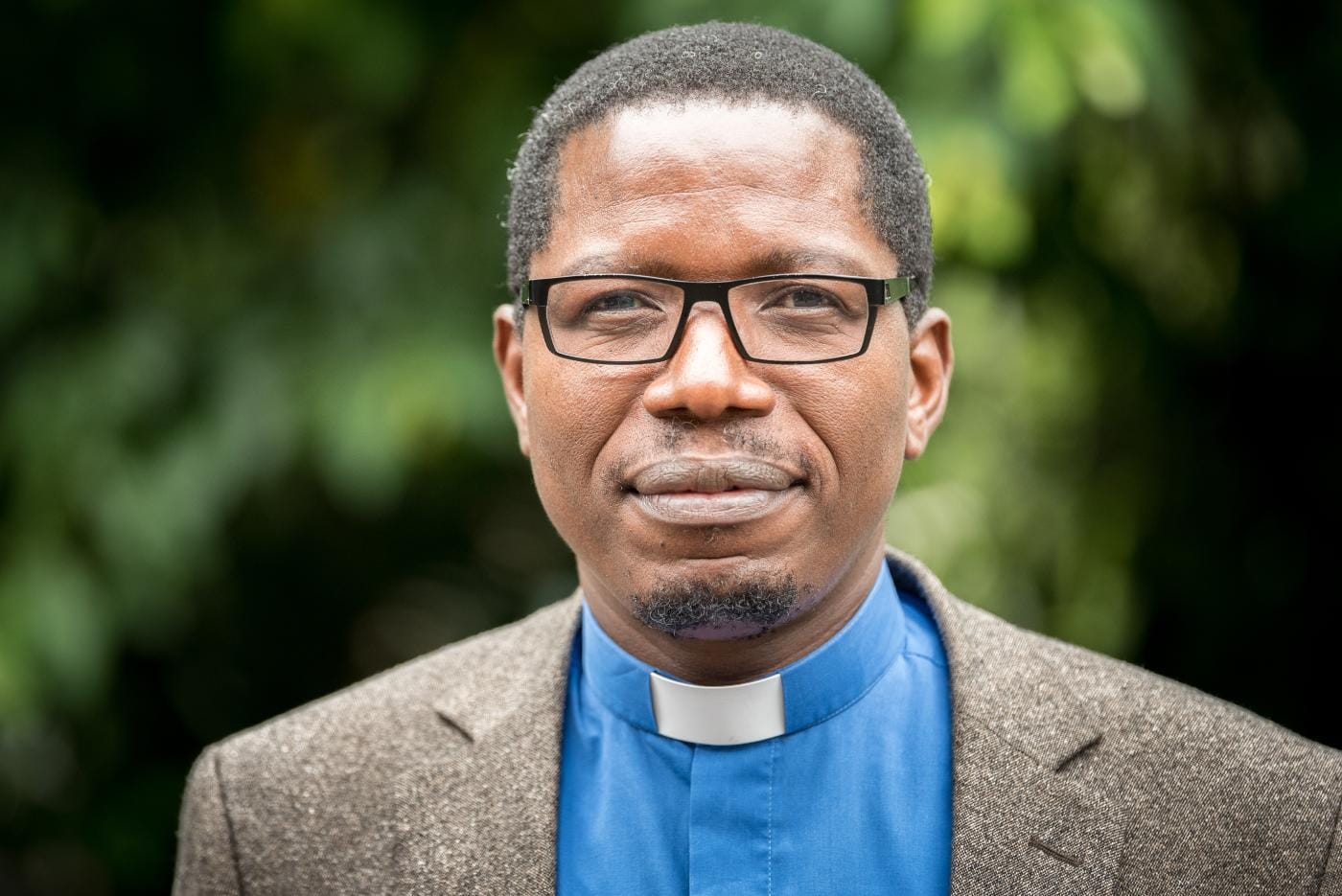
Rev. Mtata Warns Of “Politics Of Patronage” As Zimbabwe Shifts From Sticks To Carrots
By Desire Tshuma
Geneva — Prominent cleric Reverend Dr. Kenneth Mtata has warned that Zimbabwe is witnessing a dangerous shift in political control, from overt repression to a sophisticated system of patronage that “quietly captures the conscience.”
In a reflection titled ‘From Sticks to Carrots’, Rev. Mtata said for four decades Zimbabwean politics relied heavily on the “stick” violence, intimidation, arbitrary arrests and repression to silence dissent within and outside ZANU-PF.
While he noted those methods have not disappeared, Rev. Mtata argued another strategy is now taking centre stage.
“Today, many of the most influential voices are no longer silenced by fear alone but through patronage,” he wrote. “A sophisticated system has evolved to identify respected leaders, artists, clergy, academics, journalists, businesspeople, and other opinion shapers, drawing them into networks of obligation through gifts of money, vehicles, contracts, appointments, and other privileges.”
According to Rev. Mtata, the power of the “carrot” is that no instruction needs to be given. “No one needs to say, ‘Support corruption’ or ‘Defend the regime.’ The gift speaks for itself. It creates a quiet understanding that criticism should be softened, silence maintained, or loyalty quietly assumed.”
He said what makes the system particularly effective is how it extends beyond those who actually receive the gifts. It creates, he argued, “a powerful illusion for the entire nation: that if one simply cooperates, remains silent, or stays close to power, one’s turn to be rewarded will eventually come.”
“Patronage becomes an aspiration. Instead of citizens insisting on justice, accountability, and equal opportunity, many begin to compete for access to favours. Public life is transformed into a waiting room for personal reward, and the common good is gradually displaced by the pursuit of individual benefit,” Rev. Mtata wrote.
The cleric said this is especially potent in an economy where livelihoods and opportunities are increasingly controlled from the centre of political power. For many, he added, saying “No” to patronage “can mean sacrificing financial security, professional advancement, or even the well-being of one’s family.”
Drawing from Scripture, Rev. Mtata cautioned that gifts distort justice. He cited Exodus 23:8: “You shall take no bribe, for a bribe blinds the clear-sighted and subverts the cause of the righteous.” The danger, he said, is “not only in receiving an unlawful payment but in allowing one’s moral independence to be exchanged for personal benefit.”
But Rev. Mtata also offered hope, referencing the biblical story of Elijah. “God always preserves a remnant. When Elijah believed he stood alone in the face of the greedy and cruel king, Ahab, God declared that seven thousand had not bowed the knee to Baal!”
“Every generation has women and men whose convictions are not for sale, whose integrity cannot be purchased, and whose hope is anchored not in political favour but in God’s justice,” he said.
He concluded that Zimbabwe’s future will depend not on those who receive the biggest gifts, but on those who refuse to sell their conscience.
“Nations are renewed when there remains a people who cannot be bought, who speak the truth without fear or favour, and who choose faithfulness over privilege. May God strengthen that remnant, for through them hope endures.”
Rev. Dr. Kenneth Mtata was born on 17 November 1971 in Mberengwa, Zimbabwe . He is a cleric of the Evangelical Lutheran Church in Zimbabwe and holds a PhD in Biblical Studies from the University of KwaZulu-Natal.
He served as General Secretary of the Zimbabwe Council of Churches from 2016 to 2022, based at the ZCC offices in Hatfield, Harare. Since 2022 he has been based in Geneva, Switzerland, where he works as Programme Director for Life, Justice and Peace at the World Council of Churches .
Rev. Mtata has also lectured in biblical studies and theology in South Africa and Germany, and previously served as study secretary for Lutheran theology and practice at the Lutheran World Federation in Geneva.