BRING BACK ‘SAMSON’: HOW ZIMBABWE’S LIVESTOCK SECTOR CAN POWER A $15.8BN AGRICULTURAL ECONOMY
By Chiyedzo Josiah Dimbo Ambassador of Hope
_“If you desire peace, cultivate justice, but at the same time cultivate the fields to produce the fruit that will nourish peace.”_ — Norman Borlaug
Zimbabwe’s fields once fed Europe. Our cattle once spoke for themselves.
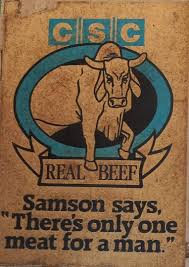
“SAMSON NYAMA INONAKA INOTAURA YEGA” was not just a slogan — it was a global brand. The Cold Storage Commission (CSC) exported premium, grass-fed Zimbabwean beef to the EU, the Middle East, and beyond. That was our former glory.
A bold agenda has been set. On 5 August 2026, the Zimbabwe Livestock Conference will convene under the banner: _Building Resilient Livestock Systems Towards a $15.8 Billion Agricultural Economy by 2030: Addressing Production and Marketing Challenges_ This high-level gathering directly feeds into the Zimbabwe Agricultural Show (ZAS) 116th edition, running from 24 to 29 August 2026 under the theme _“Powering Growth: Where Agriculture, Technology and Commerce Converge.”_ Together, they promise to bring back the glory — and the numbers say we must.
Here is the critical clarification: the $15.8 billion target is the entire agricultural economy — crops, livestock, fisheries, forestry — by 2030. The livestock sector is a vital pillar within that vision. The conference, therefore, is not about livestock claiming the whole prize, but about identifying how livestock — cattle, goats, sheep, poultry, dairy, pigs, and emerging value chains — will contribute its fair and growing share toward that $15.8 billion goal.
THE $15.8BN AGRICULTURAL ECONOMY: LIVESTOCK’S ROLE
According to the Ministry of Lands, Agriculture, Fisheries, Water and Rural Development, Zimbabwe’s entire agricultural economy is targeted to reach $15.8 billion by 2030, with livestock currently contributing over 40% of agricultural GDP and employing more than 60% of rural households.
Livestock — spanning cattle, goats, sheep, poultry, dairy, pigs, and emerging species — is the backbone of rural livelihoods. The conference will focus on how each subsector can lift its game to drive growth across the broader agricultural economy.
– Cattle: 5.4 million head — the historic flagship.
– Goats: 4.5 million head — hardy, fast-maturing, and critical for smallholder resilience.
Sheep: 600,000 head — growing demand for mutton in local and export markets.
– Poultry: 24 million birds — a $1.1 billion industry already, with room for expansion.
– Dairy, pigs, wildlife, and other species round out the portfolio.
But potential ≠ production. Our national cattle herd of 5.4 million is still marginally below the 1990 peak of 5.6 million. The off-take rate sits at 9% against a regional benchmark of 18–22%. This gap alone represents an untapped revenue opportunity of over $800 million annually if we halve the difference. For goats and sheep, off-take rates are even lower, meaning immense potential for increased market supply and income for rural communities.
Policy target: Under Vision 2030 and the Agriculture and Food Systems Transformation Strategy, government aims to grow the livestock sector as a key contributor to the $15.8 billion agricultural economy, through improved genetics, disease control, value addition, and market access.
FROM SAMSON TO SILENCE: WHAT WE LOST
In the 1980s and 1990s, CSC was Africa’s largest beef processor:
– Export capacity: 150,000 tonnes per year
– Markets: EU, UK, Middle East. “SAMSON” beef was a premium brand.
– Jobs: 10,000 direct; 50,000 indirect
We lost EU market access in 2001 due to Foot and Mouth Disease (FMD) and compliance gaps. Exports collapsed. By 2023, Zimbabwe exported only 2,800 tonnes of beef, mostly to regional markets. Our goat, sheep, and dairy exports were negligible.
Meanwhile, the world moved — and some of the most instructive models emerged from Africa and beyond.
REGIONAL & INTERNATIONAL BENCHMARKS
To reclaim glory, we must measure against those winning — and learn from innovative peers.
Botswana, with 2.5 million cattle, exported 22,000 tonnes of beef to the EU in 2023, leveraging FMD-free zones and EU certification.
Namibia, with 2.6 million cattle, sent 28,000 tonnes to the EU and China, thanks to traceability and premium grass-fed positioning.
South Africa, with 13.6 million cattle, exported 42,000 tonnes through feedlots, cold chains, and global brands.
– Brazil, with 232 million cattle, exported 2.5 million tonnes, driven by scale and low production cost.
– Australia, with 26 million cattle, exported 1.2 million tonnes, built on quality assurance and market access.
Kenya offers a powerful lesson in scale and digitalisation. Kenya’s national herd stands at approximately 20 million cattle, 28 million goats, 18 million sheep, and over 40 million poultry. The Kenya Livestock Insurance Programme (KLIP) uses satellite data to trigger payouts for pastoralists during drought. Mobile platforms like DigiCow and iCow provide smallholders with breed selection advice, veterinary alerts, and market prices via SMS. Kenya’s Kenya Meat Commission is modernising through digital traceability — from farm to fork. Zimbabwe can adopt similar digital tools to improve herd management, disease surveillance, and market linkages.
Ethiopia demonstrates the power of scale and value addition. With Africa’s largest livestock population — about 70 million cattle, 42 million goats, 52 million sheep, and million poultry — Ethiopia has invested heavily in leather processing: tanneries, finished leather goods, footwear, and garments. The Ethiopian Leather Industry Development Institute drives quality standards and export promotion. Leather exports earned Ethiopia over $120 million in recent years. Zimbabwe, with its abundant hides and skins from cattle, goats, and sheep, could replicate this model.
New Zealand is the global benchmark for dairy excellence. With just 4.7 million people and 6.3 million dairy cows, New Zealand exports over $12 billion in dairy products annually — milk powder, butter, cheese, and infant formula. Key success factors: grass-fed systems, cooperative ownership (Fonterra), stringent quality assurance, and strong export marketing. Zimbabwe’s dairy sector, currently producing around 80 million litres annually against a national demand of over 120 million litres, has massive room for growth.
Key lessons:
– Disease-free zones = market access. Botswana and Namibia earn 3× more per kg because they are EU-compliant.
Traceability sells. Premium markets pay $6–$8/kg for traceable, grass-fed beef. Zimbabwe averages $3.20/kg domestically.
Digitalisation unlocks efficiency. Kenya shows how mobile and satellite technology can transform livestock management and insurance.
•Value addition multiplies revenue. Ethiopia turns cattle, goat, and sheep hides into high-value leather goods. New Zealand turns grass into global dairy brands.
– Diversify beyond beef. Zimbabwe’s sheep, goats, poultry, and dairy each offer distinct pathways to growth within the $15.8 billion agricultural economy.
ZAS 116 & THE LIVESTOCK CONFERENCE: THE FIELD TO REBUILD
The 5 August Livestock Conference will address the production and marketing challenges head-on, asking: _How can livestock contribute its maximum share to the $15.8 billion agricultural economy by 2030?_
ZAS 116, under the theme _“Powering Growth: Where Agriculture, Technology and Commerce Converge,”_ is the national platform to restart. The show will focus on:
Breed Improvement: Showcasing Brahman, Tuli, and Angus genetics for drought resilience; also Boer goats and improved dairy breeds
FMD Control: Advocacy for compartmentalization and vaccination corridors
– Cold Chain Revival: Partnerships to rehabilitate abattoirs and feedlots
Leather Value Addition: Learning from Ethiopia’s model — investing in tanneries and finished leather products
Digitalisation: Adopting Kenya-style platforms for livestock tracking, disease alerts, market pricing, and insurance
Dairy Development: Drawing on New Zealand’s grass-fed, cooperative model to boost local milk production
– Youth & Women in Livestock: Training on fattening, finance, and market linkages across all species
This aligns with policy. The Livestock Growth Plan targets:
Herd growth to 6.5 million cattle by 2028; significant increases in goat, sheep, and poultry populations
– Off-take to 15% for cattle and higher for small ruminants
– Re-entry into EU beef markets by 2027
– Development of leather processing capacity
– Digitalisation of livestock services
WHAT MUST HAPPEN NOW
– Justice in the value chain – Transparent cattle, goat, and sheep markets; no side-marketing; fair pricing for communal farmers.
– Cultivate the fields – Dip tanks, pastures, water points, fodder production. Livestock is agriculture.
Brand Zimbabwe again – A new “SAMSON” for the 21st century: certified, traceable, _“Nyama Inonaka Inotaura Yega.”_ Plus a new dairy brand inspired by New Zealand, and a leather brand inspired by Ethiopia.
Go digital – Invest in digital platforms for traceability, disease control, market access, and insurance, following Kenya’s lead.
Patriotic stakeholders like Cde Jimayi Muduvuri have signalled readiness to support organized agricultural initiatives that create work and restore dignity. Through the Muduvuri Rehabilitation and Empowerment Foundation, support for productive sectors is key — because a working farmer is the foundation of a peaceful nation.
THE NEXT MILLIONAIRES: ZIMBABWE’S YOUTH AND THE AGRICULTURAL REVOLUTION
Here is a truth that must be spoken boldly: The next millionaires from Zimbabwe will come from the agricultural sector. Not from mining, not from banking — from the fields, the herds, the value chains of beef, goats, sheep, poultry, dairy, and leather. The young people of this nation must seize this moment.
Vision 2030 is not a government slogan; it is a generational contract. To reach an upper-middle-income economy, we need a new army of agri-preneurs who see cattle as capital, leather as export gold, digital platforms as market power, and dairy as a steady income stream. The youth must not wait for jobs — they must create them.
The President’s mantra rings true: Nyika inovakwa nevene vayo — A nation is built by its own people . The August Livestock Conference and ZAS 116 must deliberately include youth bootcamps, mentorship programs, and youth-dedicated financing windows.
Imagine a 25-year-old in Murehwa who digitises her goat herd and exports premium chevon to Dubai. Imagine a 30-year-old in Bulawayo who turns a disused abattoir into a solar-powered, traceable beef processing plant. These are not fantasies — they are the business models that will produce Zimbabwe’s next millionaires.
AMBASSADOR OF HOPE PERSPECTIVE
A cow is not just wealth. It is dignity, it is heritage, it is resilience, and it is the story of Zimbabwe speaking for itself again.
A goat is school fees. A sheep is a roof. A dairy cow is drought insurance. A leather factory is jobs. A digital platform is market power. It is all peace in the village.
We had the brand. We had the market. We had the grass. We can have it again — across beef, goats, sheep, dairy, poultry, leather, and digital services.
The 5 August Livestock Conference and ZAS 116 must not be just a show of big bulls. They must be a policy convention — a place where farmers, government, finance, and markets sign a covenant to grow livestock’s contribution to the $15.8 billion agricultural economy by 2030.
Botswana did it with 2.5 million cattle. Namibia did it with 2.6 million. Kenya did it with 20 million cattle and digitalisation. Ethiopia did it with 70 million cattle and leather value addition. New Zealand built a dairy empire with 6.3 million cows.
We have 5.4 million cattle, 4.5 million goats, 600,000 sheep, 24 million birds, and a growing dairy sector. The grass is still here. The people are still here. Digital tools are available. Leather markets are waiting. Dairy demand is rising. And the youth are ready.
The only question is: Will we cultivate the field — across every species, every value chain, every innovation, and every young dreamer?
Let’s bring back SAMSON. Let Zimbabwe’s livestock sector speak for itself again — and help power the $15.8 billion agricultural economy, one young millionaire at a time.
From Cold Storage to Cold Chain. From beef-only to diversified livestock. From $3.2bn sector to a champion contributor. From local to global.
Nyika inovakwa nevene vayo