
Zimbabwe braces for anti-Constitutional Amendment protests, month after Mnangagwa got his way
Anti-riot police officers were all over Harare Thursday afternoon and evening as they assessed the situation in anticipation of either protests or a shutdown on Friday.
Talk in most parts of the capital was centred on the planned anti-Constitutional Amendment Act (CAA3) protests as residents brace for what many expect to be cases of violence.
CAA3 extended Mnangagwa’s hold on power to 2030, as has always been Zanu PF’s wish. It also changed the manner in which Zimbabweans vote for Presidents by giving that authority to legislators only.
With no clear leader to point at, social media has been awash with posts on it, while some users encourage Zimbabweans to take to the streets.
Despite Zimbabwe’s constitution explicitly protecting the right to freedom of assembly, speech and protests, these actions have, as usual, been taken as “terrorist” actions against Mnangagwa’s “constitutionally elected government.”
“Police officers we spoke to said we should continue with our business. They even told us not to fear visiting our bars as everything will be okay,” said one resident.
“What I know, however, is that tomorrow some areas will record cases of state violence as it has been too long since Zimbabweans were beaten.
“The state would want to remind us not to entertain these thoughts through use of violence.”
In Beit-Bridge, soldiers and police officers drove their huge trucks across town and residential areas, as a sign of power and to intimidate anyone who dares to join in the protests.
“This is what happens when the state turns against its own citizens. It’s a mess! Cowards are scared!” said youthful political activist Ostallos Siziba, who is popular for having worked with opposition leader Nelson Chamisa.
Despite the government’s efforts to assure Zimbabweans that Friday will be another normal day, a document from the Public Service Commission (PSC), gleaned by this publication, indicates that it has already planned for any development.
The PSC has written to its various offices encouraging supervisors to allow civil servants to assess the situation and determine whether they can safely report for work or not.
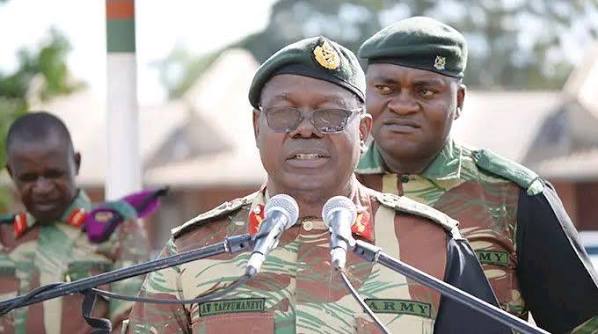
“We want people to go to work peacefully, borders must function and all aspects of Zimbabwean life must be normal,” said Lieutenant General Asher Walter Tapfumaneyi, Commander of the Zimbabwe National Army.
Although there are likely to be no protests, Zimbabweans might choose to stay at home and observe the situation away from any potential clash with state security agents. *_-NewZimbabwe_*
Zanu PF calls for Mnangagwa 2037 term extension ‘reckless,’ analysts*
Governance experts warn that a renewed push to extend President Emmerson Mnangagwa’s term to 2037 risks undermining economic and political stability.
Zanu PF’s Harare and Masvingo provincial executives’ recently said Mnangagwa deserved to have his term of office extended beyond 2030.
Mnangagwa’s term was initially expected to end in 2028 before the passing of Constitutional Amendment Act Number 3 (CAA3).
Analysts warned that calls to extend his rule to 2037 are “reckless, presumptuous and likely to fuel negative sentiment” that could upset recent economic gains.
Critics questioned the timing and motives behind the fresh push.
The push for Mnangagwa to stay beyond his current term has drawn unflattering comparisons with Nicaragua’s Daniel Ortega, who has banned elections.
Governance expert Sydicks Muradzikwa said such statements are politically premature and risk perpetuating the toxicity associated with Zimbabwe’s election cycles.
“If the rationale is that elections create instability, then repeatedly debating presidential term extension before CAA3 has even been fully implemented risks keeping the country in a constant state of political contestation rather than focusing on governance and economic delivery,” he said.
Muradzikwa added that markets and development partners value policy certainty.
“Sustained speculation over extended constitutional changes can create unnecessary uncertainty that is not helpful for the economy or successful implementation of National Development Strategy 2.”
Tshwane University of Technology lecturer Ricky Mukonza said the pronouncements reveal a leadership preoccupied with power retention rather than national development.
“How do they even begin to talk about another amendment when CAA3 has just been approved?” he asked, warning that such loose talk risked undermining socio-economic stability.
Intelwatch executive director Piers Pigou described the calls as a “desperate sycophantic and clumsy effort to demonstrate relevance” in a patronage-driven political space.
He noted that while the International Monetary (IMF) and World Bank have lauded fiscal reforms, they have a history of selective engagement and “unwittingly insulate Zimbabwe from candid introspection” on corruption and institutional decay.
“It’s not in Zimbabwe’s interest to even introduce this subject at this particular time,” he said.
Analysts agreed that Zimbabwe’s national interest would be better served by consolidating progress with international financial institutions and implementing existing reforms.
“Opening another debate on extending presidential tenure, especially when CAA3 is still in its infancy, undermines policy consistency,” Muradzikwa said.
“Priority must be implementation of agreed reforms rather than fresh controversies.” *_-Newsday_*
2. *Zanu PF calls for Mnangagwa 2037 term extension ‘reckless,’ analysts*
Governance experts warn that a renewed push to extend President Emmerson Mnangagwa’s term to 2037 risks undermining economic and political stability.
Zanu PF’s Harare and Masvingo provincial executives’ recently said Mnangagwa deserved to have his term of office extended beyond 2030.
Mnangagwa’s term was initially expected to end in 2028 before the passing of Constitutional Amendment Act Number 3 (CAA3).
Analysts warned that calls to extend his rule to 2037 are “reckless, presumptuous and likely to fuel negative sentiment” that could upset recent economic gains.
Critics questioned the timing and motives behind the fresh push.
The push for Mnangagwa to stay beyond his current term has drawn unflattering comparisons with Nicaragua’s Daniel Ortega, who has banned elections.
Governance expert Sydicks Muradzikwa said such statements are politically premature and risk perpetuating the toxicity associated with Zimbabwe’s election cycles.
“If the rationale is that elections create instability, then repeatedly debating presidential term extension before CAA3 has even been fully implemented risks keeping the country in a constant state of political contestation rather than focusing on governance and economic delivery,” he said.
Muradzikwa added that markets and development partners value policy certainty.
“Sustained speculation over extended constitutional changes can create unnecessary uncertainty that is not helpful for the economy or successful implementation of National Development Strategy 2.”
Tshwane University of Technology lecturer Ricky Mukonza said the pronouncements reveal a leadership preoccupied with power retention rather than national development.
“How do they even begin to talk about another amendment when CAA3 has just been approved?” he asked, warning that such loose talk risked undermining socio-economic stability.
Intelwatch executive director Piers Pigou described the calls as a “desperate sycophantic and clumsy effort to demonstrate relevance” in a patronage-driven political space.
He noted that while the International Monetary (IMF) and World Bank have lauded fiscal reforms, they have a history of selective engagement and “unwittingly insulate Zimbabwe from candid introspection” on corruption and institutional decay.
“It’s not in Zimbabwe’s interest to even introduce this subject at this particular time,” he said.
Analysts agreed that Zimbabwe’s national interest would be better served by consolidating progress with international financial institutions and implementing existing reforms.
“Opening another debate on extending presidential tenure, especially when CAA3 is still in its infancy, undermines policy consistency,” Muradzikwa said.
“Priority must be implementation of agreed reforms rather than fresh controversies.” *_-Newsday_*
*Zanu PF calls for Mnangagwa 2037 term extension ‘reckless,’ analysts*
Governance experts warn that a renewed push to extend President Emmerson Mnangagwa’s term to 2037 risks undermining economic and political stability.
Zanu PF’s Harare and Masvingo provincial executives’ recently said Mnangagwa deserved to have his term of office extended beyond 2030.
Mnangagwa’s term was initially expected to end in 2028 before the passing of Constitutional Amendment Act Number 3 (CAA3).
Analysts warned that calls to extend his rule to 2037 are “reckless, presumptuous and likely to fuel negative sentiment” that could upset recent economic gains.
Critics questioned the timing and motives behind the fresh push.
The push for Mnangagwa to stay beyond his current term has drawn unflattering comparisons with Nicaragua’s Daniel Ortega, who has banned elections.
Governance expert Sydicks Muradzikwa said such statements are politically premature and risk perpetuating the toxicity associated with Zimbabwe’s election cycles.
“If the rationale is that elections create instability, then repeatedly debating presidential term extension before CAA3 has even been fully implemented risks keeping the country in a constant state of political contestation rather than focusing on governance and economic delivery,” he said.
Muradzikwa added that markets and development partners value policy certainty.
“Sustained speculation over extended constitutional changes can create unnecessary uncertainty that is not helpful for the economy or successful implementation of National Development Strategy 2.”
Tshwane University of Technology lecturer Ricky Mukonza said the pronouncements reveal a leadership preoccupied with power retention rather than national development.
“How do they even begin to talk about another amendment when CAA3 has just been approved?” he asked, warning that such loose talk risked undermining socio-economic stability.
Intelwatch executive director Piers Pigou described the calls as a “desperate sycophantic and clumsy effort to demonstrate relevance” in a patronage-driven political space.
He noted that while the International Monetary (IMF) and World Bank have lauded fiscal reforms, they have a history of selective engagement and “unwittingly insulate Zimbabwe from candid introspection” on corruption and institutional decay.
“It’s not in Zimbabwe’s interest to even introduce this subject at this particular time,” he said.
Analysts agreed that Zimbabwe’s national interest would be better served by consolidating progress with international financial institutions and implementing existing reforms.
“Opening another debate on extending presidential tenure, especially when CAA3 is still in its infancy, undermines policy consistency,” Muradzikwa said.
“Priority must be implementation of agreed reforms rather than fresh controversies.” *_-Newsday_*
2. *Zanu PF calls for Mnangagwa 2037 term extension ‘reckless,’ analysts*
Governance experts warn that a renewed push to extend President Emmerson Mnangagwa’s term to 2037 risks undermining economic and political stability.
Zanu PF’s Harare and Masvingo provincial executives’ recently said Mnangagwa deserved to have his term of office extended beyond 2030.
Mnangagwa’s term was initially expected to end in 2028 before the passing of Constitutional Amendment Act Number 3 (CAA3).
Analysts warned that calls to extend his rule to 2037 are “reckless, presumptuous and likely to fuel negative sentiment” that could upset recent economic gains.
Critics questioned the timing and motives behind the fresh push.
The push for Mnangagwa to stay beyond his current term has drawn unflattering comparisons with Nicaragua’s Daniel Ortega, who has banned elections.
Governance expert Sydicks Muradzikwa said such statements are politically premature and risk perpetuating the toxicity associated with Zimbabwe’s election cycles.
“If the rationale is that elections create instability, then repeatedly debating presidential term extension before CAA3 has even been fully implemented risks keeping the country in a constant state of political contestation rather than focusing on governance and economic delivery,” he said.
Muradzikwa added that markets and development partners value policy certainty.
“Sustained speculation over extended constitutional changes can create unnecessary uncertainty that is not helpful for the economy or successful implementation of National Development Strategy 2.”
Tshwane University of Technology lecturer Ricky Mukonza said the pronouncements reveal a leadership preoccupied with power retention rather than national development.
“How do they even begin to talk about another amendment when CAA3 has just been approved?” he asked, warning that such loose talk risked undermining socio-economic stability.
Intelwatch executive director Piers Pigou described the calls as a “desperate sycophantic and clumsy effort to demonstrate relevance” in a patronage-driven political space.
He noted that while the International Monetary (IMF) and World Bank have lauded fiscal reforms, they have a history of selective engagement and “unwittingly insulate Zimbabwe from candid introspection” on corruption and institutional decay.
“It’s not in Zimbabwe’s interest to even introduce this subject at this particular time,” he said.
Analysts agreed that Zimbabwe’s national interest would be better served by consolidating progress with international financial institutions and implementing existing reforms.
“Opening another debate on extending presidential tenure, especially when CAA3 is still in its infancy, undermines policy consistency,” Muradzikwa said.
“Priority must be implementation of agreed reforms rather than fresh controversies.” *_-Newsday_*