
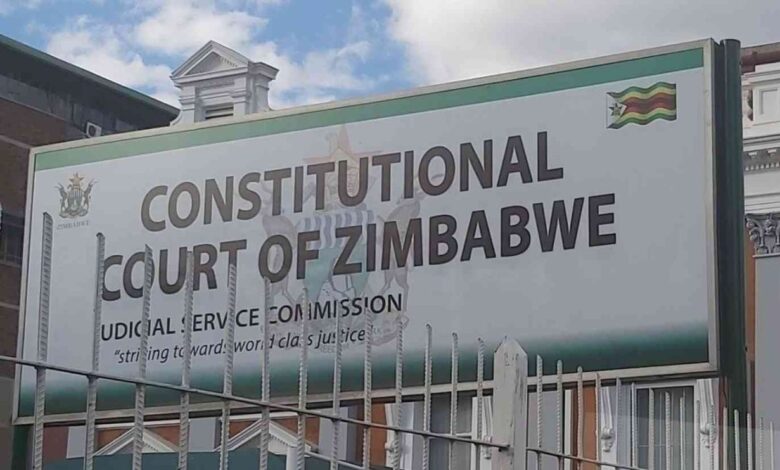
Has Zimbabwe’s Constitutional Court Already Been Told What to Do? Signs of a Pathetic Captured Judiciary in Motion
If the Constitutional Court has not heard the case, why is Zimbabwe’s Attorney General already arguing for its dismissal in the court of public opinion?
That question goes to the heart of judicial independence. Before the Constitutional Court has heard a single substantive argument, Attorney General Virginia Mabiza has publicly declared that the challenge to Constitutional Amendment Act No. 3 should be struck out without its merits being considered.
Whether or not her remarks amount to a technical breach of the sub judice rule, they create the unmistakable impression that the executive expects the country’s highest court to dispose of one of the most consequential constitutional cases in Zimbabwe’s history before it has even been heard.
This case cannot be viewed in isolation.
Constitutional Amendment Act No. 3 did not emerge in a vacuum.
It unlawfully extends President Emmerson Mnangagwa’s tenure beyond 2028, removes Zimbabweans’ right to directly elect their President, lengthens presidential terms from five to seven years, and further concentrates power in the executive. These are not routine legislative changes. They alter the very architecture of Zimbabwe’s constitutional democracy.
It is precisely because of the significance of these changes that the Constitutional Court must hear the challenge on its merits.
If the government believes the amendment is constitutional, it should have nothing to fear from judicial scrutiny. Constitutional justice is not served by avoiding constitutional questions.
Some will argue that the Attorney General was merely advancing the government’s legal position. That argument belongs in court, not in the media.
There is a fundamental difference between making submissions before judges and making them publicly while the case is still pending.
The latter risks creating the perception that the executive is signalling the outcome it expects from the judiciary.
In any constitutional democracy, justice must not only be done, it must be seen to be done.
That principle is especially important in Zimbabwe, where questions about judicial independence have persisted for years. Against that backdrop, the Attorney General’s remarks are not just legally controversial; they are politically significant. They risk reinforcing the belief that constitutional litigation involving the executive is expected to produce predetermined outcomes.
This case is bigger than Constitutional Amendment Act No. 3. It is about whether Zimbabwe’s Constitution remains the supreme law of the land or can be reshaped to suit those who hold political power.
The Constitutional Court now has an opportunity to demonstrate its independence by hearing the case openly, fairly and on its merits.
Zimbabweans deserve nothing less.