
Humanitarian Crisis Looms in Chipinge as Demolitions Leave Elderly, Schoolchildren Exposed to Elements
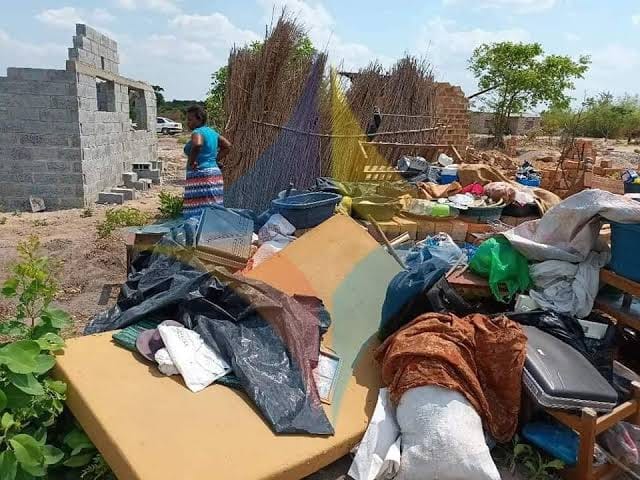
Chipinge.— A full-scale humanitarian emergency is unfolding in Chipinge District after ongoing residential demolitions left hundreds of residents homeless and threatened more than 1,000 families with forced displacement, leaving elderly citizens and schoolchildren exposed to the elements without food or alternative shelter.
The demolitions, which escalated this week across settlements including Munyokowere Village in Chipangayi Ward 5, have reduced over 100 residential structures and local school facilities to rubble. Human rights defenders and residents’ associations warn the district now faces one of its worst displacement crises in recent years, with women, children, and the elderly bearing the heaviest burden.
Public outrage mounted sharply following the circulation of video footage showing an elderly Chipinge grandmother—dressed in a ZANU PF T-shirt bearing President Emmerson Mnangagwa’s portrait—recounting how local authorities demolished her home, leaving her and her grandchildren with nowhere to sleep and without basic food supplies.
While authorities have yet to publish an official demographic tally of the displaced, local monitors report that dozens of elderly residents and school-going children are sleeping in the open amid the rubble. Parents and education campaigners have raised urgent alarms that displaced learners risk missing classes and critical examinations as families struggle to secure basic necessities, describing the destruction of local school structures as a direct threat to children’s constitutional right to education.
Affected villagers maintain they built permanent homes on the disputed land after being allocated stands by local traditional leadership, accusing authorities of wiping out lifetime investments without warning or alternative accommodation.
“We built our homes after being allocated land by local leadership. We invested everything we had. Now we have nowhere to go,” one displaced resident said.
The demolitions have exposed sharp contradictions in official government messaging. Local Government and Public Works Minister Daniel Garwe has maintained that the central government’s *Operation Chenesa* is strictly aimed at clearing illegal vending stalls and urban disorder rather than destroying residential homes. However, Justice Minister Ziyambi Ziyambi recently warned illegal settlers that “the bulldozer will come” amid a broader crackdown on unauthorized land allocations.
Civil society organizations have condemned the evictions, pointing to Section 28 of the Constitution of Zimbabwe, which obligates the State to take reasonable measures to ensure access to adequate shelter. Rights groups argue that mass evictions conducted without due process, consultation, or resettlement safeguards violate both constitutional protections and international human rights standards.
Efforts to obtain an official comment from Chipinge Rural District Council officials regarding the demolitions and emergency relief measures for displaced families were unsuccessful at the time of publication.
*Humanitarian Crisis Looms in Chipinge as Demolitions Leave Elderly, Schoolchildren Exposed to Elements_*
https://chat.whatsapp.com/IegbW8sBthq1Icbvo6Xwcb?s=cl&p=a&mlu=4&ilr=4&iam=2
Chipinge.— A full-scale humanitarian emergency is unfolding in Chipinge District after ongoing residential demolitions left hundreds of residents homeless and threatened more than 1,000 families with forced displacement, leaving elderly citizens and schoolchildren exposed to the elements without food or alternative shelter.
The demolitions, which escalated this week across settlements including Munyokowere Village in Chipangayi Ward 5, have reduced over 100 residential structures and local school facilities to rubble. Human rights defenders and residents’ associations warn the district now faces one of its worst displacement crises in recent years, with women, children, and the elderly bearing the heaviest burden.
Public outrage mounted sharply following the circulation of video footage showing an elderly Chipinge grandmother—dressed in a ZANU PF T-shirt bearing President Emmerson Mnangagwa’s portrait—recounting how local authorities demolished her home, leaving her and her grandchildren with nowhere to sleep and without basic food supplies.
While authorities have yet to publish an official demographic tally of the displaced, local monitors report that dozens of elderly residents and school-going children are sleeping in the open amid the rubble. Parents and education campaigners have raised urgent alarms that displaced learners risk missing classes and critical examinations as families struggle to secure basic necessities, describing the destruction of local school structures as a direct threat to children’s constitutional right to education.
Affected villagers maintain they built permanent homes on the disputed land after being allocated stands by local traditional leadership, accusing authorities of wiping out lifetime investments without warning or alternative accommodation.
“We built our homes after being allocated land by local leadership. We invested everything we had. Now we have nowhere to go,” one displaced resident said.
The demolitions have exposed sharp contradictions in official government messaging. Local Government and Public Works Minister Daniel Garwe has maintained that the central government’s *Operation Chenesa* is strictly aimed at clearing illegal vending stalls and urban disorder rather than destroying residential homes. However, Justice Minister Ziyambi Ziyambi recently warned illegal settlers that “the bulldozer will come” amid a broader crackdown on unauthorized land allocations.
Civil society organizations have condemned the evictions, pointing to Section 28 of the Constitution of Zimbabwe, which obligates the State to take reasonable measures to ensure access to adequate shelter. Rights groups argue that mass evictions conducted without due process, consultation, or resettlement safeguards violate both constitutional protections and international human rights standards.
Efforts to obtain an official comment from Chipinge Rural District Council officials regarding the demolitions and emergency relief measures for displaced families were unsuccessful at the time of publication.
