
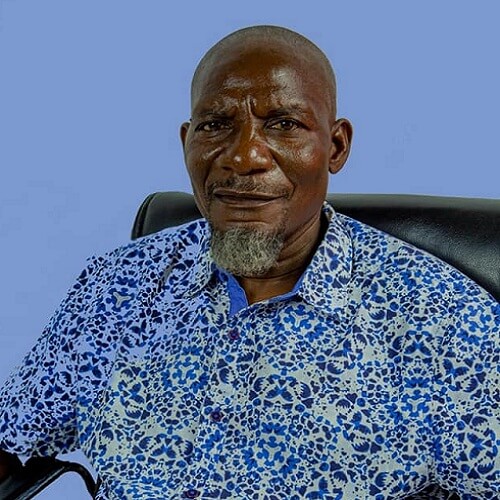
Madzibaba Zakaria — The Man, The Legend, The Senior Lecturer
Madzibaba Nicholas Zakaria was a music legend and leaves behind an indelible mark on the country’s sungura scene after a successful music career which spanned nearly five decades.
He died yesterday at the age of 69. As the founder of Khiama Boys, he mentored many successful artists, including Alick Macheso and System Tazvida. Madzibaba Zakaria proved that although art was business, there was room for one to venture into other projects, especially during Covid-19.His business ventures extended beyond music. He partnered with Esteem Communications, a local public relations and communications company, in a brand development deal.
This partnership helped professionalise his career, creating opportunities for community development work, mentorship, and corporate marketing.
He also collaborated with corporates and arts stakeholders, releasing a joint album, “Zadziso,” with Simon Mutambi. The album launch was supported by NashTV, Wezhaz Executive Cars, and Kitchen-Link, among others. Madzibaba’s influence on Zimbabwean music earned him recognition from businesspeople, who gifted him vehicles, including a brand-new Toyota Fortuner worth US$85,000 from businessman Wicknell Chivayo.
Throughout his career, Madzibaba remained committed to giving back to the community, using his platform to promote social causes and inspire future generations of musicians.
Madzibaba’s partnerships extended beyond music, as he received support from organizations like ZIMURA, which provided him with financial assistance for his medical expenses.
Born in 1957 at Belgownie Estates in Mazowe, Madzibaba grew up on farms, an environment he later said inspired his early interest in music.
His father played a box guitar at social gatherings and, by the age of ten, he could already play the instrument, though his parents initially discouraged him. His professional journey began in the mid-1970s with The Green Mangoes, which he formed at the age of 18 alongside the late Robson Kaitano.
Madzibaba later left the group to work as a storekeeper before forming another outfit, the Vhuka Boys, in 1980 with the support of Shepherd Chinyani.
Although the group recorded several singles, their music struggled to compete with leading acts of the time, including John Chibadura, Thomas Mapfumo and the Bhundu Boys.
Madzibaba moved to Harare in 1984, where he co-founded the Khiama Boys, the band that would become central to his legacy. The group included Cephas Karushanga, Levison Chakanyuka, Tineyi Chikupo, Alick Macheso , System Tazvida and Zakaria’s wife, Margaret Gweshe.
The Khiama Boys produced numerous albums and emerged as key competitors to major artists such as Leonard Dembo, James Chimombe and Marshall Munhumumwe.Madzibaba went on to release more than 26 albums, with notable songs including ‘Kubva Kure’, ‘Mabvi Nemagokora’, ‘Shamiso’ and ‘Mabhauwa’.
Madzibaba briefly stepped away from music in the late 1990s to work as a haulage truck driver, returning in 2003 to release a series of albums. His wider catalogue includes tracks such as ‘Mazano’ and ‘Ida Anokuda’.
He often emphasised the importance of discipline in sustaining a musical career.
“In order to be successful in the music industry, discipline and faith are essential,” he said. Known for his modest lifestyle and calm temperament, he repeatedly stated that he would remain devoted to music “till death do us apart”. *_-H-Metro_*