
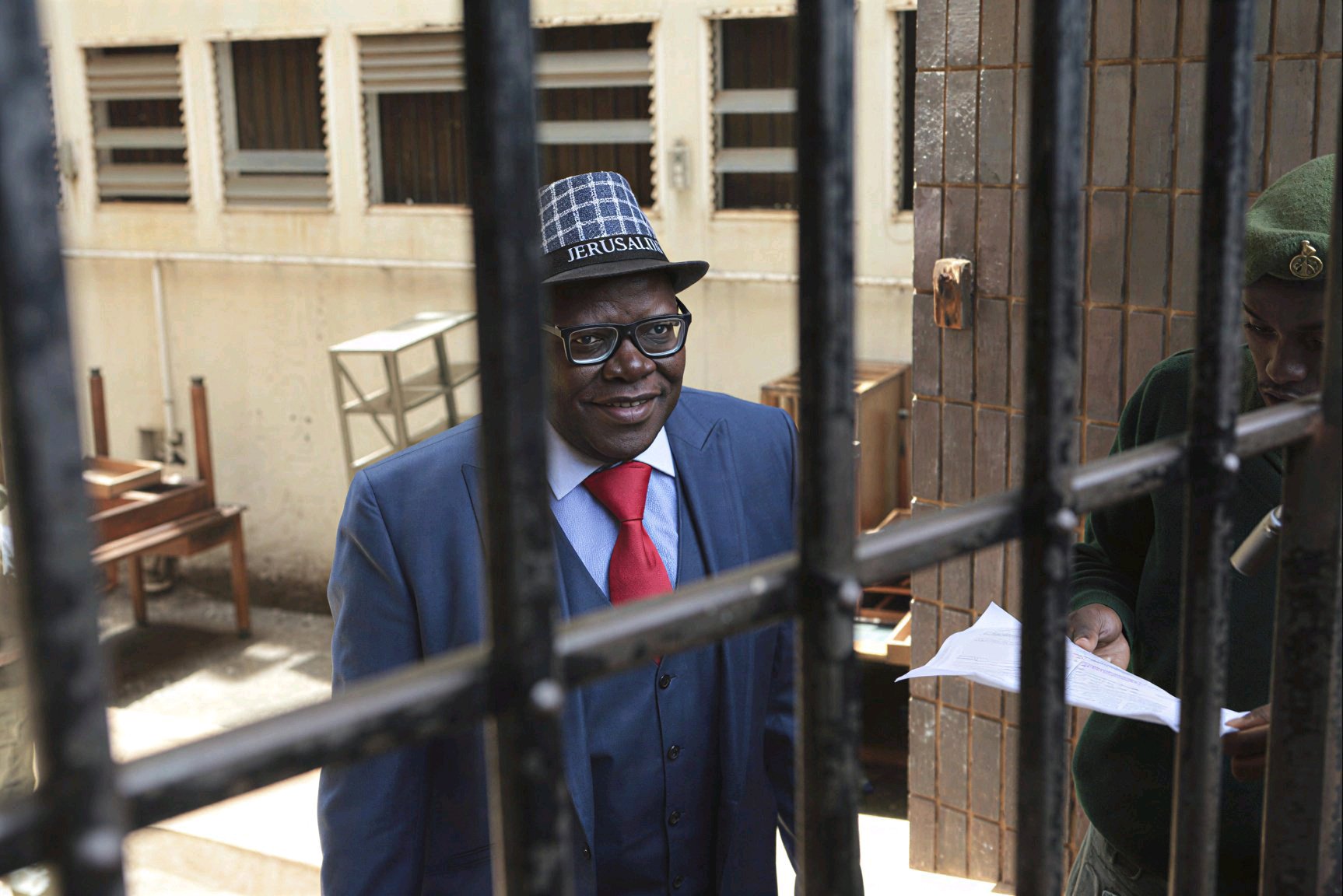
Inside story on Tendai Biti’s Mutare arrest: Did he uncover Mnangagwa’s secret plan?
In a move that has ignited fervent debate across Zimbabwe’s political landscape, veteran opposition politician Tendai Biti found himself detained in Mutare. While official reports cite “inciting public disorder” as the reason for his arrest, an in-depth investigation reveals a far more intricate political manoeuvre at play. The true catalyst for the state’s swift crackdown appears to be Biti’s pivotal role as the convener of the Constitutional Defenders Forum (CDF) and their relentless, grassroots campaign against the contentious “Constitutional Amendment Bill No. 3”.
Biti, a former Finance Minister and a prominent lawyer, was apprehended on Friday, 21 March 2026, in Mutare, Manicaland, specifically within the central business district. He was not alone; journalist Fanuel Chinowaita, politician Morgan Ncube, and lawyer Nyasha Gerald were also taken into custody alongside him. All four were subsequently held at Mutare Central Police Station. This incident, which occurred during what sources describe as a private meeting, was part of a broader mobilisation effort by the CDF to oppose the proposed constitutional changes.
The timing of these arrests is particularly telling. The Constitutional Defenders Forum was reportedly in the final stages of preparing a comprehensive report on public sentiment regarding the Bill. This suggests that the state’s actions were not merely reactive but a calculated measure of “preventative detention” designed to silence influential legal experts capable of demystifying the complex legal jargon of the Bill for the ordinary citizen.
At the heart of this political skirmish is the Constitution of Zimbabwe Amendment (No. 3) Bill (H.B. 1, 2026). This proposed legislation, approved by Cabinet on 10 February 2026 and gazetted on 16 February 2026, seeks to introduce several significant alterations to the nation’s founding document. Among its most controversial provisions is the proposal to extend the electoral cycle for the Presidency, Parliament, and local authorities from the current five years to seven years. Crucially, the Bill contains transitional provisions that would apply this extended seven-year cycle to the current electoral period, effectively prolonging President Emmerson Mnangagwa’s tenure beyond 2028, potentially until 2030 or even further.
This proposed extension directly contravenes Section 328(7) of the Constitution, which explicitly states that any amendment extending the length of time a person may hold public office should not apply to anyone who held that office before the amendment. By attempting to bypass this crucial safeguard, critics argue that the Bill is a blatant attempt to entrench power and undermine democratic principles.
Further compounding concerns is the Bill’s proposed change to the presidential election method. It seeks to repeal Section 92, which currently provides for the direct election of the President by voters. Instead, the President would be elected by Members of Parliament at a joint sitting of the Senate and the National Assembly. This shift would fundamentally alter the democratic process, moving away from the principle of “one man, one vote” that many Zimbabweans cherish.
The ruling ZANU-PF party has been actively pushing for these changes. Resolutions passed at their 21st National People’s Conference in October 2024 and the 22nd Annual Conference in October 2025 both advocated for the extension of President Mnangagwa’s term to 2030. Justice Minister Ziyambi Ziyambi, a key proponent of the Bill, has framed these changes as necessary for political stability and governance efficiency. However, this narrative is sharply contested by opposition figures and civil society organisations.
The Constitutional Defenders Forum, under Biti’s leadership, has adopted an aggressive grassroots mobilisation strategy. Their door-to-door campaigns aim to educate common citizens about the implications of the Bill, simplifying its complex legal aspects. This direct engagement with the populace poses a significant threat to the government’s perceived plan to “sneak through” the term-limit extension without widespread public understanding or consent.
The state’s response to this mobilisation has been met with widespread condemnation. Commissioner Paul Nyathi, the police spokesperson, initially denied any knowledge of Biti’s arrest, stating, “We have not received any report about Biti’s arrest. Otherwise, his relatives must provide proof of his arrest.” This official denial, juxtaposed with the clear evidence of the arrests, has further fuelled public distrust and accusations of arbitrary detention.
Jameson Timba, convener of the Defend the Constitution Platform (DCP), vehemently criticised the arrests, describing them as a “direct assault on the constitutional order.” He expressed “unequivocal solidarity” with Biti and his colleagues, highlighting that Sections 67 and 59 of the Zimbabwean constitution guarantee citizens the right to participate in political processes, campaign on public issues, and engage in peaceful demonstrations and petitions. Timba asserted that “To arrest citizens for engaging fellow Zimbabweans on a matter as fundamental as constitutional change is to criminalise citizenship itself”. The DCP has since demanded the immediate and unconditional release of the detainees and called for transparency from the Zimbabwe Republic Police regarding the legal basis for their actions.
This incident is not isolated but rather indicative of a broader pattern of repression. Biti’s offices have reportedly been under constant police surveillance, with authorities allegedly monitoring and disrupting CDF activities. Members of the forum have also reported frequent harassment and intimidation. The crackdown extends beyond Biti’s immediate circle; constitutional lawyer Lovemore Madhuku and members of the National Constitutional Assembly (NCA) were recently assaulted during their own campaigns against the Bill. Civil society groups have consistently raised alarms about an increase in alleged abductions and targeted attacks against individuals critical of the proposed constitutional amendments.
The disparity in the application of the law is stark. While opposition figures and civil society members face harassment and arrest, members of the ruling ZANU-PF party have reportedly been holding both public and private meetings in support of the Bill without any police interference. This selective enforcement of the law further underscores concerns about political bias and the erosion of democratic freedoms.
The timing of these arrests is particularly sensitive, as parliamentary consultation processes on Constitutional Amendment Bill No. 3 are scheduled to commence this week. Observers suggest that the state is engaged in a systematic effort to stifle public debate and silence dissenting voices before these crucial consultations take place. This pre-emptive action aims to minimise opposition and facilitate the smooth passage of the Bill through Parliament.
The constitutional implications of the proposed changes are profound. By extending presidential terms and altering the election method, the Bill risks concentrating excessive power in the executive branch, thereby weakening the checks and balances essential for a healthy democracy. Critics argue that such amendments, particularly those that benefit the incumbent, undermine the very spirit of constitutionalism and democratic governance.
Prominent figures have voiced their strong opposition. The Zimbabwe Catholic Bishops Conference (ZCBC) issued a statement warning that the Bill poses a significant threat to Zimbabwe’s democracy. David Coltart, another vocal critic, questioned the long-term implications, asking, “What happens if the next term is extended to 20 years?”. These concerns highlight the far-reaching consequences of the proposed amendments, extending beyond the immediate political landscape.
The battle over Constitutional Amendment Bill No. 3 is more than just a legal dispute; it is a high-stakes political chess match being played out in the streets of Manicaland and across the nation. It represents a critical juncture in Zimbabwe’s democratic journey, with profound implications for its future governance and the rule of law. The aggressive mobilisation by the Constitutional Defenders Forum and the state’s equally aggressive response underscore the intensity of this struggle. The events unfolding now are widely seen as a precursor to the 2030 elections, indicating that the battle for the nation’s political future has already begun.
As the parliamentary consultations approach, all eyes remain on Mutare Central and other detention centres, where the fate of those arrested, and indeed the future of Zimbabwe’s constitutional democracy, hangs in the balance. The legal community, human rights defenders, and concerned citizens await the next moves from the authorities, hoping for a resolution that upholds justice and democratic principles.