
Beyond the Signature: Why Victory Conventions Followed Zimbabwe’s Controversial Constitutional Overhaul
In most constitutional democracies around the globe, the enactment of
a new law is a quiet, procedural affair. Bills are debated, passed by
parliament, signed by the head of state, and gazetted into law without
public fanfare. Citizens adapt to the legal changes through
administrative notices, and governments move forward with enforcement
rather than celebration.
Yet in Zimbabwe, following President Emmerson Mnangagwa’s signing of
the controversial Constitution Amendment Bill into law on July 7,
2026, the nation witnessed a dramatic departure from global norm. The
political landscape was immediately transformed into a series of
massive, nationwide festivities.
From the highest corridors of the ruling ZANU-PF Politburo down to
rural cell structures, a massive political apparatus sprang into
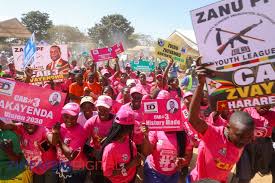
action. Nationwide Thank You rallies were organized to celebrate the
controversial bill, which paved the way for the extension of presidential terms. Featuring energetic live performances by prominent
musical artists, free transportation, and lavish catering, the rallies
were presented to the world as a spontaneous outpouring of grassroots
gratitude for the President’s leadership.
However, behind the booming loudspeakers and jubilant crowds lay a far
more calculated reality. Critics, opposition figures, and civil
society observers contend that the apparent public enthusiasm was
meticulously choreographed long before the President signed the
document.
During the preliminary public consultation hearings held across
various provinces, widespread reports emerged that citizens were
manipulated into attending. In economically vulnerable communities,
word was circulated that attendees would receive food hampers.
Observers noted that individuals speaking on behalf of the ruling
party were provided with undisclosed sums of cash, treated to
fast-food meals from outlets like Chicken Inn, and coached on
rehearsed scripts detailing what to say before the parliamentary
committees.
Meanwhile, opposition voices and dissenting citizens were
systematically silenced, denied the platform to voice their concerns,
or intimidated out of participating. Consequently, the official
records of the public hearings presented a fabricated consensus,
making it appear as though the broader populace overwhelmingly
supported extending Mnangagwa’s stay in power.
This raises a fundamental question: why does Zimbabwe hold nationwide
political rallies to celebrate a newly enacted law when most countries
do not?
Unlike established democracies where legal enactments derive
legitimacy from transparent processes, controversial legislation in
Zimbabwe often lacks genuine, broad-based public consensus. In such
environments, high-profile victory rallies serve as a powerful tool
for legitimacy engineering. By gathering large crowds, the ruling
party creates a visual illusion of overwhelming popular endorsement,
attempting to validate a law that was pushed through under
questionable circumstances.
Furthermore, these celebrations act as a show of political dominance
meant to project total control and convince political opponents that
further resistance is futile. The rallies also serve as an internal
mechanism to reward party loyalists with food, entertainment, and
patronage, ensuring continued cohesion within party ranks.
Ultimately, while the ruling party framed these nationwide events as a
triumphant celebration of the people’s will, critics view the music
and festivities as a smokescreen designed to mask a sobering truth: a
constitution altered not by the authentic voice of the masses, but
through carefully orchestrated political theater.