
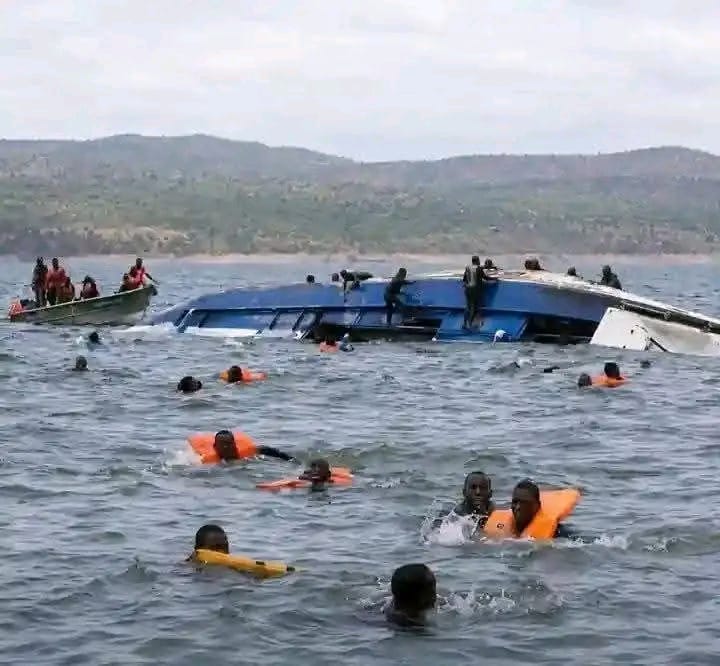
The Lake Did Not Kill Them. Negligence Did — 97 Confirmed Dead In The Mbuya Nehanda Ferry Tragedy
By Desire Tshuma
At dawn in Mola Village, Kariba, the women no longer cast their nets. They stand at the shoreline and call out names that will never answer back. Since Tuesday, 11 August 2026, Lake Kariba has not been water to them. It is a grave.
Gogo Mola, 72, sits among them. Her hands are steady but her voice cracks. “The pain in this community is deep,” she says. “The loss of so many lives in circumstances involving such serious failures cannot simply be forgotten. Negligence of this magnitude is inexcusable.”
On that Tuesday morning, the government-owned RIDA ferry Mbuya Nehanda left Andora Harbour in Kariba town for Chalala Fishing Camp. It never arrived. About 30 minutes into the journey near Long Island, water began flooding the deck. The bilge pump failed. The engines died. Then the 41-year-old vessel overturned.
What followed was Zimbabwe’s deadliest public transport disaster in modern history. Police have confirmed 97 people died. Seventy-seven were pulled alive from the water. Seven families are still waiting for closure as search and recovery operations continue.
Most of those who boarded were not tourists. They were mothers, fathers, and young traders carrying bales of clothes, drums of fuel, goats, and groceries to sell in isolated fishing camps. Many were women with babies on their backs. One victim was recovered still carrying her child.
The Mbuya Nehanda was certified to carry 90 people. On that day it carried nearly 180. With 97 confirmed dead and 77 rescued, officials estimate at least 174 souls were on board, crammed with cargo and desperation.
Survivors say the warning signs were there before the ropes were even untied. A battery and inverter slipped into the water during boarding. Passengers pleaded with the captain to postpone the trip. The Meteorological Services Department had already issued an advisory telling all boats to stay off the lake because of strong “Binga Wave” winds.
Local Government Minister Daniel Garwe later told Cabinet the deceased captain, Sign Patsikadova, had “disregarded those early warning messages and proceeded with the journey.” Garwe blamed “negligence and human error” for the tragedy. But in Mola Village, people ask why a captain was allowed to make that choice in the first place.
The ferry was old. It was government property, run by the Rural Infrastructure and Development Agency. Concerns about the ageing RIDA fleet were raised as far back as 2021, when officials admitted the boats were breaking down and needed refurbishment. Yet the Mbuya Nehanda still sailed with a fitness certificate from the Ministry of Transport.
Former MP Fadzayi Mahere has demanded that the officials who signed that certificate be charged with culpable homicide. “Giving this rickety old can a ‘fitness certificate’ is negligence of the highest order,” she said. “They’re responsible for causing the death of at least 95 people.”
Accountability has begun, slowly. Police arrested Ignatius Chiome, the Kariba district coordinator for RIDA, on allegations of culpable homicide. Court papers allege “administrative failures, serious overloading and violations of marine-safety procedures.” Chiome was granted US$500 bail. A full inquest is underway to examine the wreckage at Musambakaruma Island, where divers are still working to turn the hull.
For the people who depend on Lake Kariba, there is no alternative. There are no roads to Chalala, Nyaminyami, or the other fishing camps. The ferry is their ambulance, their market truck, their lifeline. It is also, now, their graveyard.
Lake Kariba is one of the largest man-made lakes in the world. It is beautiful and it is brutal. Sudden winds, crocodiles, hippos, and no life jackets. Yet thousands cross it every week because poverty leaves them no choice.
Tinashe, 26, who lost his cousin on the ferry, sells airtime in Kariba town now. “We graduated into nothing,” he says. “So we take the boat. What else is there?”
Gogo Mola does not want sympathy. She wants answers. “Zimbabweans deserve a government that protects life and puts the welfare of its people first,” she says. “The people shall speak. The people shall demand accountability. Together, we must bring this pain and neglect to an end.”
Until then, the women of Mola Village will keep singing. And the lake will keep its dead.


