Man killed in elephant attack at Spurwing Island as human-wildlife conflict surges in Zimbabwe
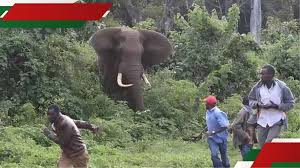
A MAN identified as Clemence Dickson from Kasimhure in Hurungwe died in the early hours of yesterday after being attacked by an elephant at Spurwing Safaris in Kariba.
The Zimbabwe Parks and Wildlife Management Authority (ZimParks) confirmed the incident, which occurred at approximately 05:20am on 18 September 2026.
According to ZimParks, investigations reveal that an elephant brought down the campsite electricity gate and attacked the adult male who was proceeding to the kitchen.
“The ZimParks team was immediately deployed and tracked the elephant towards the lake shore. The animal was identified and due to the immediate threat it posed to human life, it was eliminated. The incident was reported to the Zimbabwe Republic Police and investigations into the circumstances are ongoing,” said ZimParks spokesperson Luckmore Safuli.
The death is the latest in a string of fatal encounters in Kariba, which remains one of Zimbabwe’s top human-wildlife conflict hotspots.
Kariba, along with Mbire, Chiredzi, Binga, Hwange, Hurungwe and Nyaminyami, has been identified by ZimParks as a persistent hotspot district.
In the last two years alone, the town has recorded multiple fatalities:
In September 2025, Esward Jamu (56) was trampled to death at the National Angling Union of Zimbabwe (NAUZ) site while returning from shopping in Chalala.
In 2024, Gloria Konde, a Kariba District Hospital Human Resources officer, was killed while walking from Heights to Mahombekombe on her way to church. An elephant appeared near Heights Y Junction and caught her as she tried to flee with two minors.
In May 2024, fisherman Never Kahondo was trampled while walking from ARDA Fishing Camp to Gache-Gache Fishing Camp, just metres from safety.
In March 2024, ZimParks ranger Josphat Mandishara (62) was killed during a routine extended patrol in Gache-Gache while returning to the harbour to retrieve a boat.
In 2023, Sinai Mpofu (54) was killed in the Chiwara area while returning from fishing after tripping during an elephant charge, and Cephas Murota (47), a Cutty Sark employee, was gored and killed near Lomagundi Turn-Off on his way to work at Tamarindi Lodges.
The Spurwing death comes as Zimbabwe is battling a sharp rise in human-wildlife conflict driven by climate change, habitat encroachment, and growing human and wildlife populations.
According to latest ZimParks data presented at the National Human-Wildlife Co-existence Strategy Development Workshop in Harare, Zimbabwe has recorded 12,374 human-wildlife conflict incidents between 2016 and 2025, resulting in 486 deaths, 554 injuries and 4,025 livestock losses.
Crocodiles and elephants account for 83 percent of all fatalities. Crocodiles were responsible for 173 deaths, while elephants accounted for 114 deaths over the decade. Crocodiles also caused the most injuries (155), followed by buffaloes (73) and elephants (55).
The crisis is worsening. Reported cases rose from 1,654 in 2024 to 2,090 in 2025 – a 26 percent increase. In 2025 alone, 62 people were killed and 81 injured, up from 49 deaths and 90 injuries in 2024. Livestock losses more than doubled from 362 to 801 animals, including 244 cattle, 39 donkeys and 518 goats, dealing a heavy blow to rural livelihoods.
ZimParks says it attended to over 99 percent of reported incidents and neutralised 556 problem animals in 2025 as a mitigation measure. Hyenas, crocodiles and elephants remain the most frequently reported problem animals.
“Droughts, population growth and habitat encroachment push wildlife and communities into closer and often lethal contact,” said ZimParks Director of Operations Arthur Musakwa. “Over 12,000 incidents were recorded between 2016 and 2025. A national coordinated framework is urgently overdue.”
ZimParks Director-General Professor Edson Gandiwa added: “Climate change has fundamentally impacted the dynamics of our ecosystems. Our responsibility is to adapt our management approaches while working closely with Government agencies, conservation partners, and communities to reduce risk and build resilience.”
Zimbabwe is home to Africa’s second-largest elephant population after Botswana, estimated at over 84,000 against a carrying capacity of around 45,000, with Hwange National Park alone holding more than 45,000.
Communities in Kariba continue to demand urgent preventive measures including early warning systems such as GPS collaring and geofencing, re-erection of boundary fences between parks and communities, predator-proof bomas and lion lights, and establishment of community conservancies.
Residents also want government to expedite the Human-Wildlife Conflict Relief Fund established in 2024 to compensate families of victims, which has been slow to reach affected households.
ZimParks continues to urge residents in Kariba to avoid walking at night, avoid bushy elephant corridors, and take heed of awareness campaigns.
Investigations into the Spurwing Island incident are ongoing. Newsday