
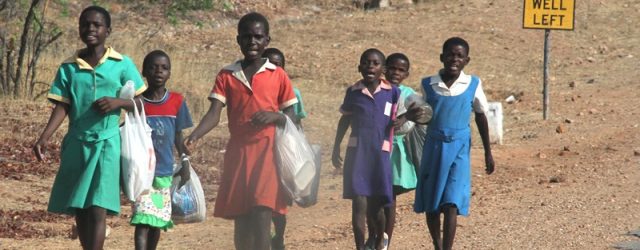
The Inherited Burden: HIV, AIDS, and the Silent Siege of the Zimbabwean Girl Child
The Observer News Editor
Kudzai Jakachira
The sun over Harare does not rise; it bleeds. It spills a bruised purple over the high-density suburbs of Epworth and Chitungwiza, illuminating a landscape where the ghosts of an epidemic still dance in the dust. For the Zimbabwean girl child, the HIV and AIDS pandemic is not a historical footnote or a distant medical statistic. It is an unholy inheritance—a parasitic shadow that dictates the rhythm of her heartbeat and the limits of her horizon.
To speak of the girl child in the context of Zimbabwe’s viral struggle is to speak of a unique, compounded tragedy. While national prevalence rates have plummeted from their apocalyptic peaks in the late 1990s, the “feminization” of the virus remains a jagged pill that the nation struggles to swallow. The statistics are clinical, but the reality is visceral.
The vulnerability of the girl child is constructed from the bricks of patriarchal tradition and the mortar of economic desperation. In many rural outposts, the “Auntie” or Ambuya still whispers of transactional survival. When a family is hollowed out by the death of breadwinners—the “missing middle” generation claimed by HIV and AIDS—it is the eldest daughter who drops out of school to become a child-head of the household.
She exchanges her uniform for a tattered apron, her textbooks for a hoe. In this vacuum of protection, she becomes prey. The “Sugar Daddy” phenomenon, or the Blesser culture, is not merely a social trope; it is a predatory cycle where young girls trade their physical sanctity for school fees, a loaf of bread, or a mobile phone data bundle. The virus, in these instances, is passed down not just through blood, but through the systemic failure to provide a safety net.
Biologically, the cards are stacked. Adolescent girls are physiologically more susceptible to HIV infection than their male counterparts. Yet, it is the social stigma that proves more lethal than the viral load. In the corridors of secondary schools, the “positive” girl carries a scarlet letter that no antiretroviral (ARV) therapy can scrub away. She navigates a world of unholy choices: disclose her status and face the blistering isolation of her peers, or remain silent and risk the transmission of the fire to the next generation.
There is a profound sincerity in the eyes of these girls—a weary wisdom that no child should possess. They speak of “the medication” in hushed tones, as if naming it might summon the grim reaper that took their mothers. The trauma is intergenerational. Many are born “HIV-free” only to be ensnared by the structural violence of poverty and gender-based inequality in their teens.
To resolve this crisis, Zimbabwe must move beyond the “condoms and brochures” approach. The resolution requires a radical reimagining of the girl child’s value in the socio-economic fabric of the nation.
The most potent vaccine against HIV for a Zimbabwean girl is a high school diploma and a bank account. We must implement Universal Basic Income models or targeted cash transfers for child-headed households. When a girl is not hungry, she is not tradable. Education must be legally mandated and subsidized, ensuring that the classroom remains a sanctuary rather than a luxury.
Programs like DREAMS (Determined, Resilient, Empowered, AIDS-free, Mentored, and Safe) must be expanded from urban hubs into the deep “red zones” of mining towns and border posts like Beitbridge. This involves integrating Pre-Exposure Prophylaxis (PrEP) into standard adolescent healthcare without the requirement of parental consent, which often acts as a barrier to those in abusive environments.
The resolution lies in the unholy task of challenging the traditional hierarchies. This means engaging traditional leaders—the chiefs and headmen—to abolish child marriage and “widow inheritance” practices that facilitate viral spread. We must foster a culture where a girl’s agency over her own body is sacrosanct, supported by a legal system that prosecutes predators with the same ferocity used for political dissent.
The psychological scarring of the HIV and AIDS pandemic is deep. We need a “Bench of Grandmothers”—a peer-to-peer counseling network that treats the depression and PTSD associated with the virus as aggressively as the viral load itself. A girl who values her future is a girl who protects her health.
The story of the Zimbabwean girl child is currently written in the ink of resilience and the tears of those lost. But it does not have to be a tragedy. To resolve the blight of HIV and AIDS, the nation must offer more than just pills; it must offer a world worth living in. We must replace the unholy alliance of poverty and disease with a sincere commitment to justice.
Only then will the sunrise over the Savannah signify a new beginning, rather than another day of survival in the shadows of an ancient plague. The girl child is not a victim to be pitied; she is a flame to be protected. And if we fail to shield that flame, the darkness that follows will be of our own making.