US$4 million bank heist mastermind denied bail
In a striking real-life drama reminiscent of a high-octane heist movie, the Bulawayo High Court has firmly denied bail to a man accused of masterminding a daring daylight robbery that saw US$4 million vanish from Ecobank’s Parkade branch.
The suspect, Bhekani Milo, faces charges that have captured the public’s imagination, involving a cross-border chase, international arrests, and a complex extradition from Botswana. The incident, which unfolded on October 3, 2024, reads like a script from a crime thriller.
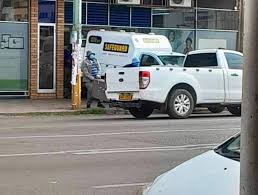
According to court documents, Milo and a group of accomplices allegedly embarked on a calculated mission from South Africa, driving a white Ford Ranger.
The vehicle, initially bearing South African plates, was reportedly swapped for Zimbabwean registration just before the group descended on Ecobank in Bulawayo.
The gang intercepted a Safeguard Private Security cash-in-transit vehicle, held guards hostage at gunpoint, and seized two robust metal cash boxes containing US$4 448 500.
Alongside the cash, three firearms were reportedly taken during the heist, amplifying the gravity of the offence.
The court heard that two of Milo’s alleged partners, Elijah and Abraham Vumbunu, were apprehended in South Africa and currently await extradition.
Milo himself was detained in Botswana on July 15 last year, after a prolonged and intricate international pursuit, and was extradited to Zimbabwe in November 2025.
Prosecutors painted a vivid picture of the extensive efforts by law enforcement to bring Milo to justice, highlighting the months-long operation and cross-border cooperation required to effect his arrest.
The State, emphasising the strength of its case, presented evidence including the recovered getaway vehicle and witnesses ready to testify — one of whom reportedly had insider knowledge of a planning meeting held in South Africa.
Prosecutors argued that the serious nature of the charges, coupled with the potential for a lengthy prison sentence, provided Milo with a strong incentive to flee justice.
Milo’s defence portrayed a different narrative, with the accused asserting his innocence, claiming he was in Mozambique at the time of the robbery.
He described himself as a family man settled in one place and offered to surrender his passport to alleviate fears of abscondment. He also denied any acquaintance with the alleged accomplices or witnesses.
However, Justice Evangelista Kabasa, presiding over the bail application, was unmoved by these claims. “Bail should not be used as anticipatory punishment,” Justice Kabasa acknowledged, “but it cannot be granted where there is a clear risk the accused may evade trial.”
She noted Milo’s extensive travels across borders and the porous nature of the region’s frontiers, stating; “The applicant is well travelled and the lack of a passport, with our porous borders, cannot stop one from travelling.”
Highlighting the significant challenges faced by the police in securing Milo’s arrest, including the necessity of a formal extradition process, Justice Kabasa declared, “If that does not speak to him being a flight risk, then I do not know what will.”
She underscored the imperative of allowing the wheels of justice to turn unimpeded and concluded that granting bail would jeopardise the proper administration of justice.
This unfolding legal saga is a gripping tale of international intrigue, high-stakes law enforcement, and the relentless pursuit of justice. *_-Herald_*