
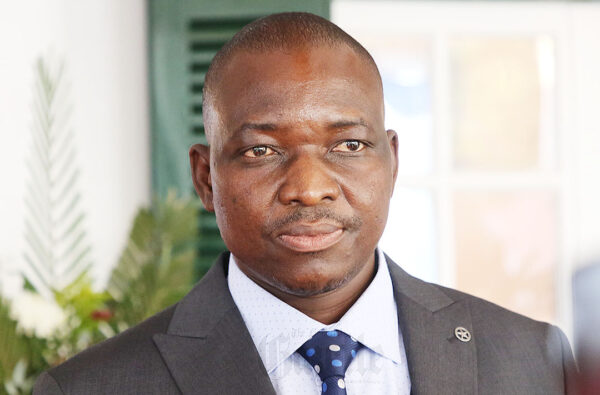
Information Minister Soda urges an end to polarisation and disinformation, calls for wise use of press freedom to celebrate what unites Zimbabwe
PRESS freedom should not be a weapon to divide, but a bridge to connect communities, amplify diverse voices, and build a shared national story, a government official has said.
In a statement to commemorate the World Press Freedom Day today, May 3, Information and Publicity Minister Zhemu Soda said press freedom should be a bridge, and not a barrier, uniting Zimbabwe through responsible journalism.
Zimbabwe joins the global community in observing World Press Freedom Day.
“This day reminds us of the fundamental value of a free, independent, and responsible press as a cornerstone of democratic society.
“It is time to move beyond the old habits of polarisation. Press freedom should not be a weapon to divide, but a bridge to connect communities, amplify diverse voices, and build a shared national story.
“Let this freedom be used to celebrate what unites us, even as we respectfully debate our differences,” Soda said.
The minister urged the media not to use press freedom as an excuse to bring in unwarranted foreign values that undermine the country’s traditions.
“Press freedom must not become an excuse to import and propagate ideas alien to Zimbabwean values, traditions, and way of life. Our rich cultural practices – respect for elders, communal spirit, Ubuntu, languages, and heritage – deserve to be honoured.
“The media has a sacred duty to be a custodian of our culture, telling our stories and celebrating our heroes, while critiquing from a place of love for the nation.”
The minister warned that “with freedom comes responsibility. The rise of fake news, disinformation, and deepfakes -hyper-realistic manipulated content generated by artificial intelligence – poses a grave threat to social cohesion, national security, and individual dignity.
“Press freedom does not mean freedom to lie, to manipulate, or to destroy. Every journalist, editor, media house, and citizen sharing content online is called upon to uphold the highest ethical standards: verify before sharing, correct mistakes, reject sensationalism, and never become a vehicle for disinformation.”
He added that having recognised the growing challenge of disinformation, the government had now embarked on a national programme to promote media literacy.
“This initiative is designed to equip citizens with the critical thinking skills necessary to evaluate information, distinguish credible sources from false ones, and identify manipulated content such as deep fakes.”
Further, Soda highlighted the importance of media literacy as press freedom alone was not enough.
“A free press must be matched by a discerning public. Without media literacy, even the most ethical journalism can be undermined by a citizenry unable to tell fact from fiction,” said the minister.
According to Soda, the programme will target schools, community centres, and digital platforms, ensuring that all Zimbabweans become active, informed, and responsible consumers of media.
“We call upon educators, civil society, and media houses to partner with government in rolling out this vital initiative.
“An empowered citizen is the best defence against disinformation. To every media worker – from veteran editor to rookie reporter, community radio volunteer to digital content creator, let us work together, critique constructively, correct lovingly, and never forget that we are building one nation, under one flag, with one future.
“The Second Republic has granted freedom; it must be used wisely. Happy World Press Freedom Day to all Zimbabwean media practitioners. Your work matters. Your freedom is precious. Protect it, and use it well,” said Soda. – _*NewZimbabwe*_
*8. *Victoria Falls under threat as development pressure mounts_
To the Tonga people, it is Mosi-oa-Tunya – “the smoke that thunders.” To the world, it is Victoria Falls, one of the Seven Natural Wonders and the crown jewel of Zimbabwe’s tourism industry.
But the iconic site is now at the centre of an escalating environmental crisis, with activists warning that unregulated construction and climate pressures are eroding its ecological integrity.
A new report by Keep Victoria Falls Wild (KVFW) claims the Victoria Falls-Mosi-oa-Tunya World Heritage Site is “crumbling” under the weight of illegal tourism infrastructure, despite being protected under UNESCO World Heritage Committee guidelines.
The report alleges that official submissions by Zimbabwe and Zambia under the Joint Integrated Management Plans (JIMP) have contained “gross inaccuracies,” including poorly detailed maps that obscure the boundaries of protected zones. This lack of clarity, KVFW says, has opened the door for developers to erect permanent structures in ecologically sensitive areas.
Under UNESCO guidelines, the site is divided into zones of varying ecological sensitivity, with the High Ecological Sensitivity Zone (HESZ) – or “Red Zone” – strictly off-limits to permanent infrastructure. This zone includes the falls, rainforest and critical riverbank ecosystems along the Zambezi River.
However, the report identifies several developments within this protected zone, including a restaurant and a proposed lodge near the Elephant Hills area, arguing that such projects violate national parks regulations.
KVFW is calling for the closure and demolition of these structures, warning that allowing them to remain undermines the site’s World Heritage status.
The watchdog also accuses park authorities of delayed and incomplete reporting, citing previous developments such as Victoria Falls River Lodge and Old Drift Lodge, which were only confirmed to be in restricted zones after construction.
Beyond governance concerns, the environmental toll is mounting. The riparian forest surrounding the falls – a rare ecosystem sustained by the mist from the cascading المياه – is under severe pressure from land clearing for lodges, golf courses and other infrastructure.
According to the report, soil erosion along the Zimbabwean bank is increasing, leading to siltation upstream and sediment build-up in the gorge. The forest itself is struggling to regenerate, with dense vegetation being replaced by sparse bush and shrubs, threatening wildlife habitats.
These pressures are being compounded by climate change. Variability in rainfall has drastically altered the flow of the Zambezi River, with water levels swinging from about 3 000 cubic metres per second in peak season to as low as 300 during dry spells.
During the 2019 drought, water levels dropped by more than half, exposing vast sections of rock and reducing the once-thundering falls to a trickle.
This decline directly impacts the rainforest ecosystem, which depends on the constant spray generated by the falls. As moisture levels fall, vegetation is drying out and dying, placing entire species of trees, birds and wildlife at risk.
Despite these concerns, development pressures are intensifying. The Victoria Falls Council Master Plan of 2024 proposes expanding the town’s footprint from 22 square kilometres to 244, encroaching into protected areas such as Victoria Falls National Park and Zambezi National Park.
KVFW warns that this expansion could undermine the very tourism base the city depends on, particularly if it encroaches on the 500-metre buffer zone around the World Heritage Site.
International scrutiny is also increasing. In an August 2025 update, the UNESCO World Heritage Committee expressed “serious concerns” that both Zimbabwe and Zambia failed to meet a key reporting deadline and had not adequately disclosed developments in sensitive zones.
Further concern surrounds the proposed Batoka Gorge Hydroelectric Scheme, which could raise water levels in the gorge by up to 40 metres and alter the site’s natural character.
UNESCO has urged both countries to finalise an updated management plan with clear usage limits and safeguards to protect the site’s “outstanding universal value.”
For conservationists, the message is urgent: restore strict protections, remove illegal structures and prioritise ecological preservation.
As pressures mount, the future of Victoria Falls hangs in the balance – with the risk that the “smoke that thunders” could one day fall silent.
_Bulawayo 24_
F