Tycoon’s Daughter Makes Nurses Dance for Dollars: The Dark Reality Behind Paul Tungwarara’s Daughter and the Parirenyatwa ‘Gift’
HARARE – In a scene that has left many Zimbabweans both baffled and deeply uncomfortable, the daughter of a prominent presidential advisor was recently seen handing out US$100 notes to nurses at Parirenyatwa Group of Hospitals. On the surface, it appeared to be a grand gesture of philanthropy—a young CEO, Tinotenda Tungwarara, supporting the nation’s frontline workers. However, the requirement for these professionals to “gyrate” to music in return for cash has sparked a firestorm of debate regarding the dignity of our civil servants and the true nature of the Tungwarara family’s influence. This was not merely a spontaneous act of kindness; it was a choreographed display of power that many feel stripped the medical professionals of their professional standing in exchange for a few “crispy” notes.
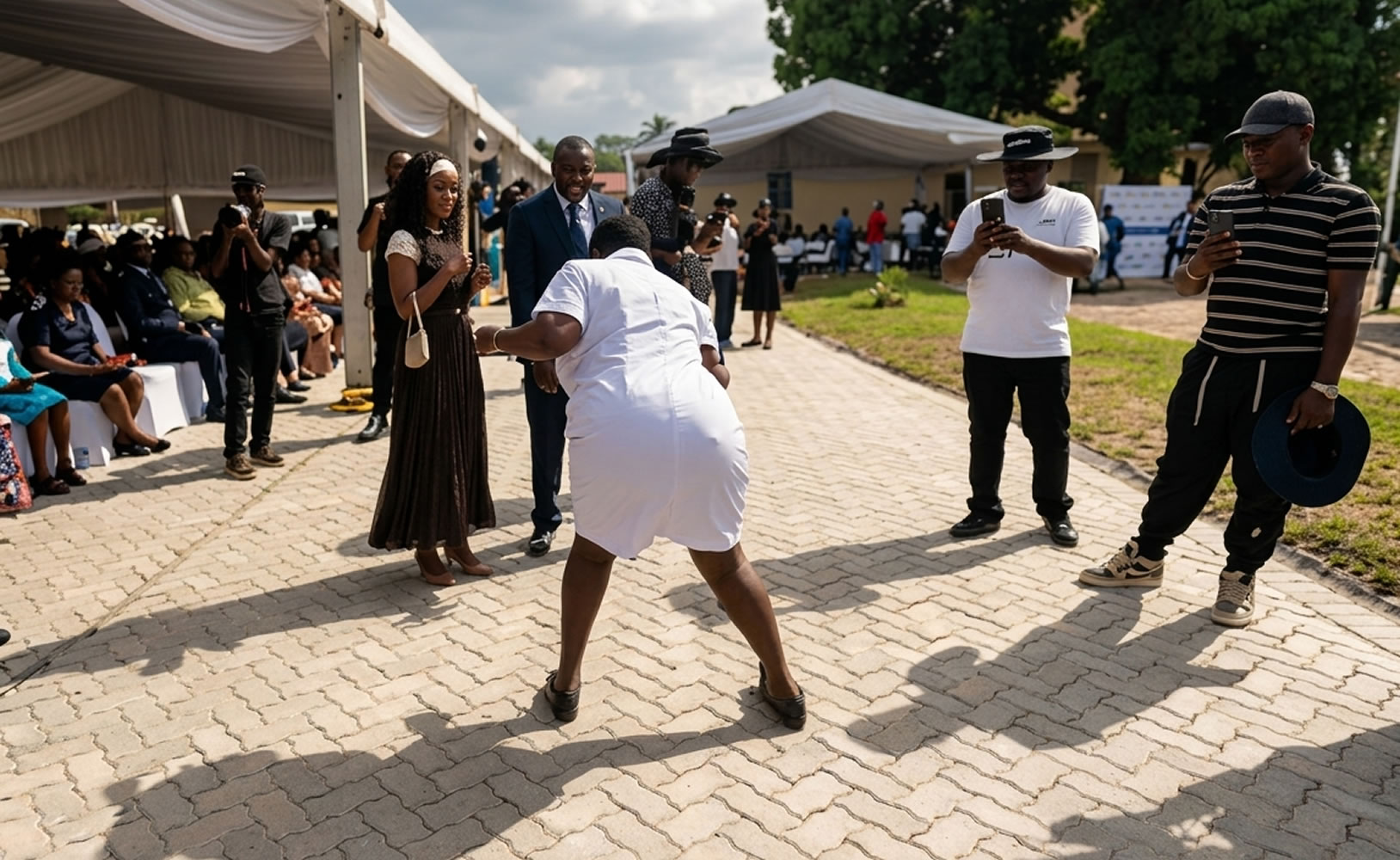
The spectacle unfolded at the official commissioning of Adlam House, a refurbished nurses’ residence at the hospital. While the music blared and the cameras rolled, nurses were invited to the dance floor to “display their fancy footwork.” For their efforts, they were rewarded with cash—a move that many have likened to a scene from a reality show rather than a serious state-sanctioned event. The presenter at the event even announced additional cash prizes for those who danced “very well.” This public display of wealth comes at a time when the nation’s healthcare system is in a state of near-collapse, with nurses having recently staged a three-day nationwide strike from April 20 to 22, 2026, to protest against “wholly inadequate” salaries and worsening working conditions.
Tinotenda, who is still in her teens, has been positioned as a business prodigy, running companies like Prevail Mart and Tap-and-Go. She recently made headlines for her flashy lifestyle, including a viral vlog of a shopping spree in South Africa where she reportedly spent over US$18,000 (approximately R130,000) in a single trip. The video, which showed her browsing luxury boutiques and flaunting high-end purchases, sparked a massive public outcry in a country where the average civil servant struggles to afford basic necessities. In another viral stunt, she hid US$500 at the Trabablas Interchange in Harare, challenging people to search for the cash—a move critics described as “playing Hunger Games” with desperate citizens. These acts, far from being seen as genuine charity, are increasingly viewed as tone-deaf displays of opulence that highlight the growing divide between the connected elite and the struggling masses.
But investigative eyes are looking beyond the viral videos. The real story lies in the “renovation monopoly” that her father, Paul Tungwarara, seems to have secured. While the daughter hands out hampers and cash, her father’s company, Prevail Group, has been handpicked for massive refurbishment projects at the hospital. The cost of these contracts remains “under wraps,” leading to suspicions of a carefully orchestrated public relations stunt designed to mask the lack of competitive bidding for multi-million dollar government tenders. Why was there no public tender for the refurbishment of the Mbuya Nehanda Maternity Ward? The secrecy surrounding these deals is a hallmark of the Tungwarara family’s business dealings, which often involve high-profile government projects awarded without transparent procurement processes.
This is not just about a dance; it is about the systematic “privatisation” of public gratitude. Why must nurses, who recently went on strike for fair wages and better conditions, be reduced to performing for their pay? The hampers, promised to be 3,500 every month, are a temporary sticking plaster on a gaping wound. While the Tungwararas celebrate their “partnership” with the state, the public is left wondering how much of the taxpayers’ money is being recycled back into these “charitable” acts. This investigation seeks to uncover the hidden clauses in the Parirenyatwa renovation deals and why a single family has become the face of “fixing” our national healthcare system. We explore the links between the Prevail Group and the Ministry of Health, questioning whether these “donations” are actually pre-calculated expenses meant to secure future, even more lucrative, government contracts.
The investigation into the Tungwarara family’s business dealings reveals a pattern of exclusive government contracts and controversial financial arrangements. Documents seen by investigators reveal that the Prevail Group was recently granted exclusive rights to undertake river rehabilitation works in Mazowe, Mashonaland Central. This Cabinet directive effectively shut out all other firms from the programme, pending the development of broader national guidelines. The directive simultaneously suspended all other river rehabilitation activities nationwide, paving the way for Prevail Group. “This is a de facto monopoly,” one executive at an environmental services firm said. “If the government wants a pilot project, it should be competitively procured and independently evaluated.”
The concentration of major state contracts in the hands of one firm raises red flags about fair competition and the integrity of procurement processes. In September 2025, a parliamentary portfolio committee accused Prevail International of gross underperformance and “window-dressing” after finding that several village business units and boreholes installed in Chivi District, Masvingo province, were either incomplete or non-functional, leaving communities without reliable access to water. This is not the first time Paul Tungwarara has faced such allegations. In early 2025, he was accused of a US$2.3 million fraud involving a botched business deal, and in 2024, the government reportedly rejected a US$15 million invoice from one of his firms for the construction of precast walls at State House—a figure that was deemed vastly inflated.
Former Finance minister Tendai Biti has been vocal in his criticism, stating that such directives lack transparency and parliamentary oversight. “Parliament must stand up to such issues. Civil society and citizens must also speak out,” he said. “We have schools without teachers and hospitals without medicine and those are the consequences of lack of transparency.” The lack of accountability in the management of public resources has led to a situation where the elite can bypass standard procedures to secure lucrative deals, often at the expense of the taxpayer.
The controversy comes against the backdrop of recent remarks by acting President Constantino Chiwenga, who publicly warned against economic capture by a small, well-connected group of elites. Chiwenga said the liberation struggle was waged to create equality, not to enable self-enrichment by a few individuals, and called for clean governance and accountability in the management of public resources. Despite these warnings, the Tungwarara family’s influence seems to be growing, with their involvement in projects like the US$500 million Mt Hampden Cyber City development and the Presidential Borehole Scheme.
The spectacle of nurses dancing for dollars is a symptom of a deeper malaise where the elite use the desperation of the working class to build their own brands. The healthcare workers at Parirenyatwa, who have been on the front lines of a system plagued by drug shortages and equipment failures, deserve more than just “crispy notes” and food hampers. They deserve a living wage and the dignity that comes with their profession. The healthcare sector in Zimbabwe has been in a state of crisis for years, with a massive brain drain of medical professionals seeking better opportunities abroad. For those who remain, the daily reality is one of overcrowded wards, broken equipment, and a lack of basic medical supplies.
The Mbuya Nehanda Maternity Ward, which is set to be refurbished by the Prevail Group, is a critical facility that has long suffered from neglect. While the renovations are undoubtedly needed, the manner in which the contract was awarded raises serious questions. Why was there no open tender process to ensure that the work is done by the most qualified firm at the best price? The secrecy surrounding the budget for these renovations only adds to the suspicion that these projects are being used to reward political loyalty rather than to provide the best possible service to the public.
As the Tungwararas continue to expand their footprint in government contracts, the public is left to question the true cost of these “gifts.” Are these donations actually pre-calculated expenses meant to secure future, even more lucrative, government contracts? The links between the Prevail Group and the Ministry of Health remain under scrutiny, as the public demands transparency and an end to the “privatisation” of public services. The spectacle of philanthropy, when combined with exclusive access to government contracts, creates a system of patronage that undermines the principles of fair competition and clean governance.
The investigation continues to seek answers regarding the hidden clauses in the Parirenyatwa renovation deals and why a single family has become the face of “fixing” our national healthcare system. The role of Paul Tungwarara as an investment advisor to the President further complicates the situation, as it creates a potential conflict of interest between his official role and his private business interests. This blurring of the lines between public service and private gain is a recurring theme in the Tungwarara story, and it is one that warrants further investigation.
The nurses’ strike in April 2026 highlighted the dire state of the healthcare sector. For three days, medical professionals across the country stayed away from work, demanding better pay and improved working conditions. The government’s response—a series of “donations” from well-connected business families—has done little to address the systemic issues that led to the strike in the first place. Instead of addressing the root causes of the crisis, the authorities seem content to allow the elite to use the suffering of the working class as a backdrop for their public relations stunts.
In the end, the image of nurses gyrating for cash will remain a haunting reminder of the power dynamics at play in modern-day Zimbabwe. It is a story of wealth, influence, and the struggle for dignity in a country where the lines between philanthropy and political patronage are increasingly blurred. The Tungwarara family’s rise to prominence is a testament to the power of connections in a system that often prioritises loyalty over merit. As the nation watches the latest viral videos of Tinotenda’s shopping sprees and cash giveaways, the underlying reality remains: the real work of fixing the healthcare system and ensuring fair wages for civil servants is being overshadowed by a carefully choreographed display of “charity.”
The investigation into the Prevail Group’s activities will continue, with a focus on the transparency of the Parirenyatwa contracts and the impact of the “renovation monopoly” on the quality of healthcare services. The public deserves to know how their money is being spent and whether these high-profile projects are truly in the best interests of the nation. Until there is a move towards greater transparency and accountability, the spectacle of dancing for dollars will continue to be a symbol of the deep-seated issues facing Zimbabwe’s public sector.
The history of Paul Tungwarara’s business ventures is littered with controversy. From the US$15 million State House wall invoice to the US$2.3 million fraud allegations, the pattern of questionable financial dealings is clear. Yet, despite these red flags, his companies continue to be awarded some of the most lucrative contracts in the country. This raises serious questions about the oversight mechanisms in place to ensure that government contracts are awarded fairly and that public funds are used responsibly.
In the case of the Parirenyatwa renovations, the lack of a public tender for the Mbuya Nehanda Maternity Ward is particularly concerning. This is a facility that serves some of the most vulnerable members of society, and the quality of the work done there will have a direct impact on the lives of countless mothers and their babies. To award such a critical contract without a transparent and competitive process is a disservice to the public and a betrayal of the trust placed in the government to manage national resources for the benefit of all.
As this investigation has shown, the “gift” to Parirenyatwa is not just an act of kindness; it is part of a larger strategy to secure influence and consolidate power. The spectacle of nurses dancing for cash is the public face of this strategy, designed to distract from the lack of transparency and the growing monopoly over government contracts. But for the people of Zimbabwe, the reality of a crumbling healthcare system and inadequate wages cannot be hidden behind a few “crispy” notes. The demand for accountability and fair play will only grow louder as more details of these deals come to light.
The story of the Tungwarara family is a microcosm of the challenges facing Zimbabwe today. It is a story of how the elite can use their connections to bypass the rules, while the rest of the population is left to struggle with the consequences. But it is also a story of the resilience of the Zimbabwean people, who continue to demand better from their leaders and to fight for a future where dignity and merit are valued over wealth and influence. The investigation into the dark reality behind the tycoon’s daughter and the Parirenyatwa ‘gift’ is just the beginning of a much larger conversation about the future of the nation. Mý Zimbabwe