
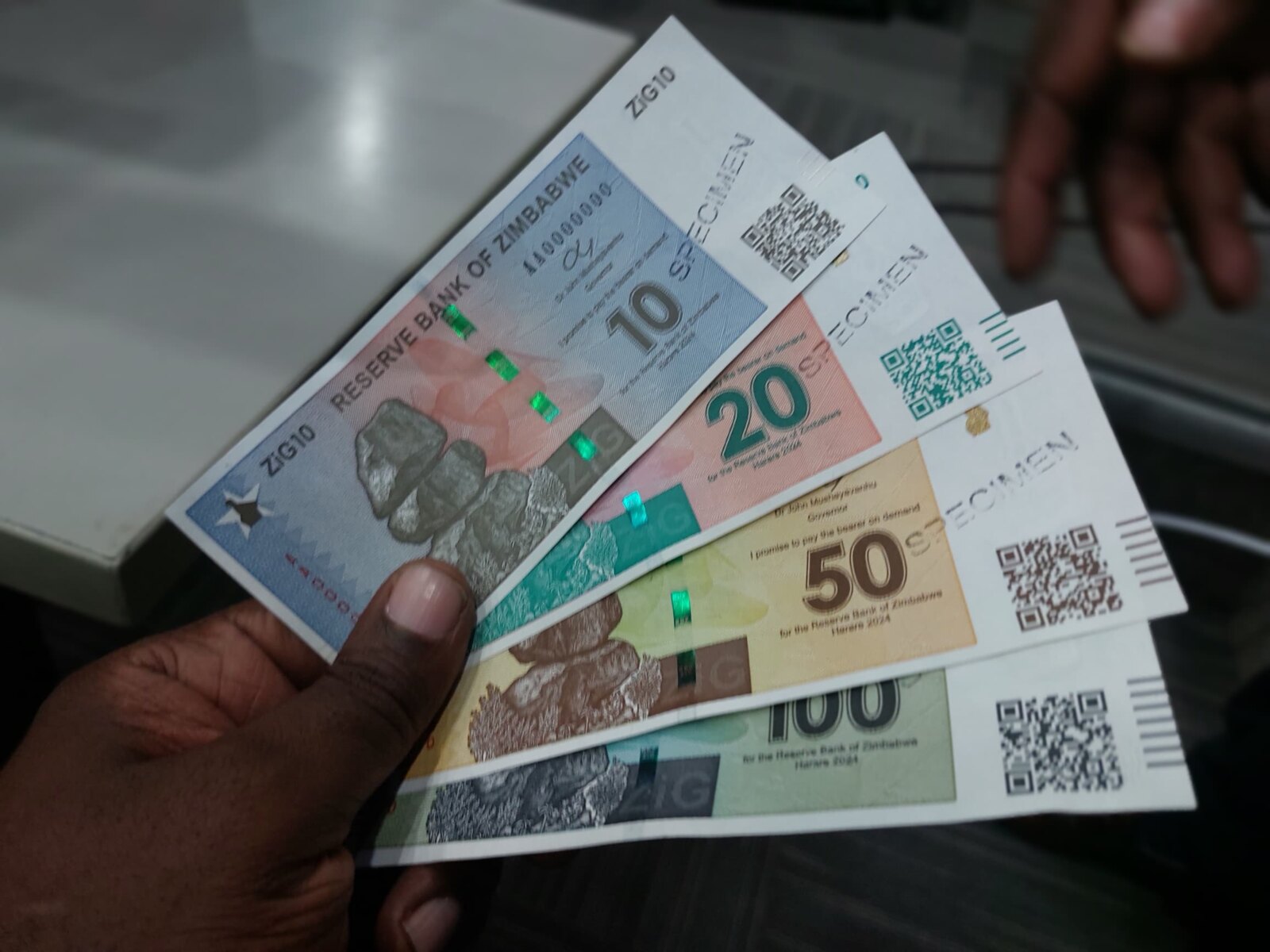
RBZ releases ZiG669 million in new banknotes as demand increases
THE Reserve Bank of Zimbabwe (RBZ) has released new local currency banknotes worth ZiG669 million into the market — representing roughly 3 percent of total deposits in the domestic currency — as the central bank moves to make cash readily available and support its wider use.
Total ZiG deposits in the banking sector stood at ZiG22,3 billion at the end of last month, meaning the amount of notes now in circulation marks a measured but significant injection of physical cash into the economy.
RBZ Governor Dr John Mushayavanhu said the central bank has also recorded a notable improvement in demand for ZiG, both in electronic and cash forms, following an intensive nationwide awareness campaign.
“Following the successful nationwide ZiG awareness and educational campaign, the public expressed great enthusiasm to accept and use ZiG banknotes,” he said.
“The Reserve Bank accordingly availed the requisite ZiG banknotes in sufficient quantities to meet demand, consistent with the stipulated cash withdrawal limits. The Reserve Bank has also witnessed a significant improvement in demand for the ZiG in both electronic and cash forms, including from entities that were previously reluctant to accept ZiG banknotes in their business operations. Reflecting this development, the Reserve Bank has to date availed ZiG banknotes equivalent to about 3 percent of total banking sector ZiG deposits, which stood at ZiG22,3 billion as at end of April 2026.”
The new ZiG notes, which were introduced last month, are now circulating widely through automated teller machines (ATMs), banking halls and HomeLink kiosks, with denominations of ZiG10, ZiG20 and ZiG50 improving access to cash for households and businesses.
Dr Mushayavanhu said the RBZ has ensured adequate supply of notes, in line with stipulated withdrawal limits, with individuals allowed to withdraw up to ZiG10 000 per week and corporates up to ZiG100 000.
“Economic agents have been accessing ZiG banknotes through banking halls, automated teller machines and HomeLink kiosks without challenges,” he added.
The improved uptake follows an extensive public education campaign that covered all 64 districts across the country’s 10 provinces, including remote areas.
Teams from the central bank engaged directly with more than 1,55 million people at about 3 800 centres, helping address concerns and build confidence in the currency.
Monetary authorities believe acceptance of ZiG has broadened significantly, including in areas that had initially shown low uptake.
“The Reserve Bank has witnessed widespread acceptance and usage of the ZiG in both electronic and cash forms across all the 10 provinces of the country,” said Dr Mushayavanhu.
“Reflecting this development, the Reserve Bank has successfully distributed ZiG banknotes across all the country’s 10 provinces through the banking sector and HomeLink.”
He said access to cash is steadily improving even in previously underserved areas.
To sustain momentum, Dr Mushayavanhu added, the central bank will continue monitoring financial institutions to ensure adequate cash supplies, including in remote locations.
“The Reserve Bank will also continue to undertake regular ZiG perceptions and confidence surveys across the country to track progress on the ZiG usage and to receive feedback from the public on potential areas for improvement,” he said.
These surveys involve gathering feedback from individuals, businesses and financial institutions on how the currency is being used, levels of trust, challenges being faced and overall confidence in ZiG as a medium of exchange and store of value.
The findings are critical in guiding policy adjustments and strengthening the currency’s stability.
Importantly, growing demand and usage of ZiG form part of the key conditions required for Zimbabwe to transition to a mono-currency system, where the local unit becomes the dominant or sole medium of exchange in the economy.
Achieving this milestone depends on sustained public confidence, stable macroeconomic fundamentals and widespread adoption of ZiG in everyday transactions.
Dr Mushayavanhu says the RBZ will continue issuing banknotes in optimal quantities aligned with deposit levels and economic activity, while keeping the public informed on progress as part of its commitment to transparency and accountability.
The local currency is currently backed by about US$1,3 billion in foreign currency reserves, nearly double the value of deposits in the banking system, providing a buffer to support stability.
Early indications suggest that improved availability of cash is already restoring the use of ZiG in sectors such as transport and retail, as well as in other small transactions, particularly in urban areas.